Epilepsy Unit, Hôpital Gui de Chauliac, Montpellier, France; Research Unit (URCMA: Unité de Recherche sur les Comportements et Mouvements Anormaux), INSERM, U661, Montpellier F-34000, France.
Department of Clinical Neuroscience, Lausanne University Hospital (CHUV) and University of Lausanne, Lausanne, Switzerland.
Clin Neurophysiol. 2020 Aug;131(8):2023-2031. doi: 10.1016/j.clinph.2020.05.006. Epub 2020 May 13.
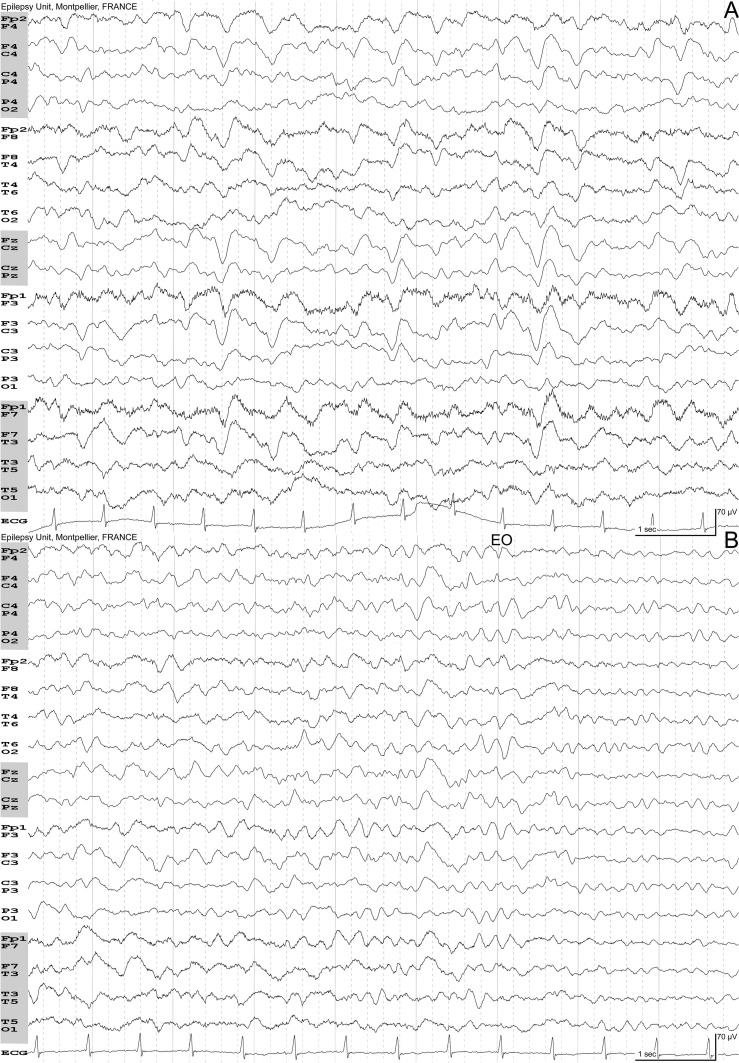
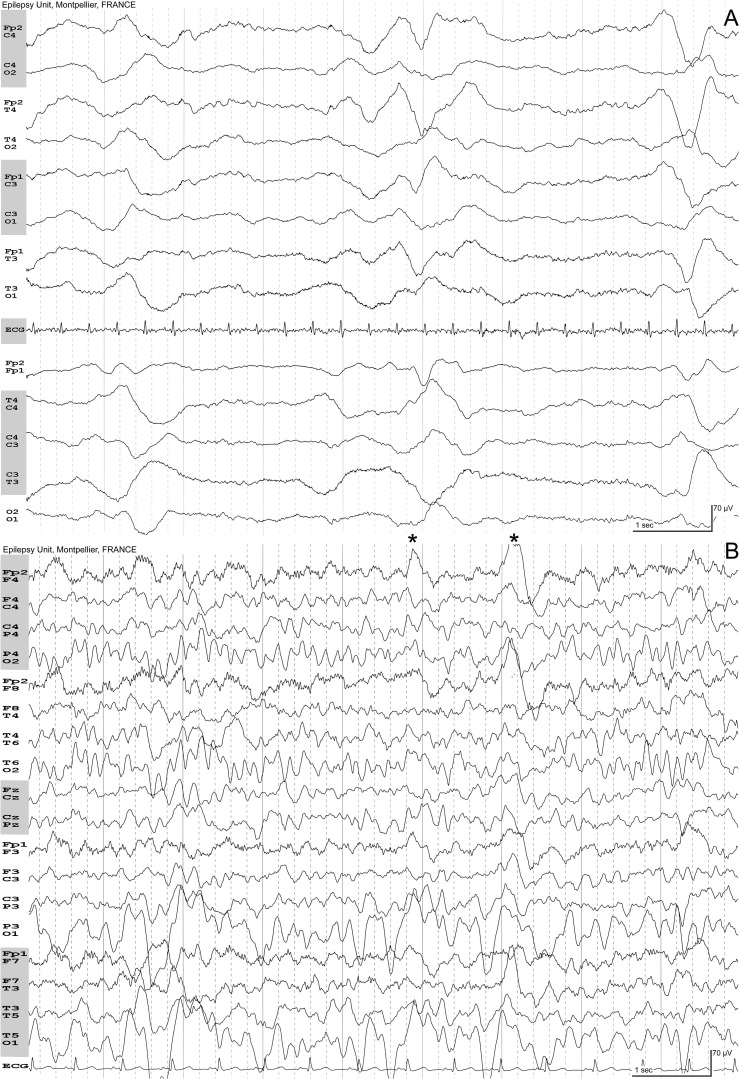
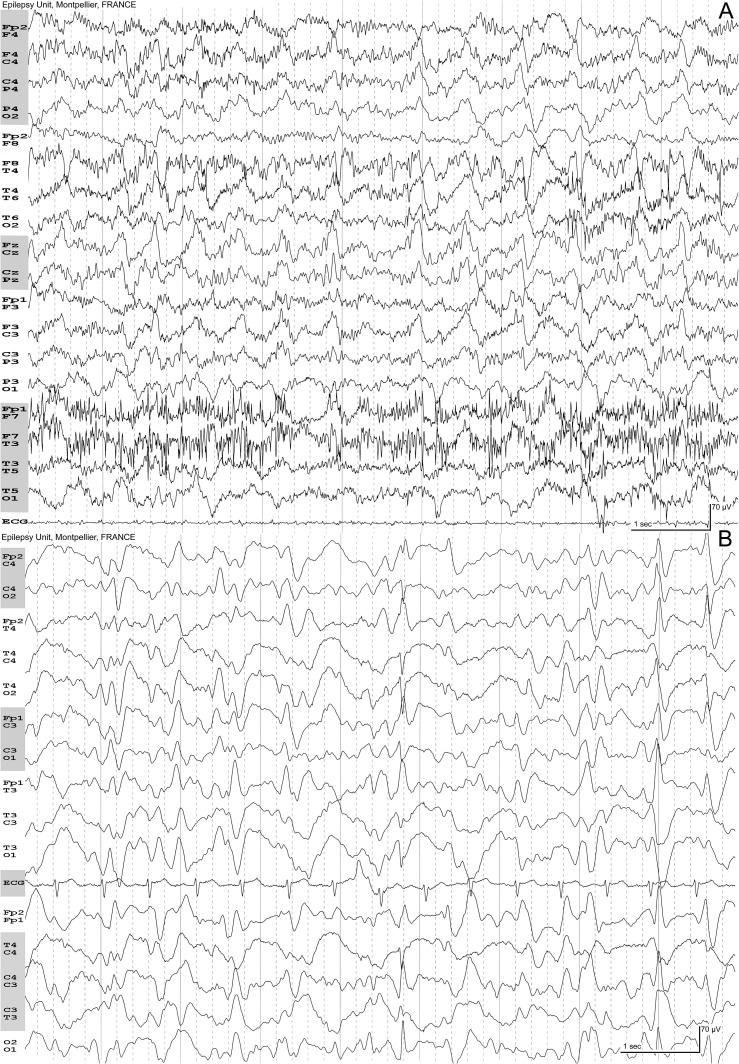
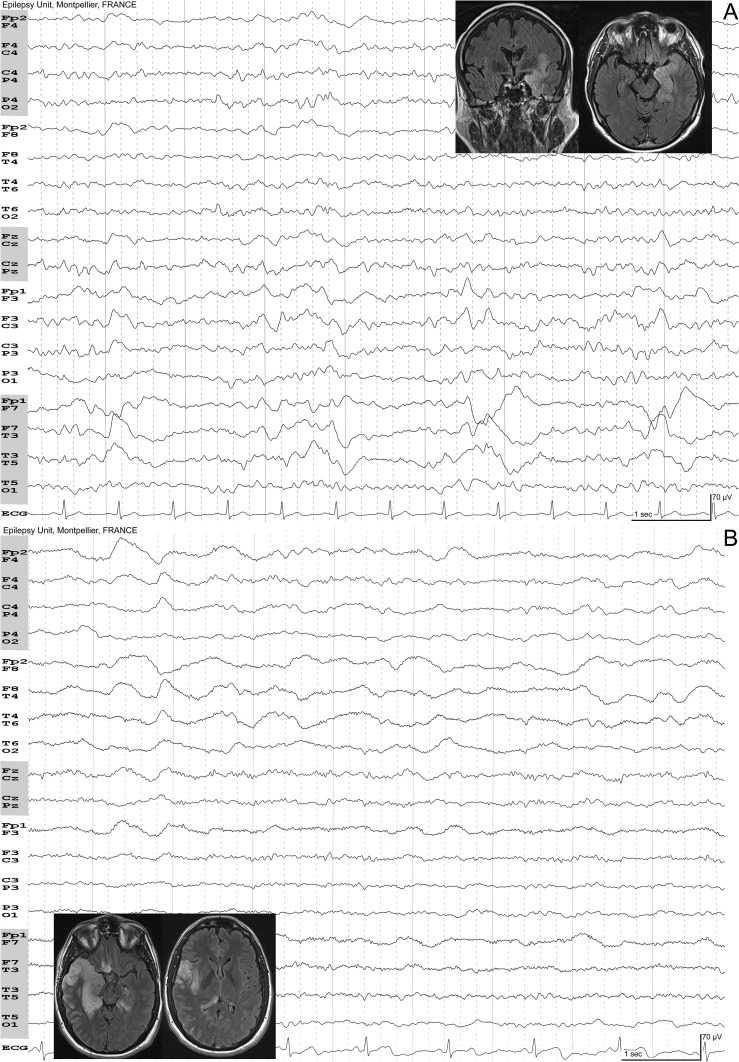
There are questions and challenges regarding neurologic complications in COVID-19 patients. EEG is a safe and efficient tool for the evaluation of brain function, even in the context of COVID-19. However, EEG technologists should not be put in danger if obtaining an EEG does not significantly advance diagnosis or change management in the patient. Not every neurologic problem stems from a primary brain injury: confusion, impaired consciousness that evolves to stupor and coma, and headaches are frequent in hypercapnic/hypoxic encephalopathies. In patients with chronic pulmonary disorders, acute symptomatic seizures have been reported in acute respiratory failure in 6%. The clinician should be aware of the various EEG patterns in hypercapnic/hypoxic and anoxic (post-cardiac arrest syndrome) encephalopathies as well as encephalitides. In this emerging pandemic of infectious disease, reduced EEG montages using single-use subdermal EEG needle electrodes may be used in comatose patients. A full 10-20 EEG complement of electrodes with an ECG derivation remains the standard. Under COVID-19 conditions, an expedited study that adequately screens for generalized status epilepticus, most types of regional status epilepticus, encephalopathy or sleep may serve for most clinical questions, using simplified montages may limit the risk of infection to EEG technologists. We recommend noting whether the patient is undergoing or has been placed prone, as well as noting the body and head position during the EEG recording (supine versus prone) to avoid overinterpretation of respiratory, head movement, electrode, muscle or other artifacts. There is slight elevation of intracranial pressure in the prone position. In non-comatose patients, the hyperventilation procedure should be avoided. At present, non-specific EEG findings and abnormalities should not be considered as being specific for COVID-19 related encephalopathy.
关于 COVID-19 患者的神经系统并发症存在一些问题和挑战。脑电图是评估脑功能的一种安全有效的工具,即使在 COVID-19 背景下也是如此。然而,如果获取脑电图并不能显著改善患者的诊断或治疗方案,那么就不应该让脑电图技术员面临风险。并非所有的神经系统问题都源于原发性脑损伤:在高碳酸血症/低氧性脑病中,意识混乱、意识障碍进展为昏迷和昏迷以及头痛很常见。在慢性肺部疾病患者中,有报道称在急性呼吸衰竭中出现急性症状性癫痫发作的比例为 6%。临床医生应该了解高碳酸血症/低氧性和缺氧性(心搏骤停后综合征)脑病以及脑炎的各种脑电图模式。在这种新发传染病的大流行中,昏迷患者可能会使用一次性使用皮下脑电图针电极进行简化脑电图描记。完整的 10-20 个电极脑电图导联和心电图衍生仍然是标准。在 COVID-19 条件下,进行一项快速研究,使用简化的脑电图描记,充分筛查全身性癫痫持续状态、大多数类型的局灶性癫痫持续状态、脑病或睡眠障碍,可能适用于大多数临床问题,从而可以限制脑电图技术员感染的风险。我们建议在脑电图记录期间(仰卧位与俯卧位)注意患者是否正在或已经处于俯卧位,并注意患者的身体和头部位置,以避免对呼吸、头部运动、电极、肌肉或其他伪影的过度解释。俯卧位时颅内压略有升高。在非昏迷患者中,应避免过度通气。目前,不应将非特异性脑电图发现和异常视为 COVID-19 相关脑病的特异性表现。