Flinspach Armin Niklas, Zinn Sebastian, Zacharowski Kai, Balaban Ümniye, Herrmann Eva, Adam Elisabeth Hannah
Department of Anaesthesiology, Intensive Care Medicine and Pain Therapy, University Hospital Frankfurt, Goethe-University Frankfurt, Theodor-Stern Kai 7, 60590 Frankfurt, Germany.
Department of Biostatistics and Mathematical Modelling, Goethe-University Frankfurt, Theodor-Stern Kai 7, 60590 Frankfurt, Germany.
J Clin Med. 2022 Jun 17;11(12):3494. doi: 10.3390/jcm11123494.
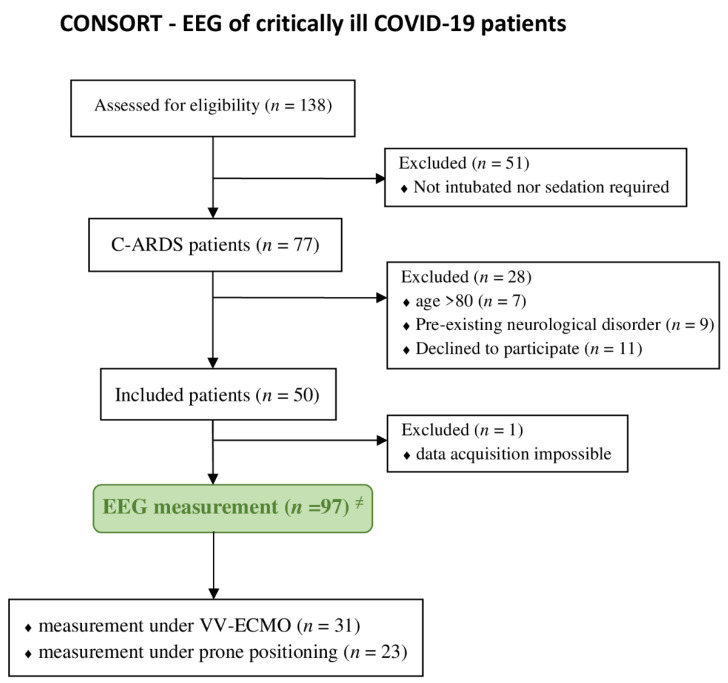
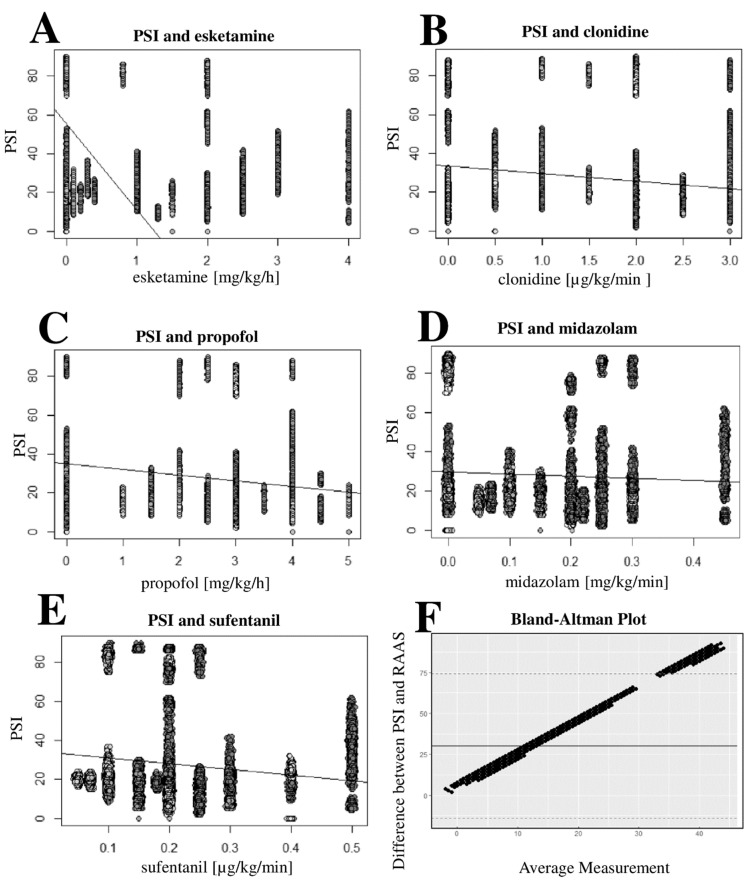
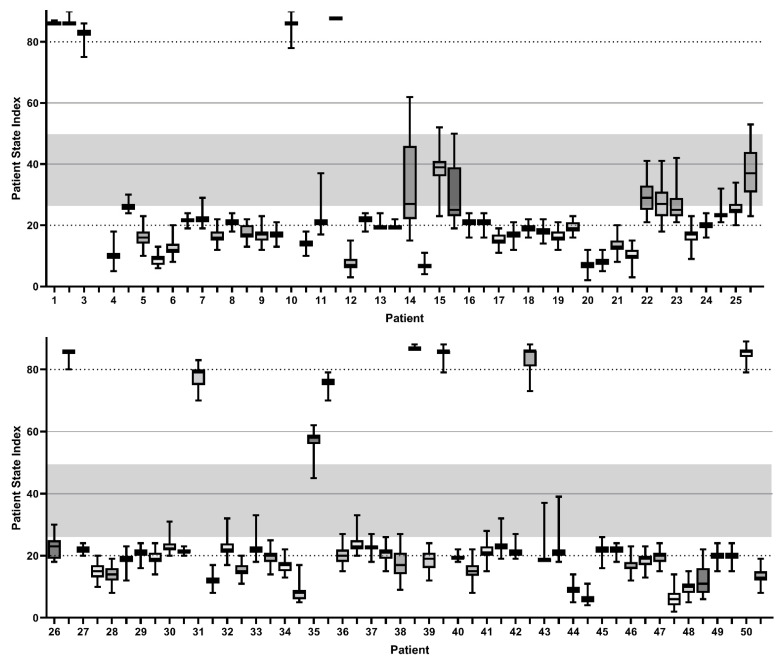
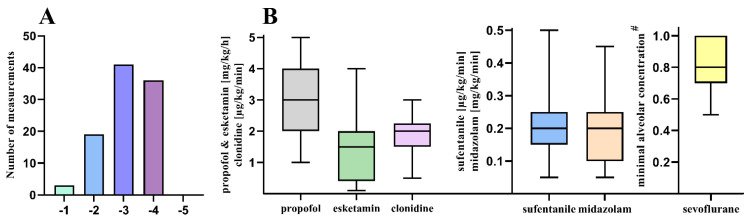
The sedation management of patients with severe COVID-19 is challenging. Processed electroencephalography (pEEG) has already been used for sedation management before COVID-19 in critical care, but its applicability in COVID-19 has not yet been investigated. We performed this prospective observational study to evaluate whether the patient sedation index (PSI) obtained via pEEG may adequately reflect sedation in ventilated COVID-19 patients. Statistical analysis was performed by linear regression analysis with mixed effects. We included data from 49 consecutive patients. None of the patients received neuromuscular blocking agents by the time of the measurement. The mean value of the PSI was 20 (±23). The suppression rate was determined to be 14% (±24%). A deep sedation equivalent to the Richmond Agitation and Sedation Scale of −3 to −4 (correlation expected PSI 25−50) in bedside examination was noted in 79.4% of the recordings. Linear regression analysis revealed a significant correlation between the sedative dosages of propofol, midazolam, clonidine, and sufentanil (p < 0.01) and the sedation index. Our results showed a distinct discrepancy between the RASS and the determined PSI. However, it remains unclear to what extent any discrepancy is due to the electrophysiological effects of neuroinflammation in terms of pEEG alteration, to the misinterpretation of spinal or vegetative reflexes during bedside evaluation, or to other causes.
重症新型冠状病毒肺炎(COVID-19)患者的镇静管理具有挑战性。在COVID-19之前,处理后的脑电图(pEEG)已用于重症监护中的镇静管理,但其在COVID-19中的适用性尚未得到研究。我们进行了这项前瞻性观察研究,以评估通过pEEG获得的患者镇静指数(PSI)是否能充分反映机械通气的COVID-19患者的镇静情况。采用混合效应线性回归分析进行统计分析。我们纳入了49例连续患者的数据。在测量时,所有患者均未接受神经肌肉阻滞剂。PSI的平均值为20(±23)。抑制率确定为14%(±24%)。在79.4%的记录中,床边检查发现深度镇静相当于里士满躁动镇静量表(Richmond Agitation and Sedation Scale)的-3至-4级(预期PSI为25-50时具有相关性)。线性回归分析显示,丙泊酚、咪达唑仑、可乐定和舒芬太尼的镇静剂量(p<0.01)与镇静指数之间存在显著相关性。我们的结果显示,RASS与确定的PSI之间存在明显差异。然而,目前尚不清楚这种差异在多大程度上是由于神经炎症的电生理效应导致pEEG改变、床边评估时对脊髓或自主反射的误判,还是其他原因。