Touchstone Diabetes Center, Department of Internal Medicine, University of Texas Southwestern Medical Center, Dallas, TX, USA.
Department of Biological Sciences, School of Life Sciences, Ulsan National Institute of Science and Technology, Ulsan, South Korea.
Mol Metab. 2020 Sep;39:101010. doi: 10.1016/j.molmet.2020.101010. Epub 2020 May 11.
Obesity-induced insulin resistance is closely associated with chronic subclinical inflammation in white adipose tissue. However, the mechanistic involvement of adipocyte-derived inflammation under these disease conditions remains unclear. Our aim was to investigate the relative inflammation-related contributions of adipocytes and macrophages to insulin sensitivity.
RIDα/β is an adenoviral protein complex that inhibits several inflammatory pathways, including TLR4, TNFα, and IL1β signaling. We generated novel mouse models with adipocyte-specific and macrophage-specific doxycycline (dox)-inducible RIDα/β-transgenic mice (RID and RID mice, respectively).
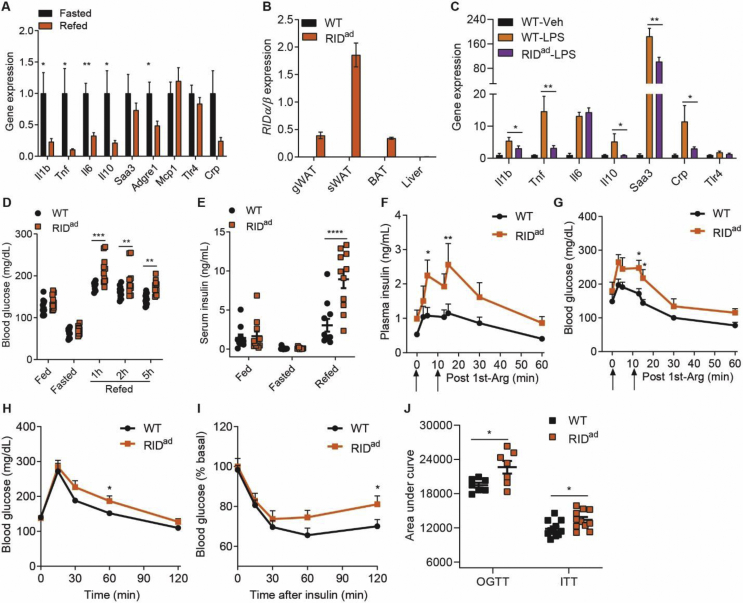
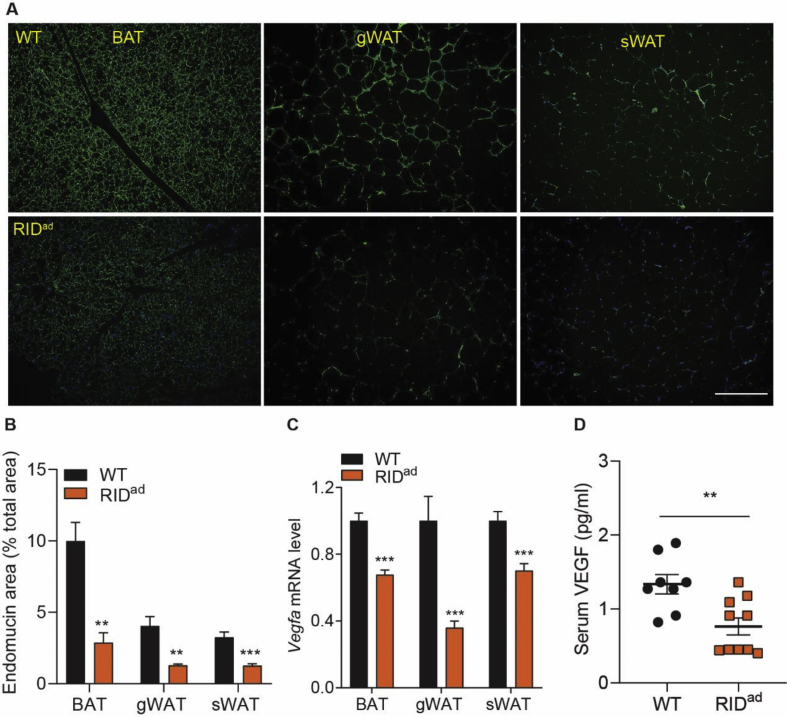
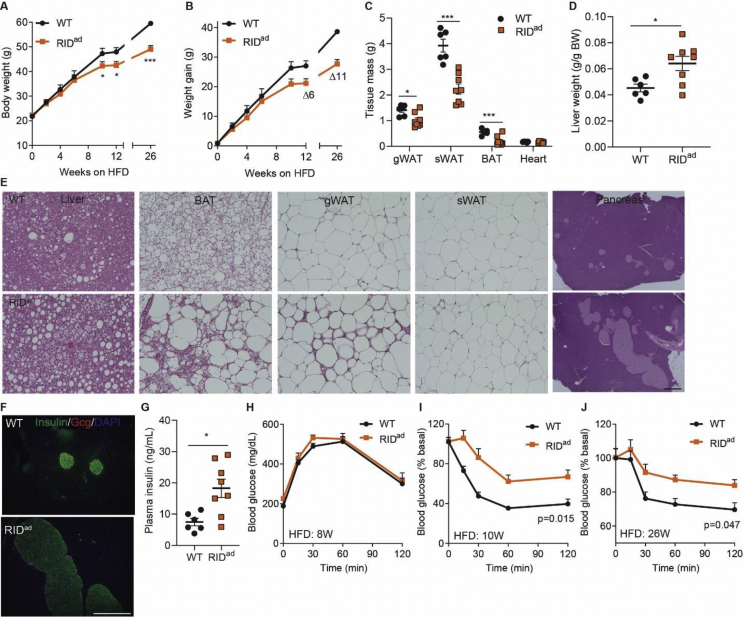
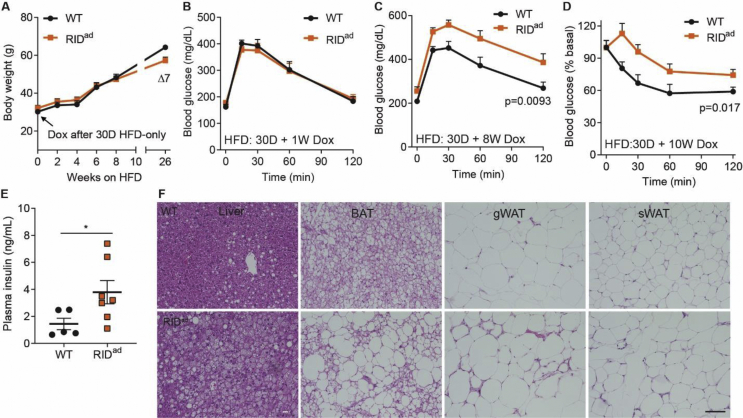
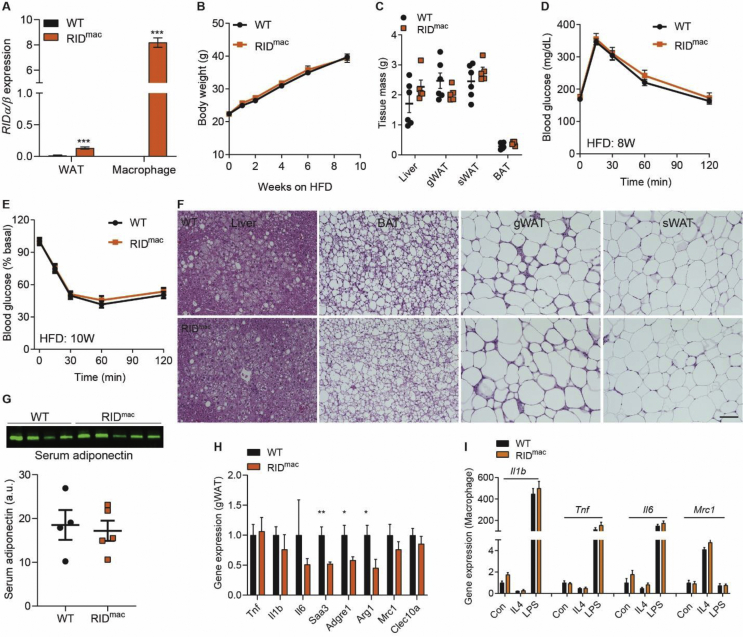
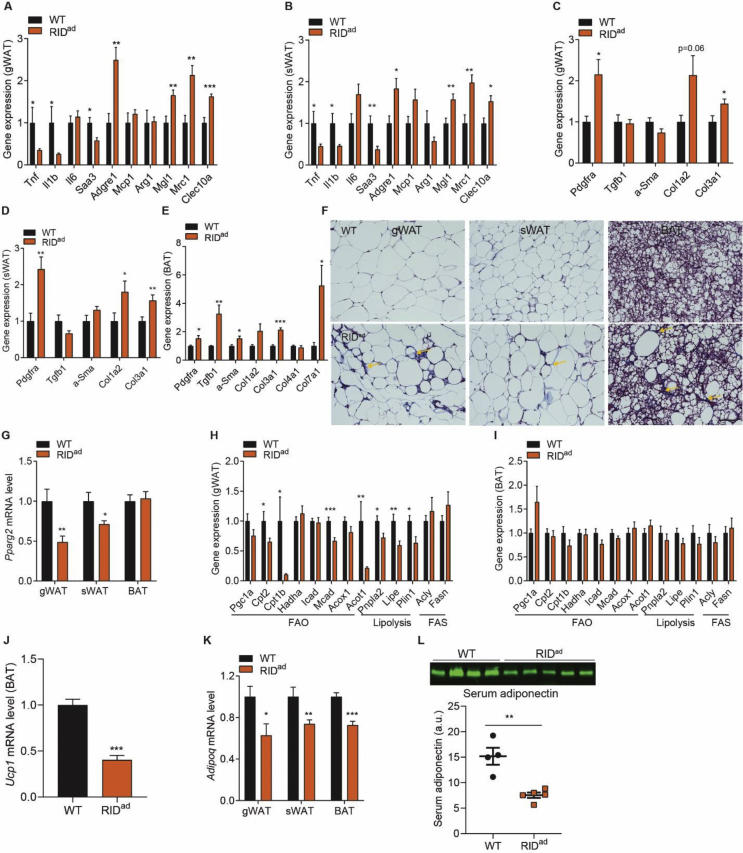
RIDα/β induction significantly reduced LPS-stimulated inflammatory markers, such as Tnf, Il1b, and Saa3 in adipose tissues. Surprisingly, RID mice had elevated levels of postprandial glucose and insulin and exhibited glucose intolerance and insulin resistance, even under chow-fed conditions. Moreover, the RID mice displayed further insulin resistance under obesogenic (high-fat diet, HFD) conditions despite reduced weight gain. In addition, under pre-existing obese and inflamed conditions on an HFD, subsequent induction of RIDα/β in RID mice reduced body weight gain, further exacerbating glucose tolerance, enhancing insulin resistance and fatty liver, and reducing adiponectin levels. This occurred despite effective suppression of the inflammatory pathways (including TNFα and IL1β). In contrast, RID mice, upon HFD feeding, displayed similar weight gain, comparable adiponectin levels, and insulin sensitivity, suggesting that the inflammatory properties of macrophages did not exert a negative impact on metabolic readouts. RIDα/β expression and the ensuing suppression of inflammation in adipocytes enhanced adipose tissue fibrosis and reduced vascularization.
Our novel findings further corroborate our previous observations suggesting that suppressing adipocyte inflammation impairs adipose tissue function and promotes insulin resistance, despite beneficial effects on weight gain.
肥胖引起的胰岛素抵抗与白色脂肪组织中慢性亚临床炎症密切相关。然而,在这些疾病状态下,脂肪细胞衍生的炎症的机制参与仍不清楚。我们的目的是研究脂肪细胞和巨噬细胞对胰岛素敏感性的相对炎症相关贡献。
RIDα/β 是一种抑制几种炎症途径的腺病毒蛋白复合物,包括 TLR4、TNFα 和 IL1β 信号通路。我们生成了具有脂肪细胞特异性和巨噬细胞特异性强力霉素(dox)诱导 RIDα/β 转基因小鼠(RID 和 RID 小鼠,分别)的新型小鼠模型。
RIDα/β 的诱导显著降低了 LPS 刺激的脂肪组织中炎症标志物,如 Tnf、Il1b 和 Saa3。令人惊讶的是,RID 小鼠在给予 Chow 饮食时,表现出餐后血糖和胰岛素水平升高,并且表现出葡萄糖不耐受和胰岛素抵抗。此外,尽管 RID 小鼠的体重增加减少,但在肥胖症(高脂肪饮食,HFD)条件下,RID 小鼠表现出进一步的胰岛素抵抗。此外,在 HFD 下存在肥胖和炎症的预先存在条件下,RID 小鼠中 RIDα/β 的随后诱导减少了体重增加,进一步恶化了葡萄糖耐量,增强了胰岛素抵抗和脂肪肝,并降低了脂联素水平。尽管有效抑制了炎症途径(包括 TNFα 和 IL1β),但仍会发生这种情况。相比之下,RID 小鼠在给予 HFD 后表现出相似的体重增加、相似的脂联素水平和胰岛素敏感性,表明巨噬细胞的炎症特性对代谢结果没有产生负面影响。RIDα/β 的表达及其随后对脂肪细胞炎症的抑制增强了脂肪组织纤维化并减少了血管化。
我们的新发现进一步证实了我们之前的观察结果,即抑制脂肪细胞炎症会损害脂肪组织功能并促进胰岛素抵抗,尽管对体重增加有有益影响。