Department of Endocrinology, The First People's Hospital of Lanzhou City, Lanzhou, Gansu, P. R. China.
Department of Endocrinology, The People's Hospital of Gansu Province, Lanzhou, Gansu, P. R. China.
Ren Fail. 2020 Nov;42(1):463-473. doi: 10.1080/0886022X.2020.1762647.
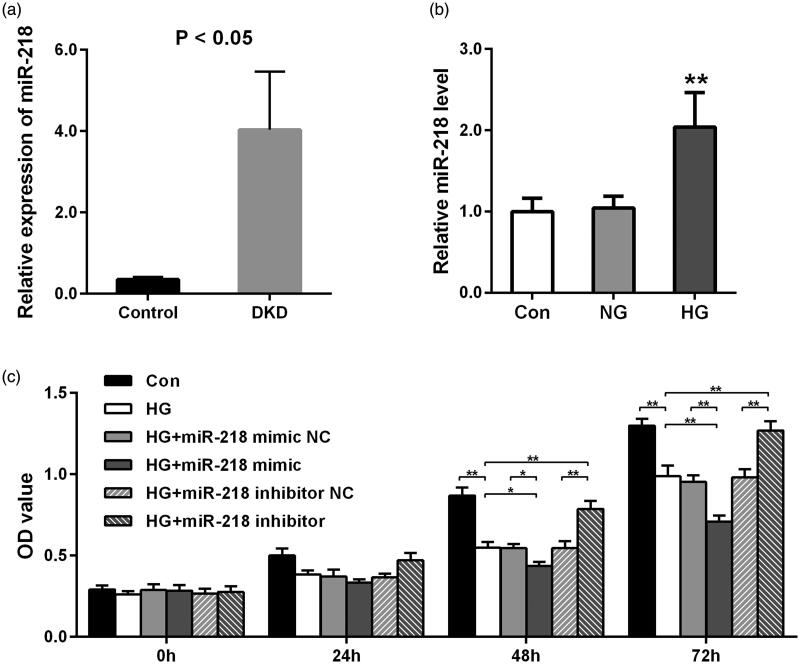
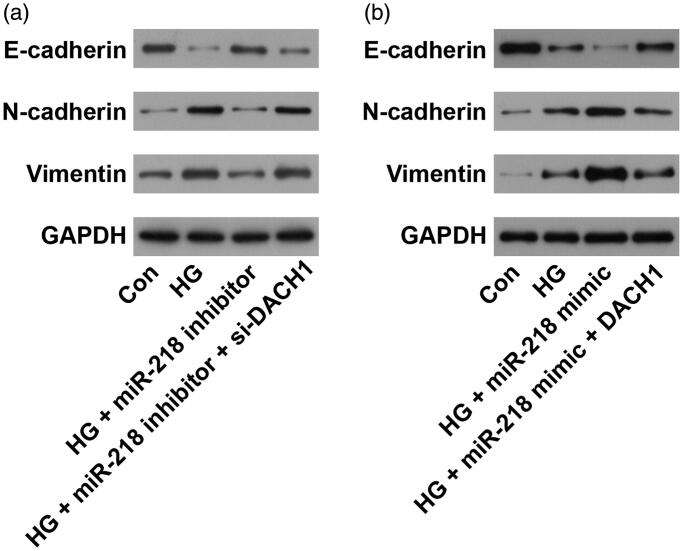
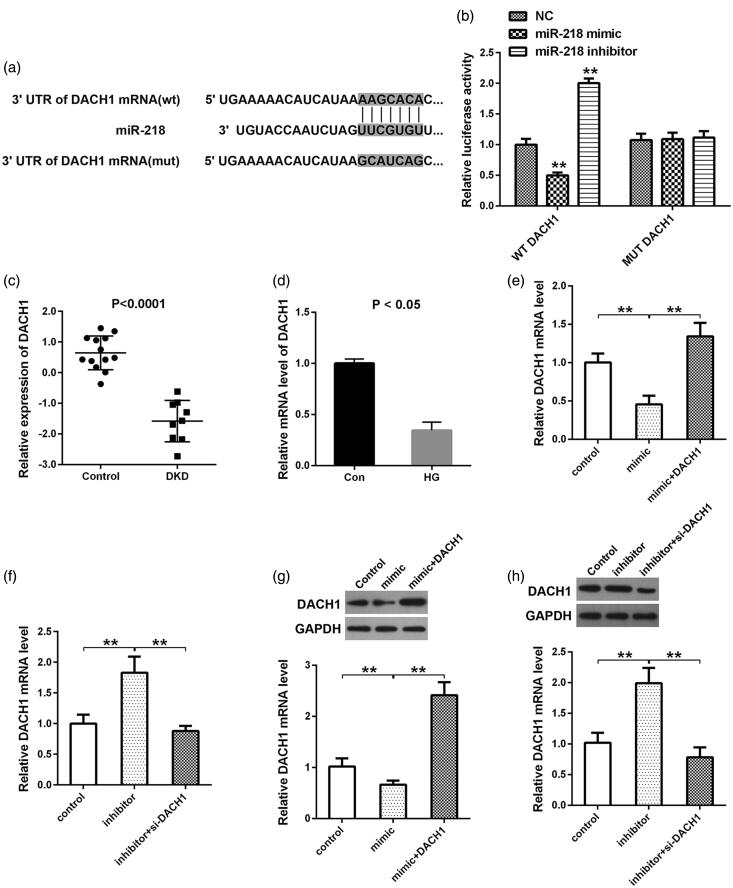
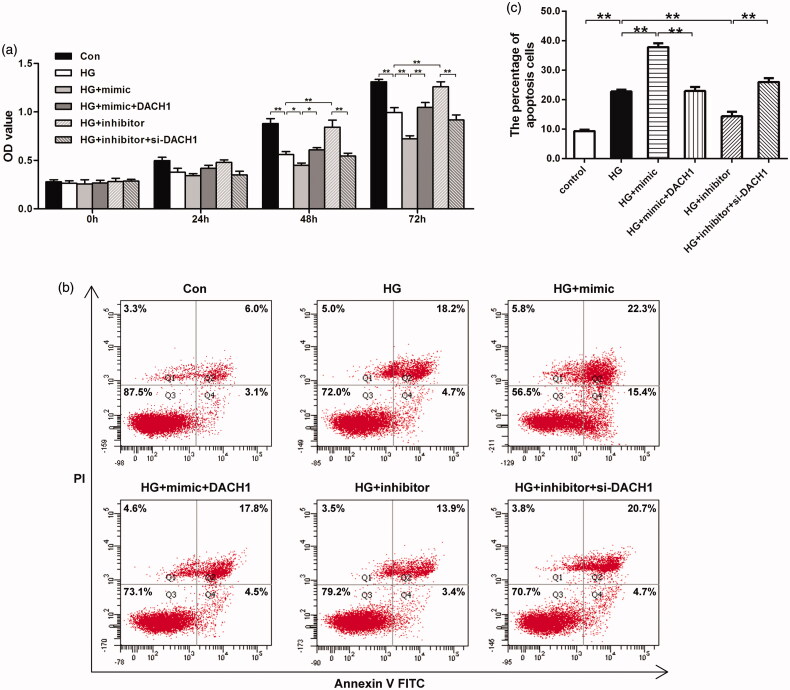
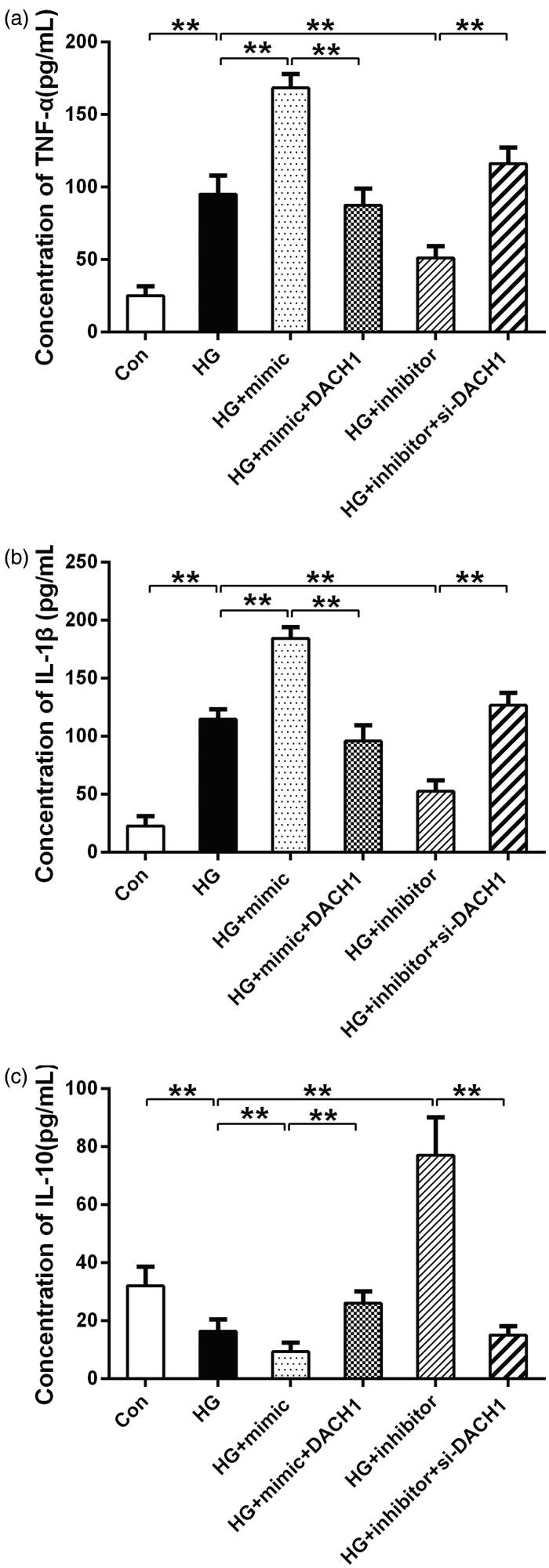
This report was designed to assess the functional role of miR-218/dachshund family transcription factor 1 (DACH1) in diabetic kidney disease (DKD) and investigate its possible molecular mechanism. From the GEO database, we downloaded different datasets for analyzing the expression of miR-218 and DACH1 in DKD. TargetScan was adopted to predict the binding sites between miR-218 and DACH1, which was further verified by dual-luciferase reporter assays. The renal proximal tubule cells (HK-2) treated with high glucose (HG) were used as an model. QRT-PCR and western blot were used to determine the expression of DACH1 and other relative factors. Cell counting kit-8 and flow cytometer were applied to detect cell viability and apoptosis. The levels of inflammatory cytokines were determined by an ELISA assay. A prominent raise of miR-218 was observed in DKD through bioinformatics analysis, which was further confirmed in the HG-induced model. DACH1 is a target of miR-218. miR-218 reduced cell viability and induced apoptosis by negatively regulating DACH1. Moreover, upregulating miR-218 in HG models increased the concentrations of pro-inflammatory cytokines TNF-α and IL-1β, reduced the level of anti-inflammatory cytokine IL-10, and promoted the epithelial-mesenchymal transition (EMT) process, which is possibly achieved by targeting DACH1. While downregulating miR-218 showed the opposite results. These data demonstrated that, under an HG environment, miR-218 suppressed the HK-2 cells proliferation, promoted apoptosis, caused an inflammatory response, and facilitated the EMT process largely by targeting DACH1, providing an insight into the therapeutic intervention of DKD.
本报告旨在评估 miR-218/达克斯犬家族转录因子 1(DACH1)在糖尿病肾病(DKD)中的功能作用,并探讨其可能的分子机制。我们从 GEO 数据库中下载了不同的数据集,用于分析 DKD 中 miR-218 和 DACH1 的表达。采用 TargetScan 预测 miR-218 和 DACH1 之间的结合位点,并通过双荧光素酶报告基因实验进一步验证。使用高糖(HG)处理的人肾近端小管细胞(HK-2)作为模型。实时定量 PCR(QRT-PCR)和 Western blot 用于测定 DACH1 和其他相关因子的表达。细胞计数试剂盒-8 和流式细胞术用于检测细胞活力和凋亡。酶联免疫吸附试验(ELISA)用于测定炎症细胞因子的水平。通过生物信息学分析发现 miR-218 在 DKD 中显著上调,在 HG 诱导的模型中进一步得到证实。DACH1 是 miR-218 的靶基因。miR-218 通过负调控 DACH1 降低细胞活力并诱导细胞凋亡。此外,在 HG 模型中上调 miR-218 增加了促炎细胞因子 TNF-α和 IL-1β的浓度,降低了抗炎细胞因子 IL-10 的水平,并促进了上皮-间充质转化(EMT)过程,这可能是通过靶向 DACH1 实现的。而下调 miR-218 则表现出相反的结果。这些数据表明,在 HG 环境下,miR-218 通过靶向 DACH1 抑制 HK-2 细胞增殖,促进细胞凋亡,引起炎症反应,并促进 EMT 过程,为 DKD 的治疗干预提供了新的思路。