Department of Hematology/Oncology, Fox Chase Cancer Center, Philadelphia, PA, USA.
Division of Pharmaceutics and Pharmacology, College of Pharmacy, The Ohio State University, Columbus, OH, USA.
Curr Oncol Rep. 2020 May 15;22(6):54. doi: 10.1007/s11912-020-00916-9.
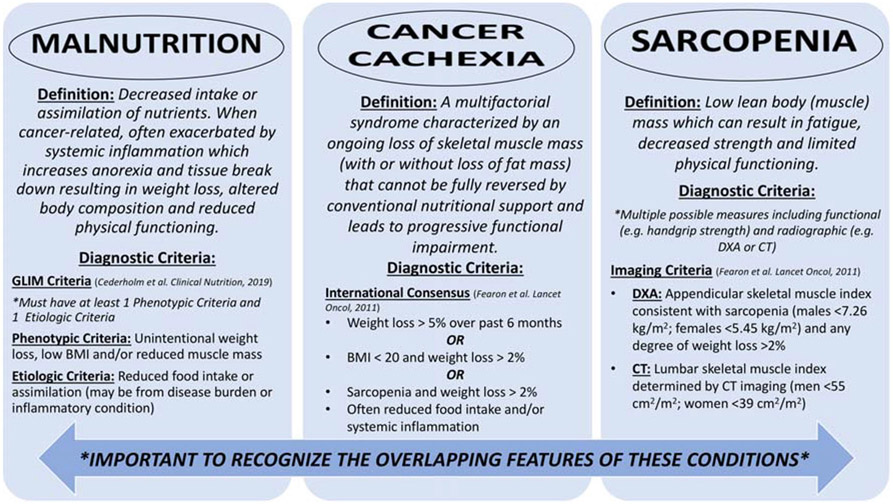
Malnutrition, cancer cachexia, and sarcopenia often co-occur in patients with advanced cancer and are associated with poorer response to chemotherapy and reduced survival. Here, we evaluate the current literature regarding the role of nutrition and these associated conditions in patients with advanced lung cancer.
While rates of malnutrition are high, nutritional intervention studies have generally been limited by small sample sizes. Novel strategies such as home-based meal delivery may have promise. While no therapy is approved for cancer cachexia, ghrelin agonists and other targeted therapies have yielded promising data in clinical trials. Recent data also suggest that obesity may improve immunotherapy responsiveness. Malnutrition and associated muscle wasting are clearly negative prognostic markers in advanced lung cancer. Patients with malnutrition should be urgently referred for dietary counseling and guidelines for nutritional support should be followed. Optimal treatment of these syndromes will likely include nutrition and anti-cachexia interventions used in combination.
营养不良、癌性恶病质和肌肉减少症常同时发生于晚期癌症患者,与化疗反应较差和生存时间缩短相关。在此,我们评估了关于晚期肺癌患者营养状况及相关情况的现有文献。
尽管营养不良的发生率很高,但营养干预研究通常受到样本量小的限制。一些新策略,如家庭送餐,可能具有前景。尽管尚无疗法被批准用于癌性恶病质,但胃饥饿素激动剂和其他靶向治疗在临床试验中取得了有希望的数据。最近的数据还表明,肥胖可能改善免疫治疗的反应性。营养不良和相关的肌肉消耗是晚期肺癌明确的预后不良标志物。有营养不良的患者应紧急转介接受饮食咨询,并且应遵循营养支持指南。这些综合征的最佳治疗可能包括联合使用营养和抗恶病质干预。