Wang Xiaoli, Sun Xiaoxuan, Niu Mengyue, Zhang Xiaona, Wang Jing, Zhou Chang, Xie Anmu
Department of Neurology, The Affiliated Hospital of Qingdao University, Qingdao, China.
Front Neurosci. 2020 Apr 29;14:353. doi: 10.3389/fnins.2020.00353. eCollection 2020.
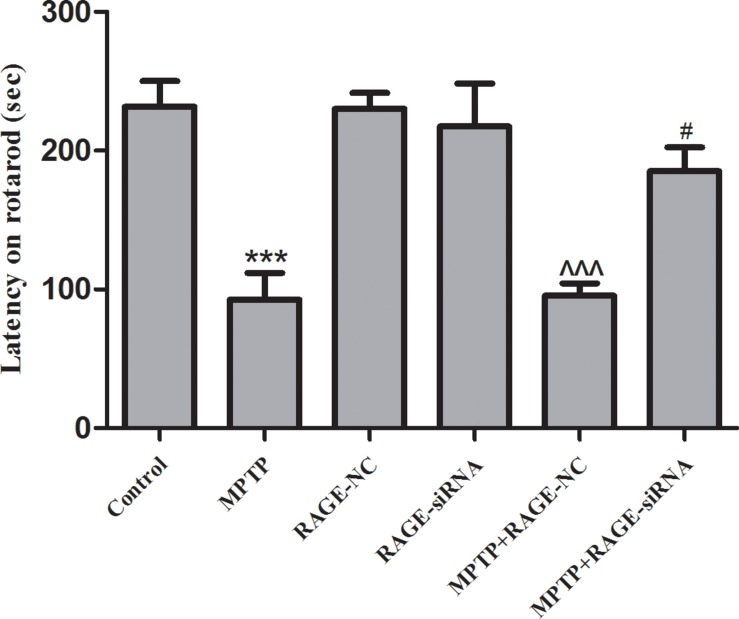
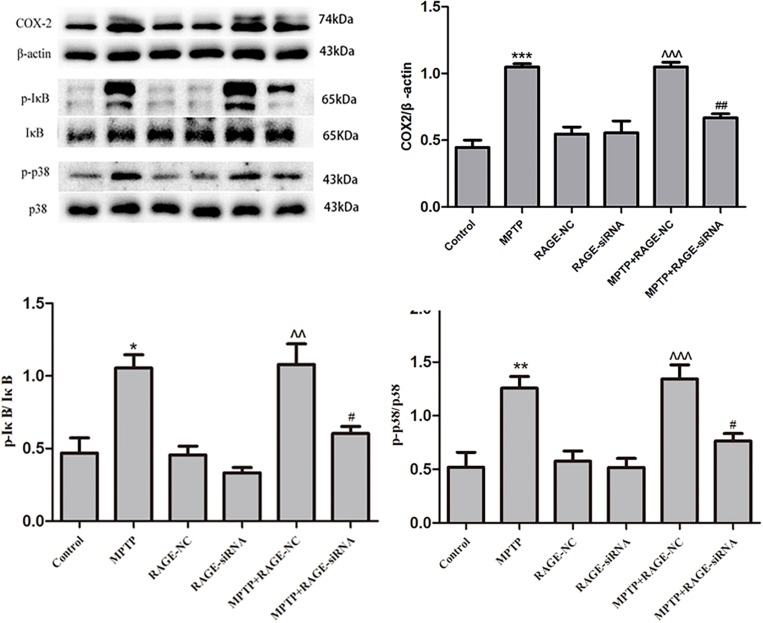
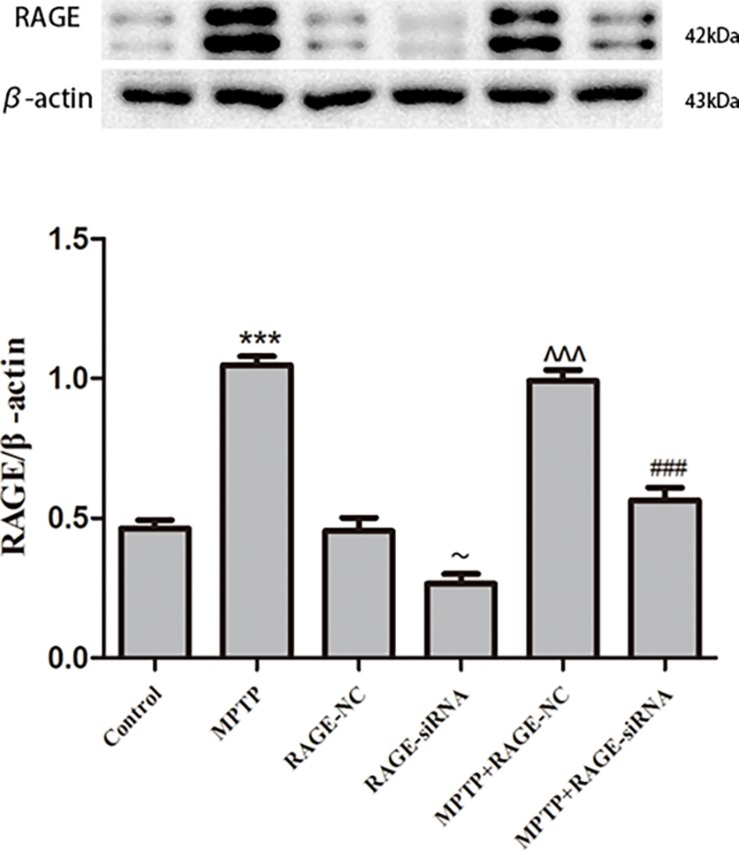
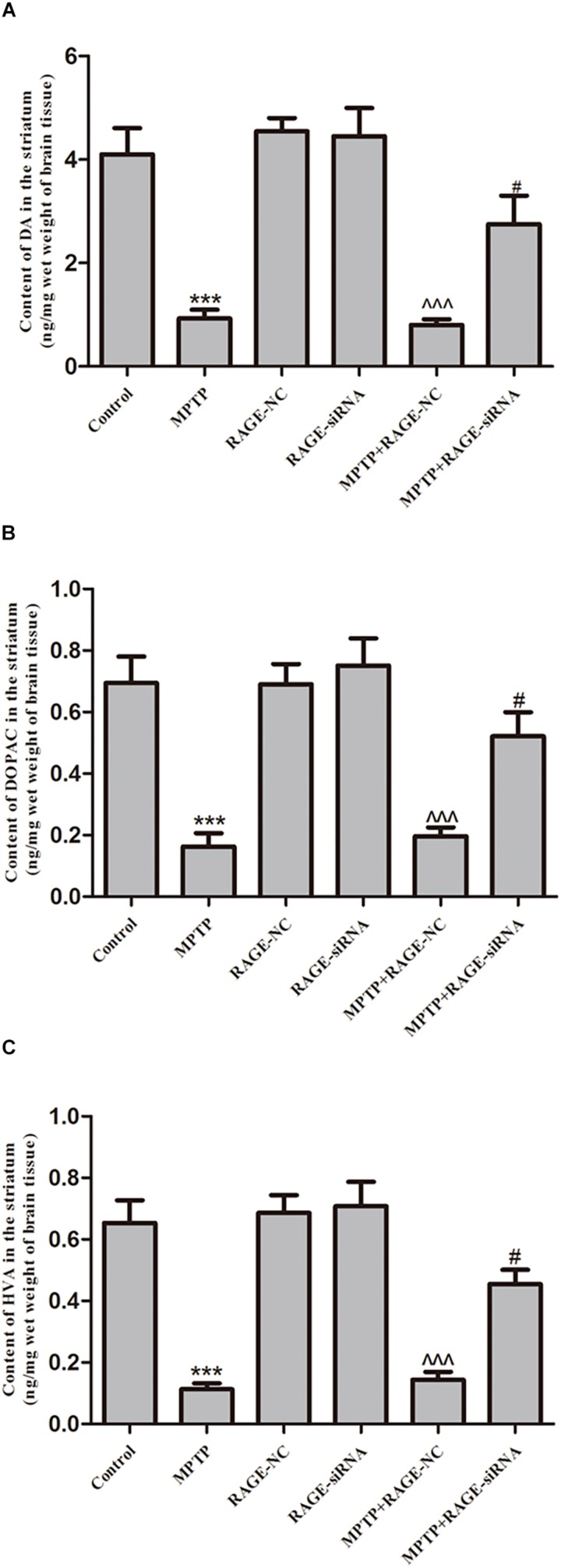
Accumulating evidence suggested that neuroinflammation played a crucial role in dopaminergic neuronal death in Parkinson's disease (PD). The receptor for advanced glycation end products (RAGE), a multi-ligand receptor of the immunoglobulin superfamily, has been proposed as a key molecule in the onset and sustainment of the inflammatory response. Engagement of RAGE contributed to neuroinflammation by upregulating nuclear factor-κB (NF-κB) as well as cytokines. The aim of the present study was to investigate the expression of RAGE in 1-methyl-4-phenyl-1,2,3,6-tetrahydropyridine (MPTP)-treated mice and elucidate the RAGE signal pathway involved in the inflammation. Results showed that RAGE protein and pro-inflammatory cytokines cyclooxygenase type 2 (COX-2) were upregulated in MPTP-treated mice. Further experiments showed that RAGE ablation inhibited phosphorylation of IκB and p38 and protected nigral dopaminergic neurons against cell death in the substantia nigra (SN). These results suggested that RAGE participated in the pathogenesis of PD by neuroinflammation and p38MAPK-NFκB signal pathway may be involved in the process. Moreover, interfering with RAGE signaling pathway may be a reasonable therapeutic option in slowing PD development and progression.
越来越多的证据表明,神经炎症在帕金森病(PD)多巴胺能神经元死亡中起关键作用。晚期糖基化终产物受体(RAGE)是免疫球蛋白超家族的一种多配体受体,已被认为是炎症反应发生和持续的关键分子。RAGE的激活通过上调核因子-κB(NF-κB)以及细胞因子来促进神经炎症。本研究的目的是调查RAGE在1-甲基-4-苯基-1,2,3,6-四氢吡啶(MPTP)处理的小鼠中的表达,并阐明参与炎症的RAGE信号通路。结果显示,MPTP处理的小鼠中RAGE蛋白和促炎细胞因子环氧合酶2(COX-2)上调。进一步实验表明,RAGE缺失抑制IκB和p38的磷酸化,并保护黑质多巴胺能神经元免于黑质(SN)中的细胞死亡。这些结果表明,RAGE通过神经炎症参与PD的发病机制,并且p38丝裂原活化蛋白激酶-NFκB信号通路可能参与该过程。此外,干扰RAGE信号通路可能是减缓PD发展和进程的合理治疗选择。