Flamion Allison, Missotten Pierre, Jennotte Lucie, Hody Noémie, Adam Stéphane
Psychology of Aging Unit, Department of Psychology and Clinics of Human Systems, University of Liège, Liège, Belgium.
Front Psychol. 2020 Apr 28;11:807. doi: 10.3389/fpsyg.2020.00807. eCollection 2020.
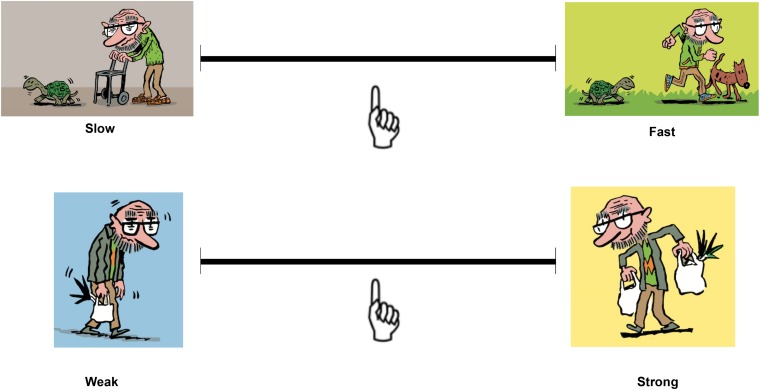
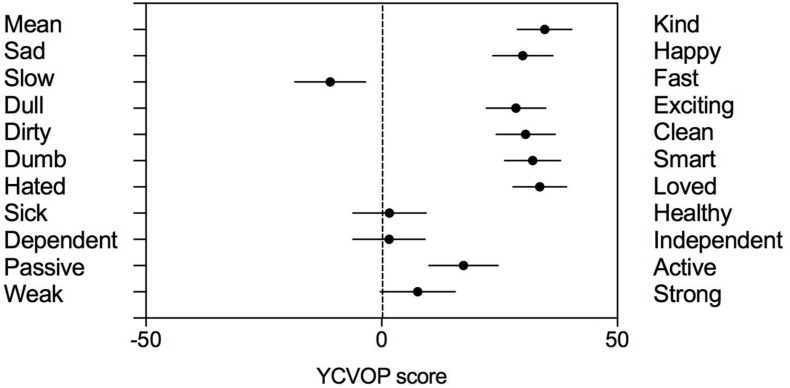
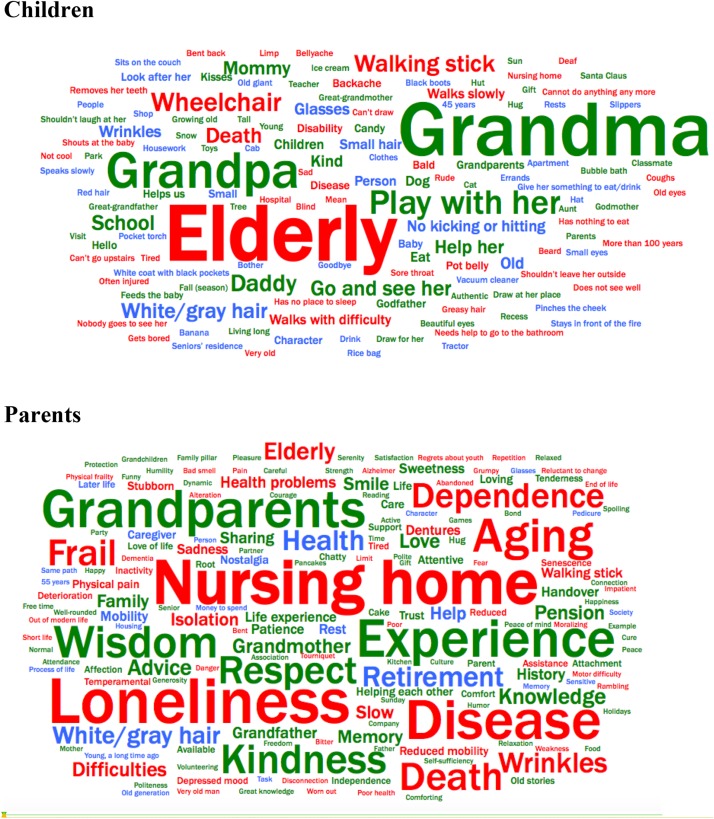
Ageist attitudes have been discovered in children as early as 3 years. However, so far very few studies, especially during the last decade, have examined age-related stereotypes in preschool children. Available questionnaires adapted to this population are scarce. Our study was designed to probe old age-related views in 3- to 6-year-old children ( = 126) using both an open-ended Image-of-Aging question and a new pilot tool, called Young Children's Views of Older People (YCVOP), based on a visual analog scale illustrated by cartoons. Parental views of older people were also collected. The YCVOP was easy to use and internally consistent. Both that scale and the Image-of-Aging question showed globally favorable views of older people in preschool children, especially regarding warmth and smartness traits. However, assessment of physical capacity and independence tended to be negative. The overall results were in line with the low-competence, high-warmth stereotype of older people that is common in young adults and school-age children and was found in parents in the current study (Stereotype Content Model). Strikingly, children's views did not correlate with those of their parents': The children's responses appeared more personal and emotional, while the parents tended to adopt global stereotypes. The preschoolers' views of older people were much more positive in those who spontaneously evoked their grandparents when asked to think of an old person. In conclusion, this study, introducing a new visual tool to assess age-related stereotypes, suggests ambivalent views of older adults start in preschool children and are influenced by grandparents relationships.
早在3岁时,人们就发现儿童存在年龄歧视态度。然而,到目前为止,很少有研究,尤其是在过去十年中,考察过学龄前儿童与年龄相关的刻板印象。适用于这一群体的现有问卷很少。我们的研究旨在通过一个开放式的衰老形象问题和一个新的试点工具,即基于卡通插图视觉模拟量表的《幼儿对老年人的看法》(YCVOP),探究3至6岁儿童(=126名)对老年人的看法。同时还收集了父母对老年人的看法。YCVOP易于使用且内部一致。该量表和衰老形象问题都显示,学龄前儿童对老年人总体上持积极看法,尤其是在温暖和聪明特质方面。然而,对身体能力和独立性的评价往往是负面的。总体结果与年轻人和学龄儿童中常见的老年人低能力、高温暖刻板印象一致,在本研究的父母中也发现了这种情况(刻板印象内容模型)。令人惊讶的是,儿童的看法与父母的看法不相关:儿童的回答似乎更具个人性和情感性,而父母则倾向于采用整体刻板印象。当被要求想到一个老人时,那些自发想到祖父母的学龄前儿童对老年人的看法要积极得多。总之,本研究引入了一种新的视觉工具来评估与年龄相关的刻板印象,表明学龄前儿童对老年人的看法存在矛盾,且受祖孙关系的影响。