Chen Qiu-Feng, Zhang Xiao-Hong, Huang Nao-Xin, Chen Hua-Jun
College of Computer and Information Sciences, Fujian Agriculture and Forestry University, Fuzhou, China.
Department of Radiology, Fujian Medical University Union Hospital, Fuzhou, China.
Front Neurol. 2020 Apr 28;11:275. doi: 10.3389/fneur.2020.00275. eCollection 2020.
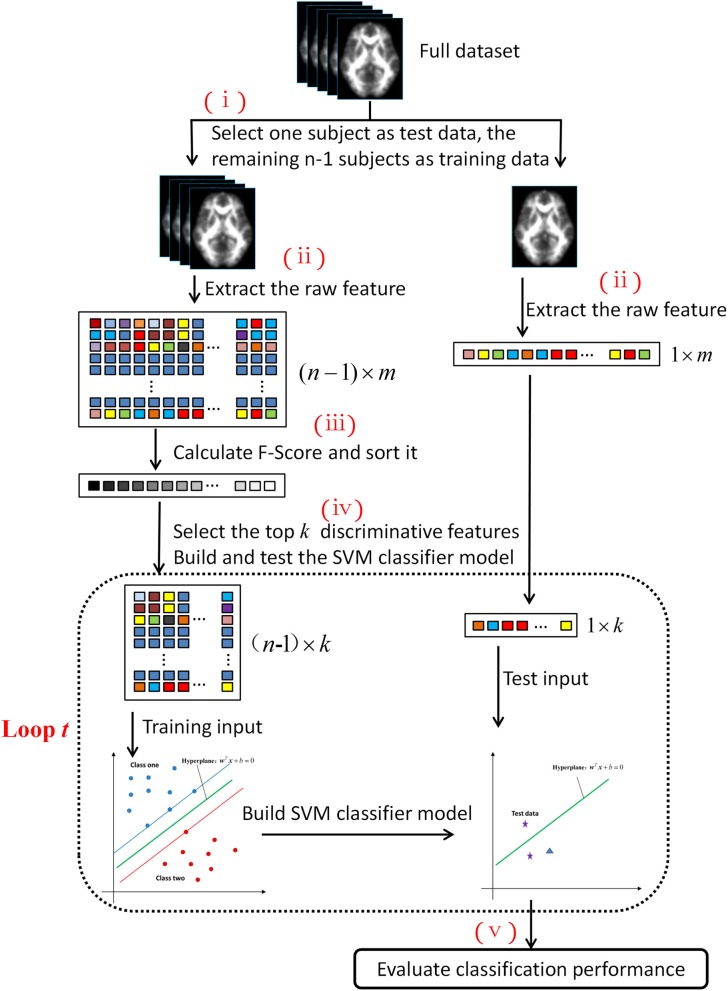
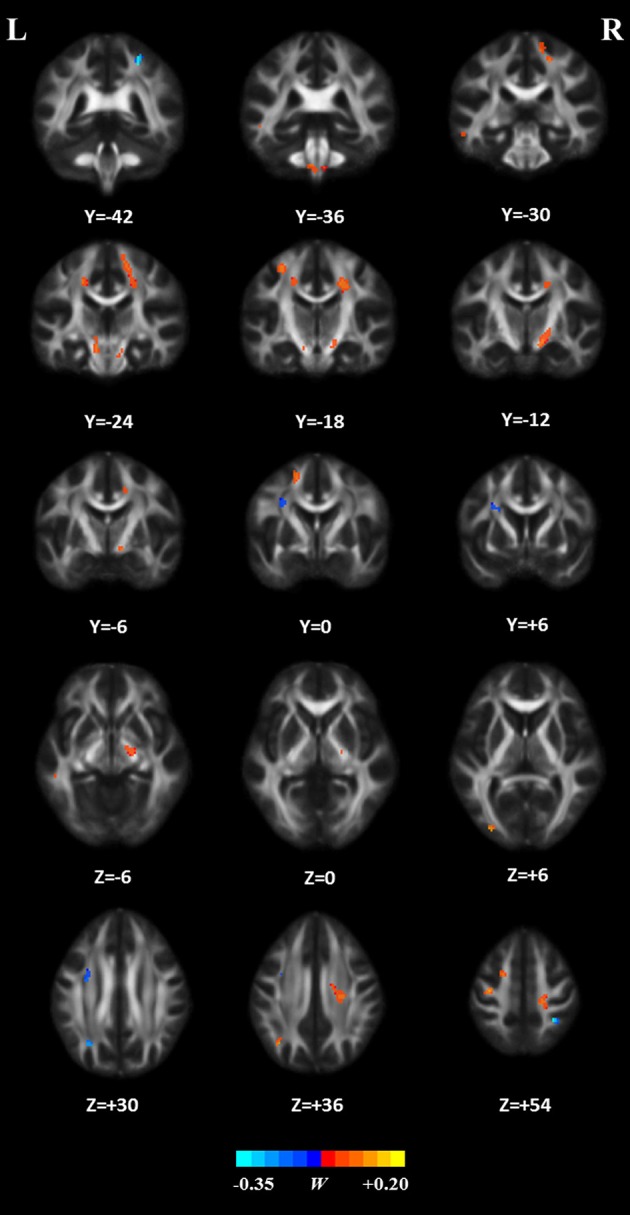
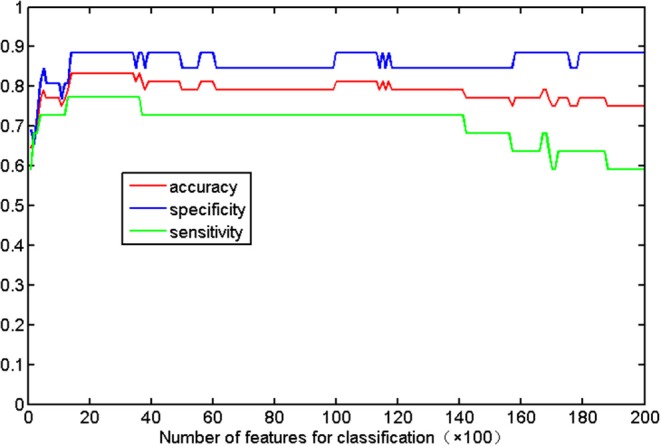
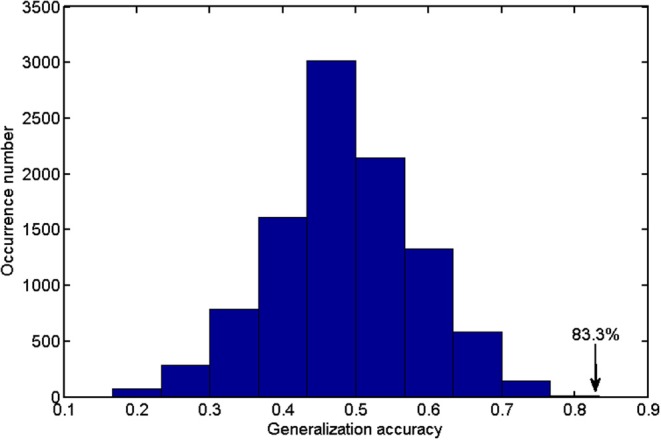
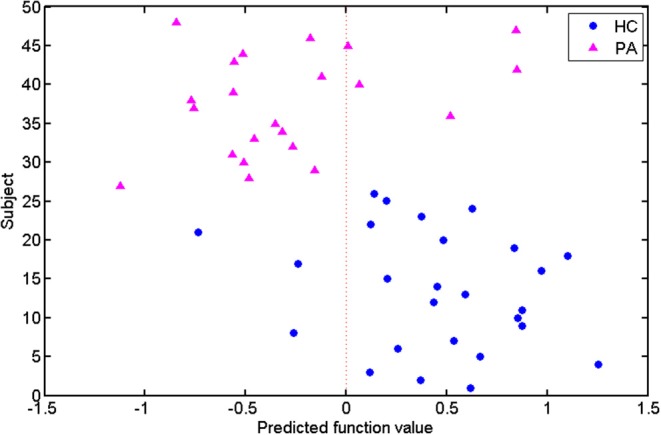
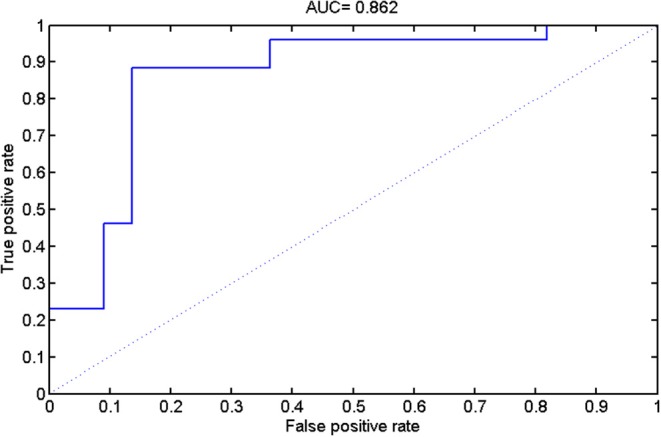
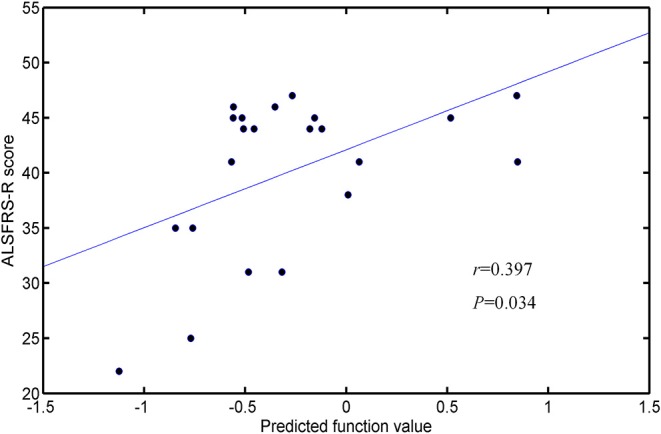
White matter (WM) impairments involving both motor and extra-motor areas have been well-documented in amyotrophic lateral sclerosis (ALS). This study tested the potential of diffusion measurements in WM for identifying ALS based on support vector machine (SVM). Voxel-wise fractional anisotropy (FA) values of diffusion tensor images (DTI) were extracted from 22 ALS patients and 26 healthy controls and served as discrimination features. The revised ALS Functional Rating Scale (ALSFRS-R) was employed to assess ALS severity. Feature ranking and selection were based on Fisher scores. A linear kernel SVM algorithm was applied to build the classification model, from which the classification performance was evaluated. To promote classifier generalization ability, a leave-one-out cross-validation (LOOCV) method was adopted. By using the 2,400~3,400 ranked features as optimal features, the highest classification accuracy of 83.33% (sensitivity = 77.27% and specificity = 88.46%, = 0.0001) was achieved, with an area under receiver operating characteristic curve of 0.862. The predicted function value was positively correlated with patient ALSFRS-R scores ( = 0.493, = 0.020). In the optimized SVM model, FA values from several regions mostly contributed to classification, primarily involving the corticospinal tract pathway, postcentral gyrus, and frontal and parietal areas. Our results suggest the feasibility of ALS diagnosis based on SVM analysis and diffusion measurements of WM. Additional investigations using a larger cohort is recommended in order to validate the results of this study.
在肌萎缩侧索硬化症(ALS)中,涉及运动和运动外区域的白质(WM)损伤已有充分记录。本研究基于支持向量机(SVM)测试了WM扩散测量用于识别ALS的潜力。从22例ALS患者和26名健康对照中提取扩散张量图像(DTI)的体素分数各向异性(FA)值,并将其用作判别特征。采用修订的ALS功能评定量表(ALSFRS-R)评估ALS严重程度。特征排序和选择基于Fisher分数。应用线性核SVM算法构建分类模型,并评估其分类性能。为提高分类器泛化能力,采用留一法交叉验证(LOOCV)方法。使用2400~3400个排序后的特征作为最佳特征,实现了83.33%的最高分类准确率(敏感性=77.27%,特异性=88.46%,P=0.0001),受试者工作特征曲线下面积为0.862。预测函数值与患者ALSFRS-R评分呈正相关(r=0.493,P=0.020)。在优化的SVM模型中,几个区域的FA值对分类贡献最大,主要涉及皮质脊髓束通路、中央后回以及额叶和顶叶区域。我们的结果表明基于SVM分析和WM扩散测量进行ALS诊断是可行的。建议使用更大的队列进行进一步研究以验证本研究结果。