Fatima Sahar, Ratnani Iqbal, Husain Maha, Surani Salim
Critical Care, Houston Methodist Hospital, Houston, USA.
Critical Care Medicine, Debakey Heart and Vascular Center, Houston, USA.
Cureus. 2020 Apr 12;12(4):e7651. doi: 10.7759/cureus.7651.
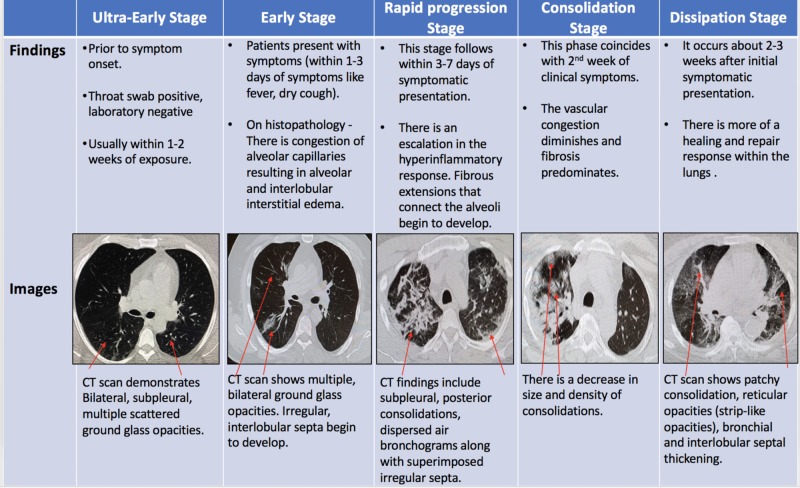
After its origin in Wuhan, China, coronavirus related respiratory illness spread across the globe, being declared as a pandemic by WHO on March 13, 2020. Because it is acquired via respiratory droplets, community spread is responsible for the recent global crisis. The current diagnostic options include real-time polymerase chain reaction (RT-PCR) and a few serology tests, including but not limited to the recently approved five minutes serology tests. The disease presents as a lower respiratory tract illness. Anecdotal experiences have shown that imaging characteristics are crucial to diagnosis as radiological evidence of disease appears prior to clinical manifestations and tends to evolve over time, which can be useful in predicting the stage of the disease. CT scan is more sensitive than a chest X-ray in highlighting these changes.
自新冠病毒在中国武汉出现后,与冠状病毒相关的呼吸道疾病在全球蔓延,世界卫生组织于2020年3月13日宣布其为大流行病。由于它是通过呼吸道飞沫传播的,社区传播是导致近期全球危机的原因。目前的诊断方法包括实时聚合酶链反应(RT-PCR)和一些血清学检测,包括但不限于最近批准的五分钟血清学检测。该疾病表现为下呼吸道疾病。轶事经验表明,影像学特征对诊断至关重要,因为疾病的放射学证据在临床表现之前就已出现,并且往往会随时间演变,这有助于预测疾病的阶段。在突出这些变化方面,CT扫描比胸部X光更敏感。