University of Toronto Mississauga, Ontario, Canada.
Department of Biological Sciences, Brock University, St. Catharines, Ontario, Canada.
Genome Biol Evol. 2020 Aug 1;12(8):1217-1239. doi: 10.1093/gbe/evaa097.
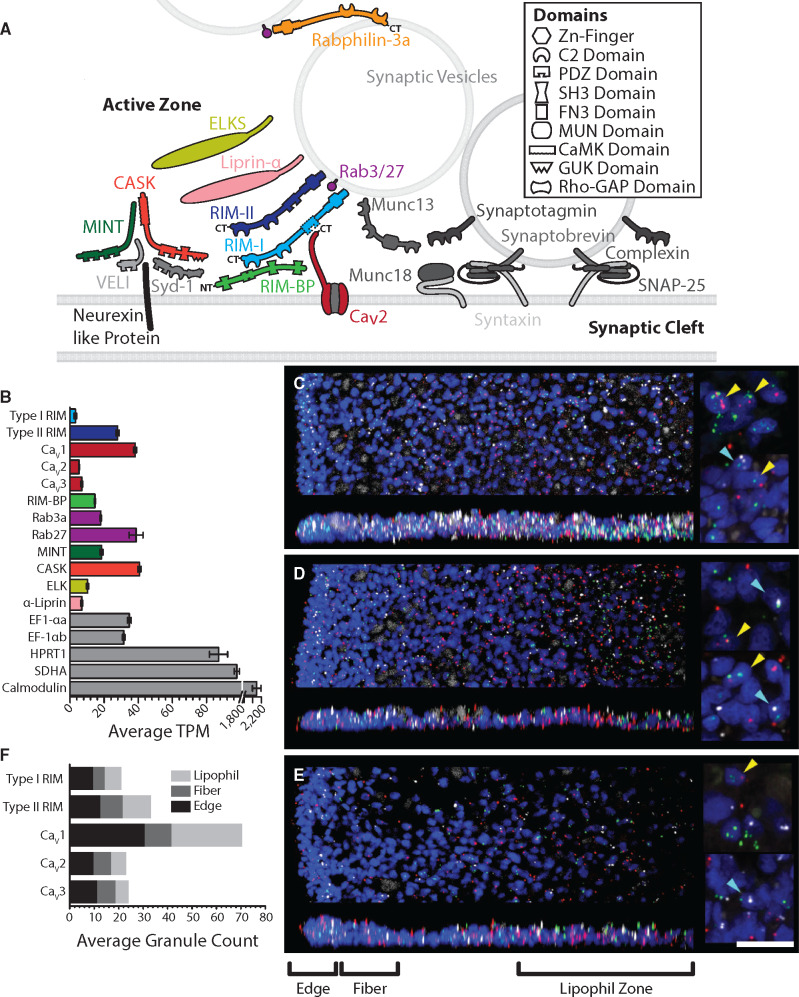
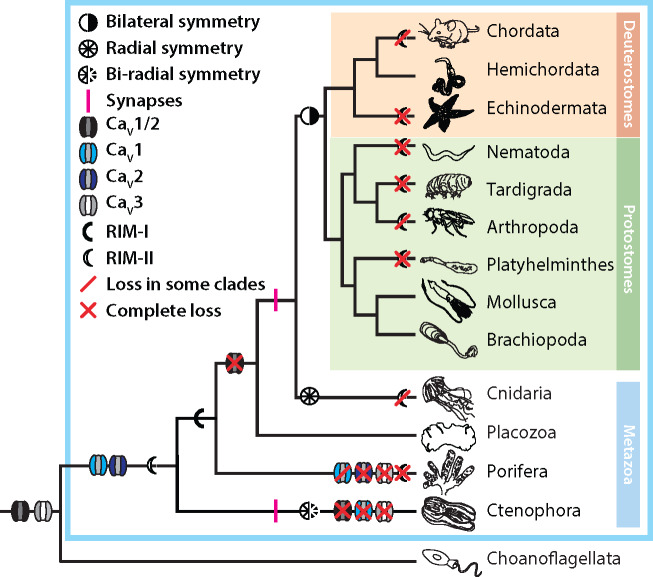
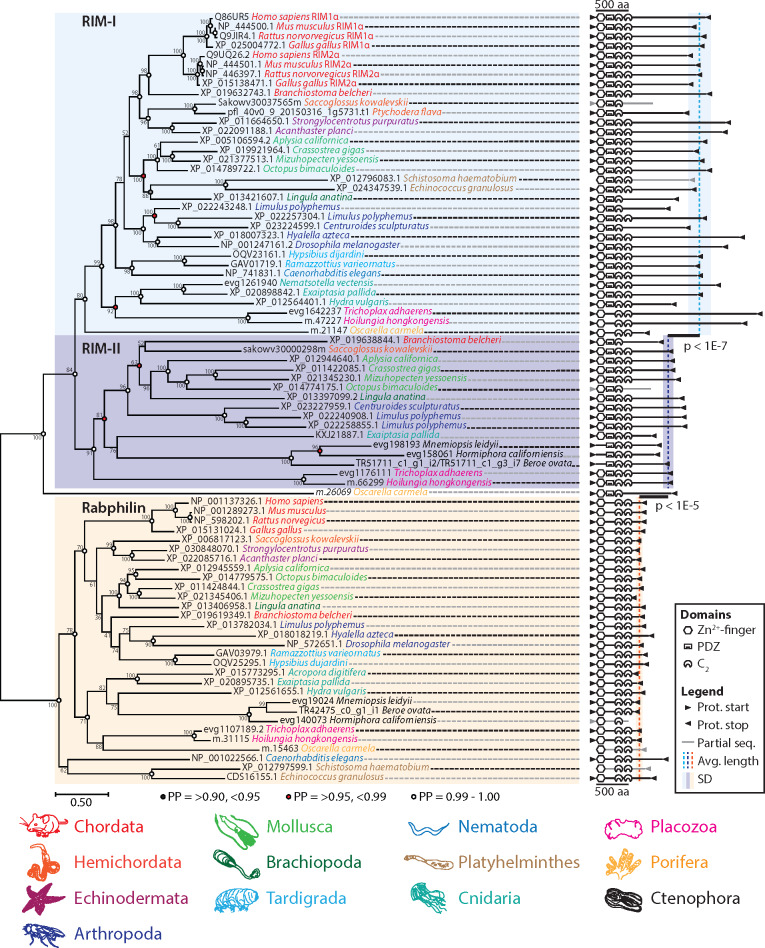
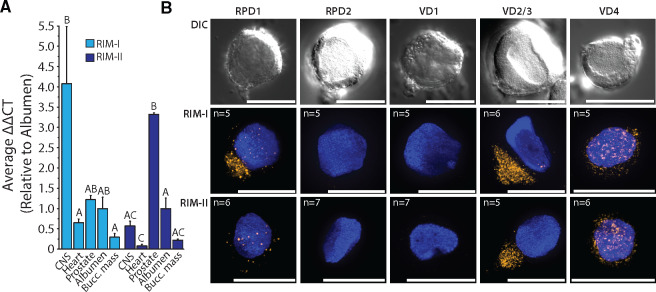
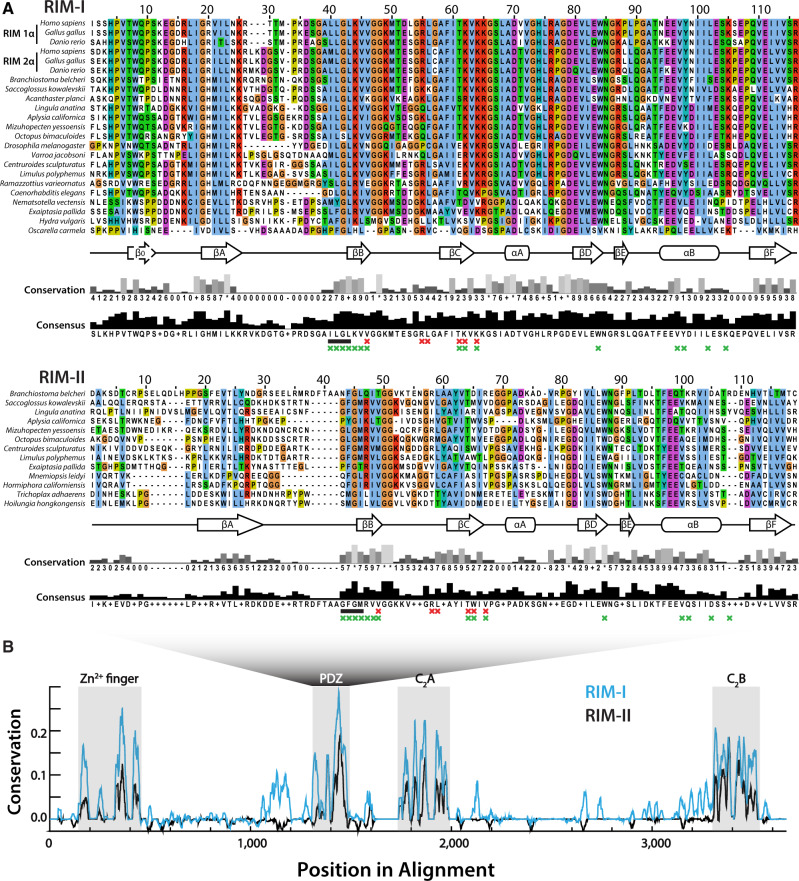
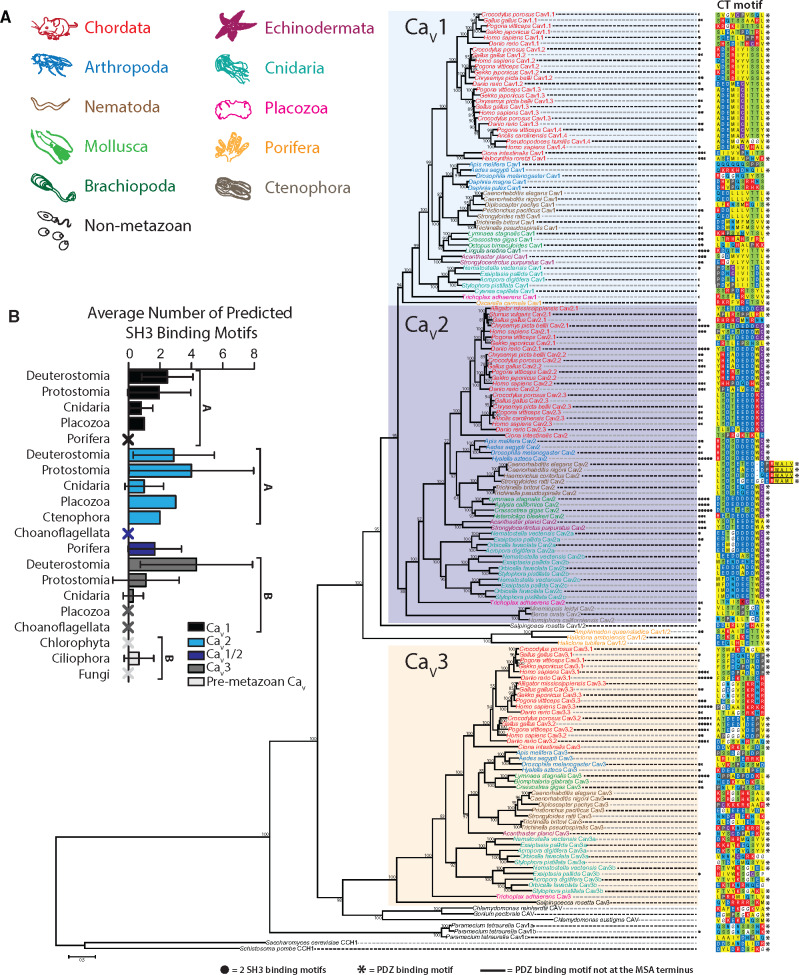
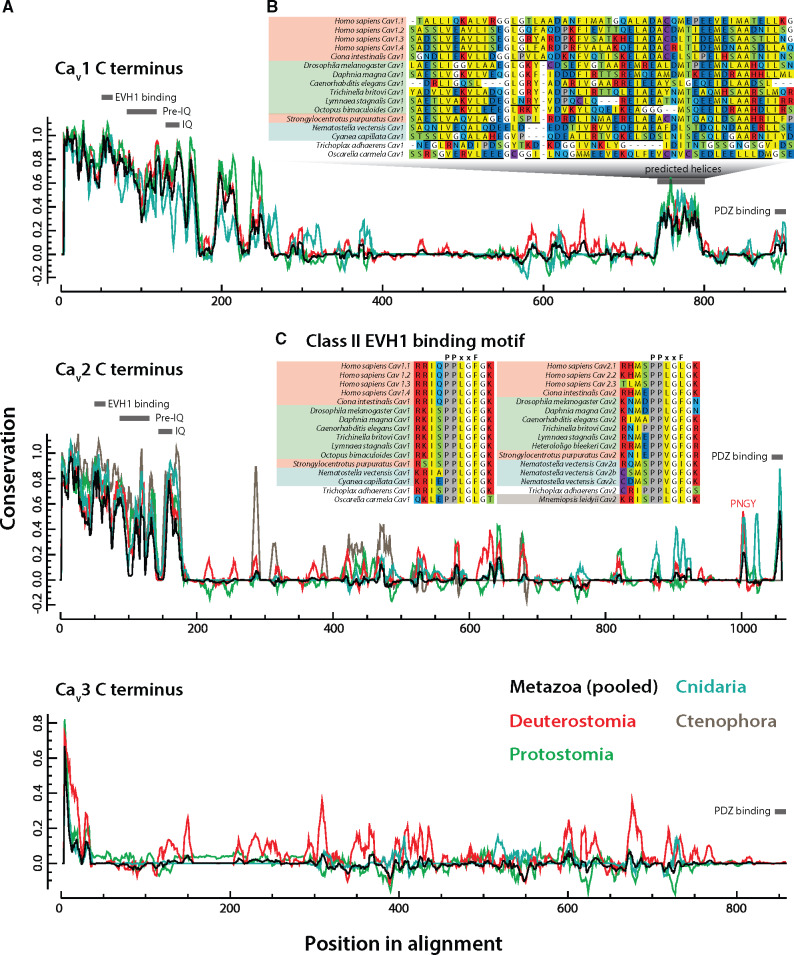
The precise localization of CaV2 voltage-gated calcium channels at the synapse active zone requires various interacting proteins, of which, Rab3-interacting molecule or RIM is considered particularly important. In vertebrates, RIM interacts with CaV2 channels in vitro via a PDZ domain that binds to the extreme C-termini of the channels at acidic ligand motifs of D/E-D/E/H-WC-COOH, and knockout of RIM in vertebrates and invertebrates disrupts CaV2 channel synaptic localization and synapse function. Here, we describe a previously uncharacterized clade of RIM proteins bearing domain architectures homologous to those of known RIM homologs, but with some notable differences including key amino acids associated with PDZ domain ligand specificity. This novel RIM emerged near the stem lineage of metazoans and underwent extensive losses, but is retained in select animals including the early-diverging placozoan Trichoplax adhaerens, and molluscs. RNA expression and localization studies in Trichoplax and the mollusc snail Lymnaea stagnalis indicate differential regional/tissue type expression, but overlapping expression in single isolated neurons from Lymnaea. Ctenophores, the most early-diverging animals with synapses, are unique among animals with nervous systems in that they lack the canonical RIM, bearing only the newly identified homolog. Through phylogenetic analysis, we find that CaV2 channel D/E-D/E/H-WC-COOH like PDZ ligand motifs were present in the common ancestor of cnidarians and bilaterians, and delineate some deeply conserved C-terminal structures that distinguish CaV1 from CaV2 channels, and CaV1/CaV2 from CaV3 channels.
钙通道电压门控钙通道(CaV2)在突触活性区的精确定位需要各种相互作用的蛋白,其中 Rab3 相互作用分子(RIM)被认为尤为重要。在脊椎动物中,RIM 通过 PDZ 结构域与 CaV2 通道相互作用,该结构域与通道的极端 C 末端结合,在酸性配体基序 D/E-D/E/H-WC-COOH 处结合 PDZ 结构域配体特异性相关的关键氨基酸,脊椎动物和无脊椎动物中 RIM 的敲除会破坏 CaV2 通道突触定位和突触功能。在这里,我们描述了一个以前未被表征的 RIM 蛋白家族,其结构域架构与已知的 RIM 同源物相似,但存在一些显著差异,包括与 PDZ 结构域配体特异性相关的关键氨基酸。这个新的 RIM 出现在后生动物的主干谱系附近,并经历了广泛的丢失,但在一些选定的动物中保留下来,包括早期分化的栉水母 Trichoplax adhaerens 和软体动物。在 Trichoplax 和软体动物蜗牛 Lymnaea stagnalis 中的 RNA 表达和定位研究表明,存在差异的区域/组织类型表达,但在 Lymnaea 的单个孤立神经元中存在重叠表达。栉水母是具有突触的最早分化的动物,与具有神经系统的动物不同,它们缺乏经典的 RIM,只具有新鉴定的同源物。通过系统发育分析,我们发现 CaV2 通道 D/E-D/E/H-WC-COOH 样 PDZ 配体基序存在于刺胞动物和两侧对称动物的共同祖先中,并描绘了一些深度保守的 C 末端结构,这些结构区分了 CaV1 与 CaV2 通道,以及 CaV1/CaV2 与 CaV3 通道。