Institute for Genome Sciences, University of Maryland School of Medicine, Baltimore, MD 21201.
Eugene Bell Center for Regenerative Biology and Tissue Engineering, Marine Biological Laboratory, Woods Hole, MA 02543.
Proc Natl Acad Sci U S A. 2022 Jul 12;119(28):e2122301119. doi: 10.1073/pnas.2122301119. Epub 2022 Jul 8.
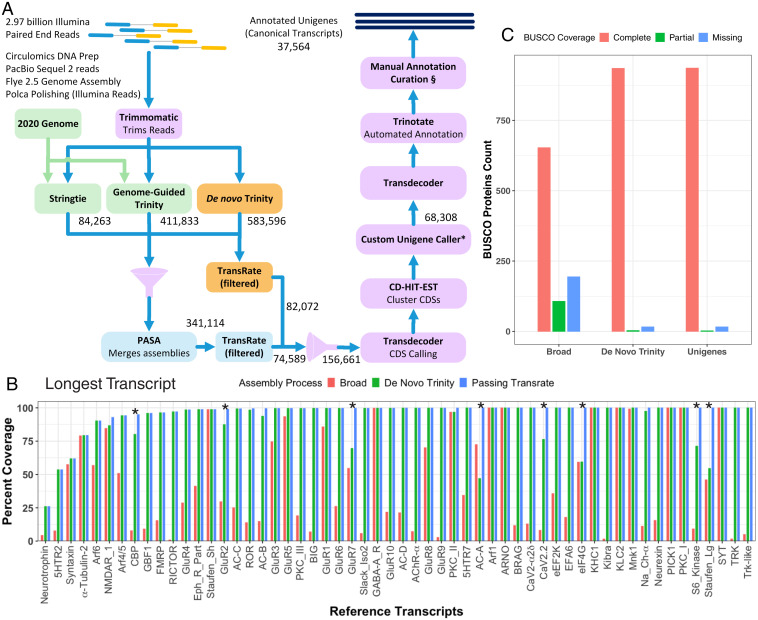
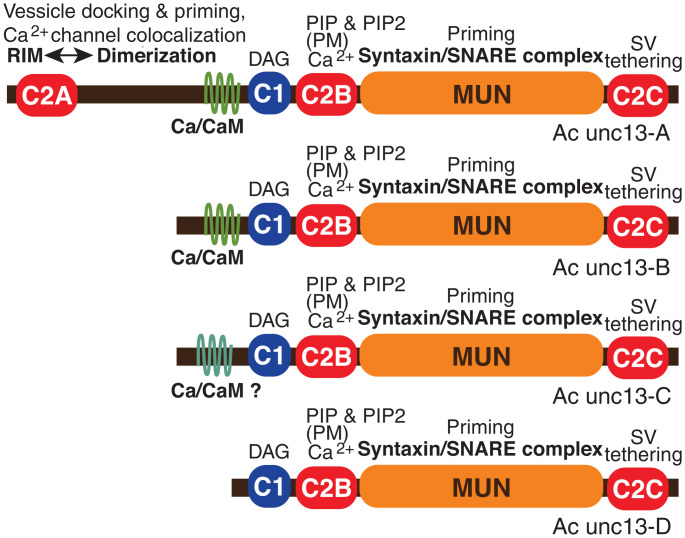
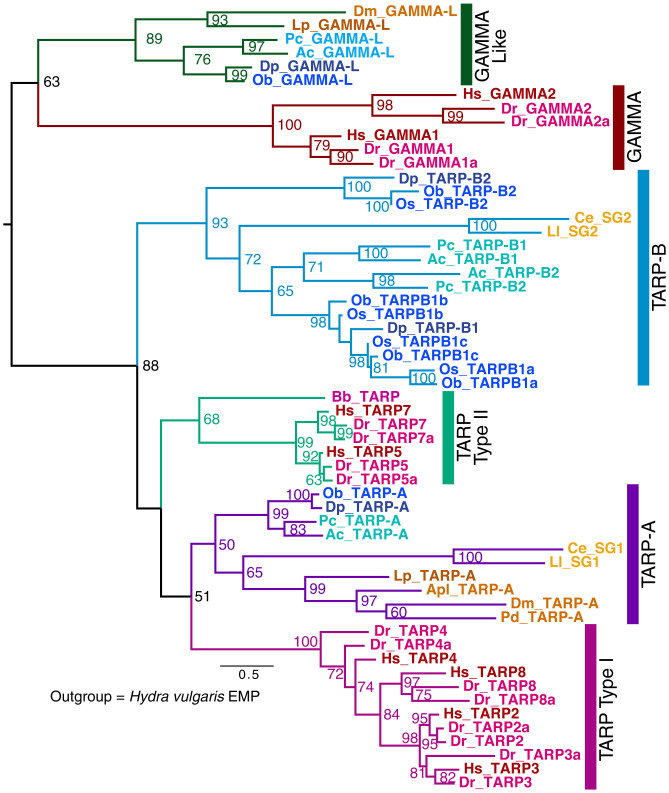
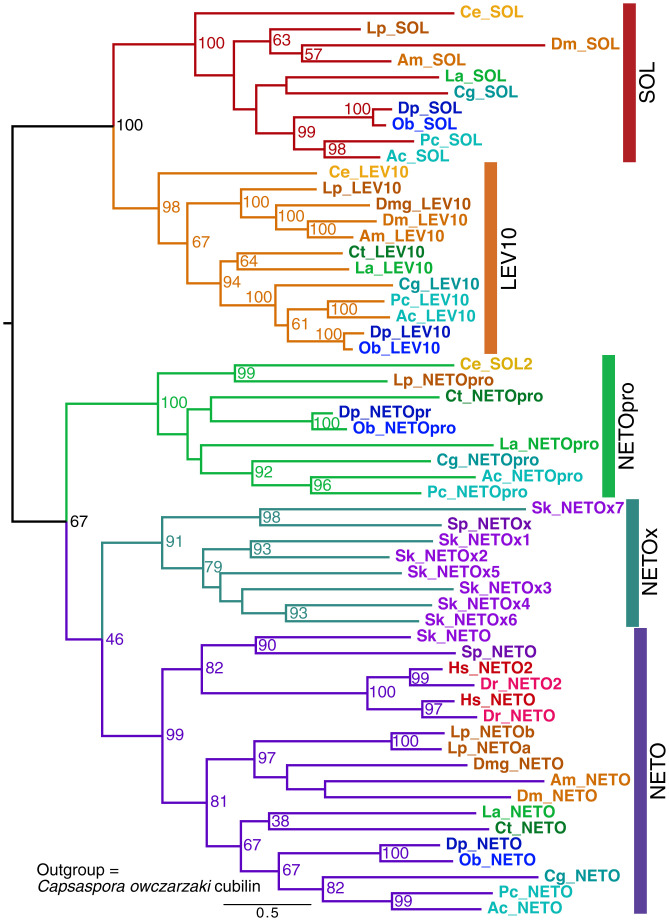
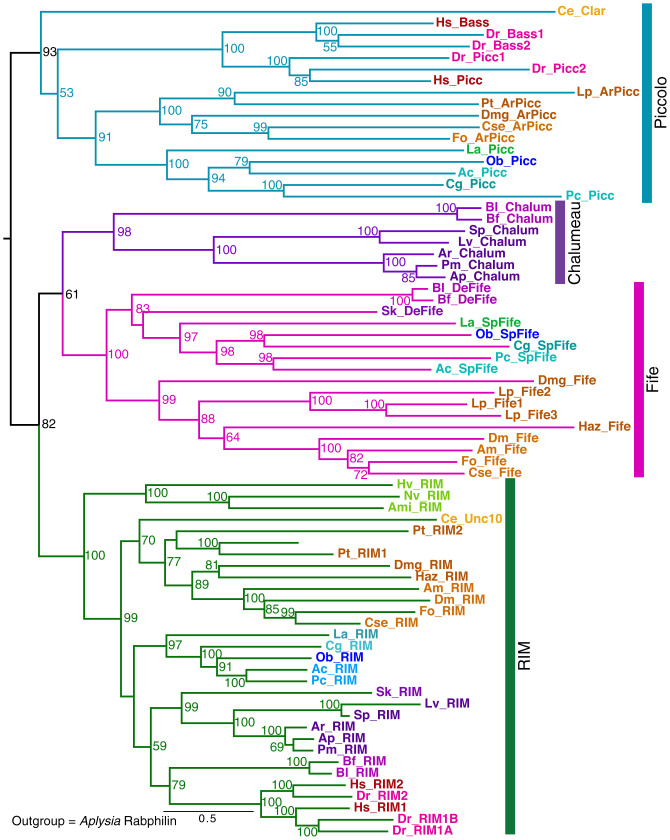
The gastropod mollusk is an important model for cellular and molecular neurobiological studies, particularly for investigations of molecular mechanisms of learning and memory. We developed an optimized assembly pipeline to generate an improved nervous system transcriptome. This improved transcriptome enabled us to explore the evolution of cognitive capacity at the molecular level. Were there evolutionary expansions of neuronal genes between this relatively simple gastropod (20,000 neurons) and (500 million neurons), the invertebrate with the most elaborate neuronal circuitry and greatest behavioral complexity? Are the tremendous advances in cognitive power in vertebrates explained by expansion of the synaptic proteome that resulted from multiple rounds of whole genome duplication in this clade? Overall, the complement of genes linked to neuronal function is similar between and As expected, a number of synaptic scaffold proteins have more isoforms in humans than in or . However, several scaffold families present in mollusks and other protostomes are absent in vertebrates, including the Fifes, Lev10s, SOLs, and a NETO family. Thus, whereas vertebrates have more scaffold isoforms from select families, invertebrates have additional scaffold protein families not found in vertebrates. This analysis provides insights into the evolution of the synaptic proteome. Both synaptic proteins and synaptic plasticity evolved gradually, yet the last deuterostome-protostome common ancestor already possessed an elaborate suite of genes associated with synaptic function, and critical for synaptic plasticity.
腹足纲软体动物是细胞和分子神经生物学研究的重要模型,尤其适用于研究学习和记忆的分子机制。我们开发了一个优化的组装管道来生成改进的神经系统转录组。这个改进的转录组使我们能够在分子水平上探索认知能力的进化。在这种相对简单的腹足纲动物(20000 个神经元)和(5 亿个神经元)之间,是否存在神经元基因的进化扩张,后者具有最精细的神经元回路和最复杂的行为?脊椎动物认知能力的巨大进步是否可以用这个谱系中多次全基因组复制导致的突触蛋白组的扩张来解释?总的来说,与神经元功能相关的基因在 和 之间是相似的。不出所料,许多突触支架蛋白在人类中的异构体比在 或 中更多。然而,在脊椎动物中不存在几种在软体动物和其他原口动物中存在的支架家族,包括 Fifes、Lev10s、SOLs 和一个 NETO 家族。因此,虽然脊椎动物具有更多来自特定家族的支架异构体,但无脊椎动物具有脊椎动物中未发现的额外支架蛋白家族。这项分析为突触蛋白组的进化提供了线索。突触蛋白和突触可塑性都逐渐进化,但最后一个后口动物-原口动物的共同祖先已经拥有了一套与突触功能相关的复杂基因,这对突触可塑性至关重要。