Bioinformatics and Systems Biology Graduate Program, University of California, San Diego, 9500 Gilman Drive, La Jolla, CA, 92093-0760, USA.
Department of Pediatrics, University of California, San Diego, 9500 Gilman Drive, La Jolla, CA, 92093-0760, USA.
NPJ Syst Biol Appl. 2020 May 15;6(1):14. doi: 10.1038/s41540-020-0135-y.
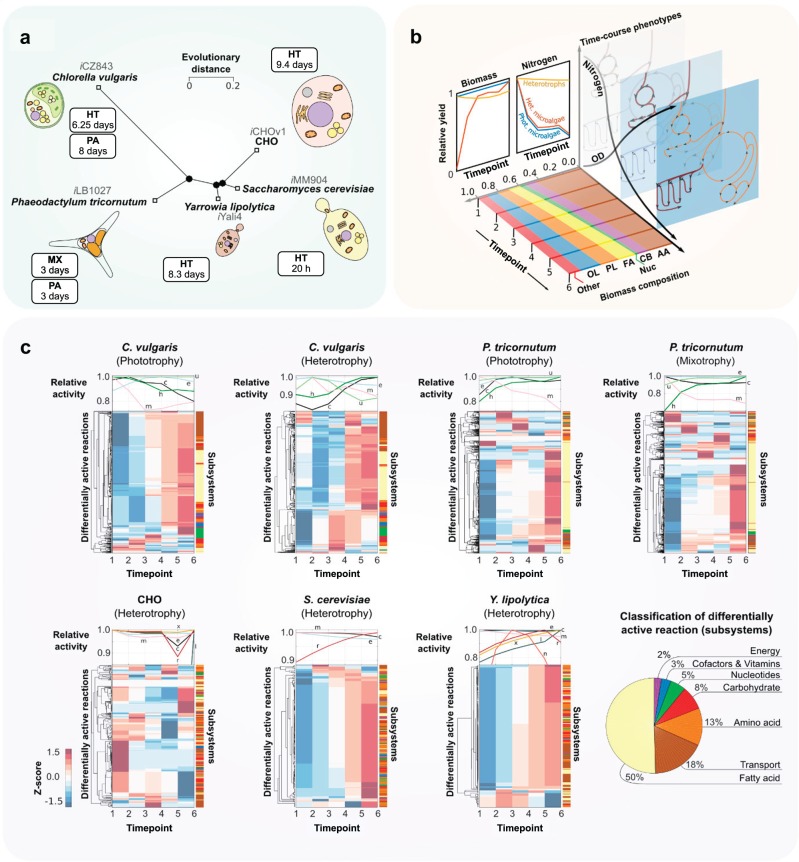
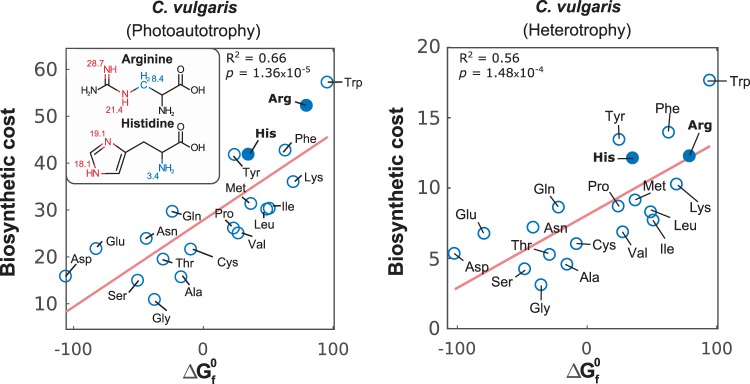
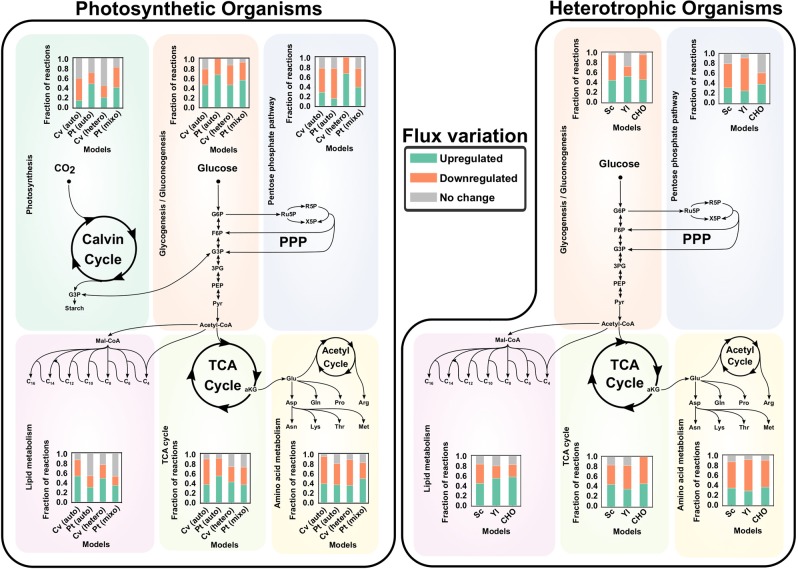
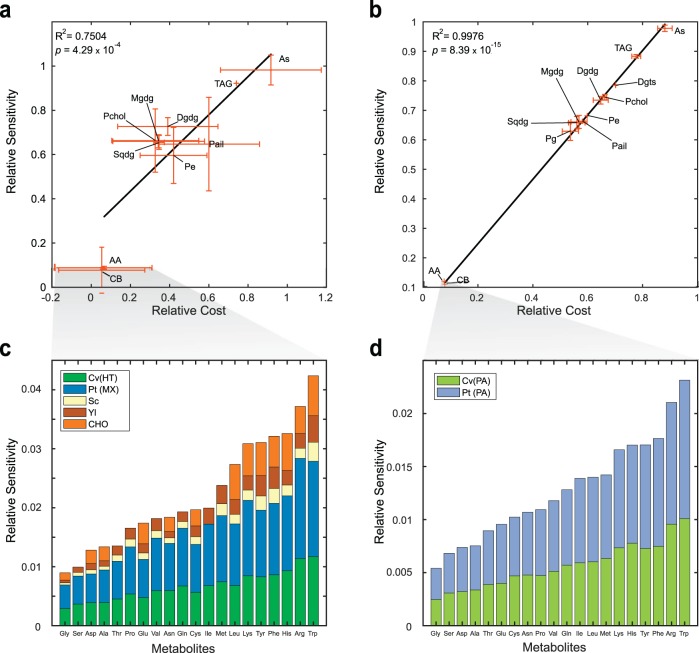
Cells can sense changes in their extracellular environment and subsequently adapt their biomass composition. Nutrient abundance defines the capability of the cell to produce biomass components. Under nutrient-limited conditions, resource allocation dramatically shifts to carbon-rich molecules. Here, we used dynamic biomass composition data to predict changes in growth and reaction flux distributions using the available genome-scale metabolic models of five eukaryotic organisms (three heterotrophs and two phototrophs). We identified temporal profiles of metabolic fluxes that indicate long-term trends in pathway and organelle function in response to nitrogen depletion. Surprisingly, our calculations of model sensitivity and biosynthetic cost showed that free energy of biomass metabolites is the main driver of biosynthetic cost and not molecular weight, thus explaining the high costs of arginine and histidine. We demonstrated how metabolic models can accurately predict the complexity of interwoven mechanisms in response to stress over the course of growth.
细胞能够感知细胞外环境的变化,并随后调整其生物量组成。营养物质的丰度决定了细胞生产生物量成分的能力。在营养受限的条件下,资源分配会急剧转向富含碳的分子。在这里,我们使用动态生物量组成数据,使用五个真核生物(三种异养生物和两种光合生物)的可用基因组规模代谢模型来预测生长和反应通量分布的变化。我们确定了代谢通量的时间分布,这些分布表明了在氮耗尽时,途径和细胞器功能的长期趋势。令人惊讶的是,我们对模型敏感性和生物合成成本的计算表明,生物量代谢物的自由能是生物合成成本的主要驱动因素,而不是分子量,从而解释了精氨酸和组氨酸的高成本。我们展示了代谢模型如何能够准确预测在生长过程中应对压力时交织机制的复杂性。