Division of Cancer and Stem Cells, Nottingham Breast Cancer Research Centre, Biodiscovery Institute, University of Nottingham, University Park, Nottingham, NG7 2RD, UK.
Radiation Biology Section, Biomedical Physics Department, King Faisal Specialist Hospital and Research Centre, Riyadh, Kingdom of Saudi Arabia.
Mol Neurobiol. 2020 Jul;57(7):2889-2901. doi: 10.1007/s12035-020-01928-z. Epub 2020 May 16.
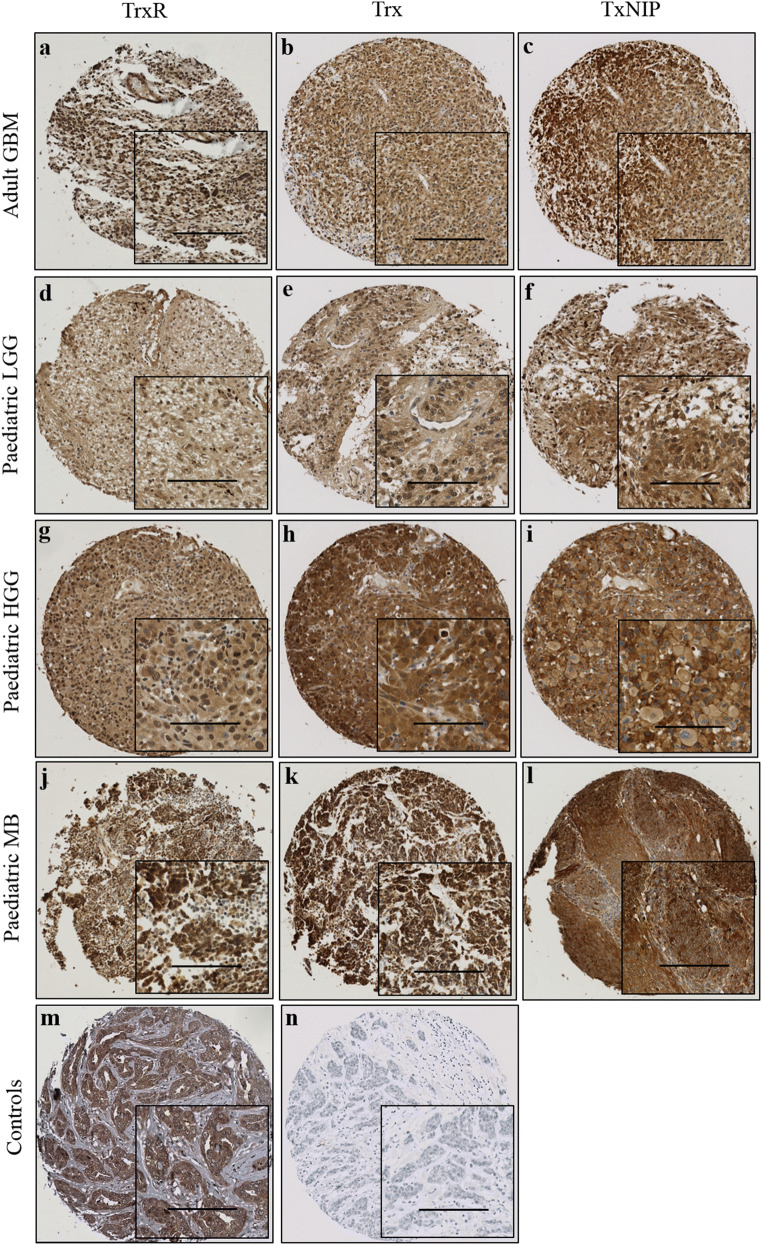
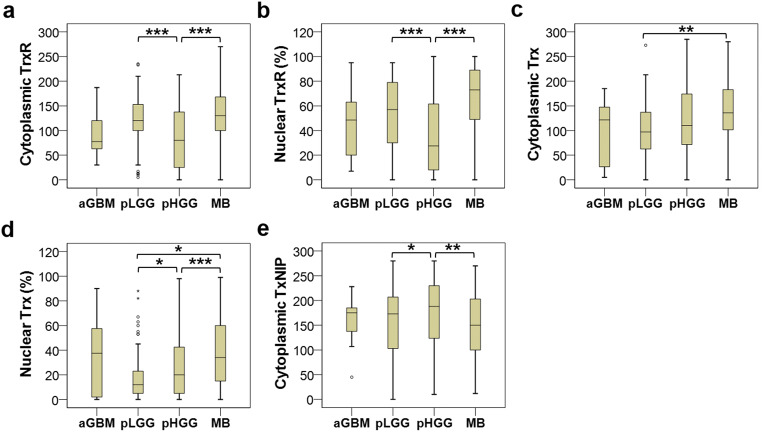
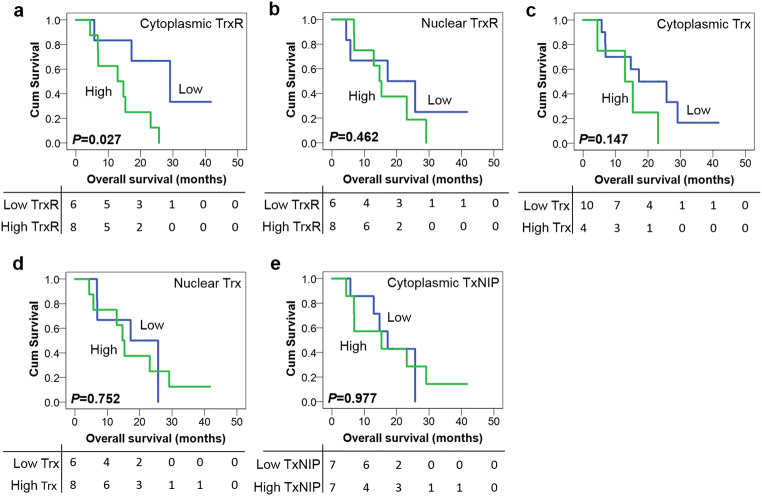
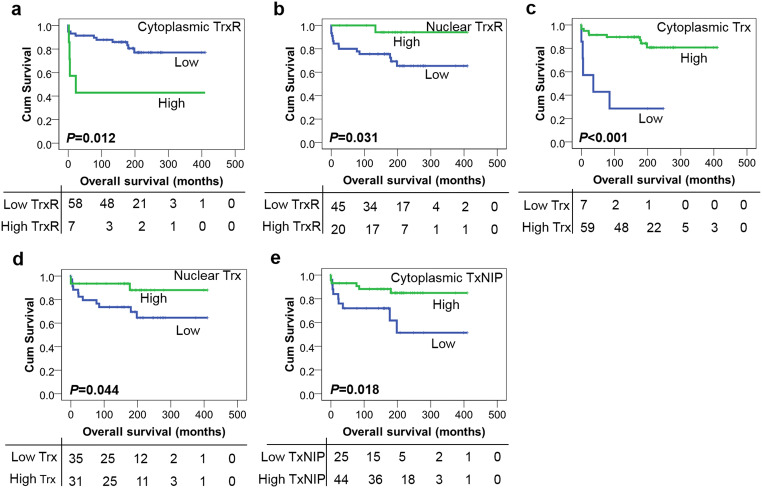
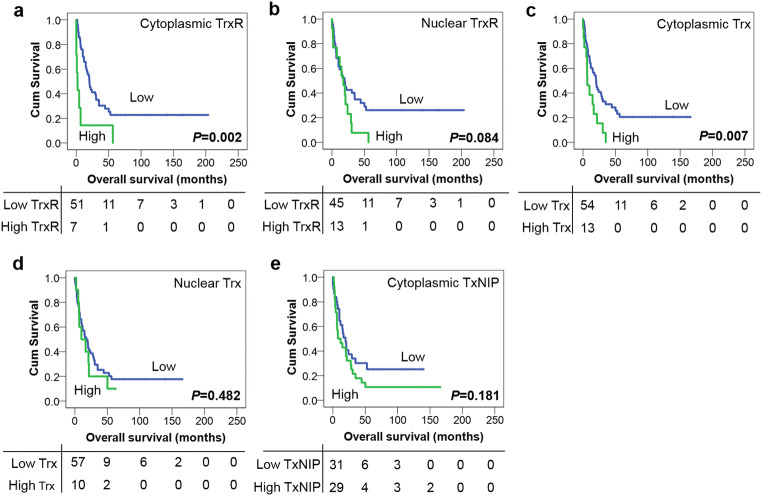
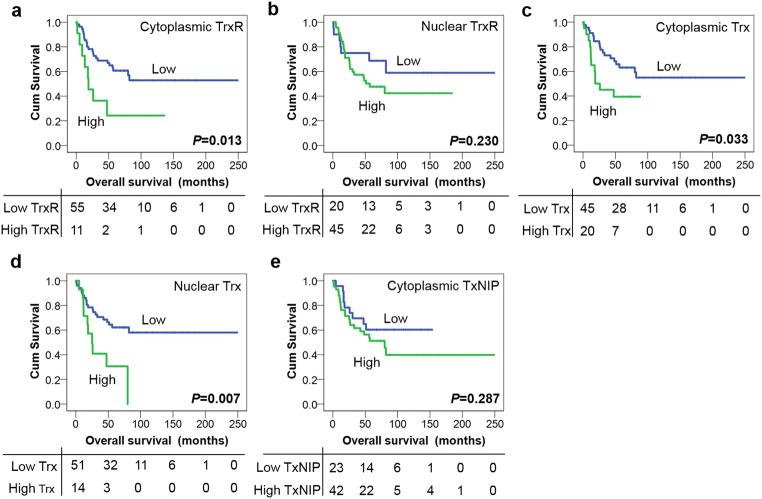
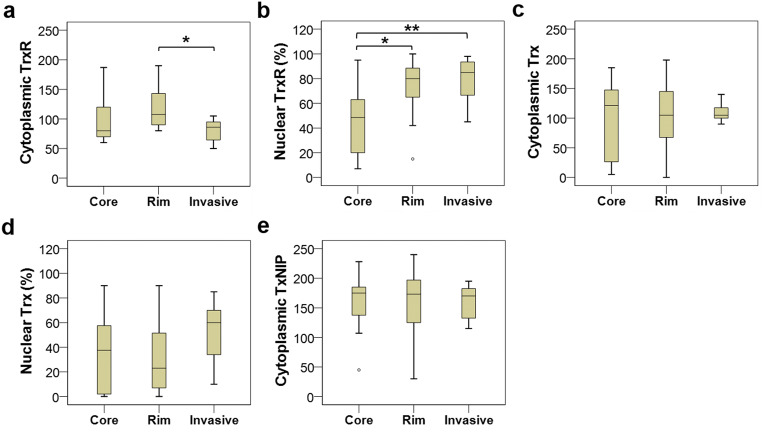
The thioredoxin (Trx) system is an important enzyme family that regulates cellular redox homeostasis. Protein expression of Trx system family members has been assessed in various cancers and linked to various clinicopathological variables, disease progression, treatment response and survival outcomes but information is lacking in brain tumours. Expression of the system was therefore examined, by immunohistochemistry in different brain tumour types, adult and paediatric cases, to determine if expression was of importance to clinical outcome. Trx system proteins were expressed, to variable levels, across all brain tumour types with significant variations in expression between different tumour types/grades/regions. High Trx reductase (TrxR) expression was linked to worse prognosis across all cohorts. High cytoplasmic TrxR expression was significantly associated with adverse overall survival (OS) in adult glioblastoma (P = 0.027) and paediatric low-grade glioma (LGG) patients (P = 0.012). High expression of nuclear TrxR, cytoplasmic and nuclear Trx and Trx-interacting protein (TxNIP) was associated with improved OS in paediatric LGGs (P = 0.031, P < 0.001, P = 0.044 and P = 0.018, respectively). For patients with high-grade gliomas, both high cytoplasmic TrxR and Trx expression were associated with poor OS (P = 0.002 and P = 0.007, respectively). In medulloblastoma, high expression of cytoplasmic TrxR and Trx and nuclear Trx was associated with worse prognosis (P = 0.013, P = 0.033 and P = 0.007, respectively); with cytoplasmic TrxR and nuclear Trx remaining so in multivariate analysis (P = 0.009 and P = 0.013, respectively). The consistent finding that high levels of cytoplasmic TrxR are associated with a worse prognosis across all cohorts suggests that TrxR is an important therapeutic target in brain cancers.
硫氧还蛋白(Trx)系统是调节细胞氧化还原稳态的重要酶家族。Trx 系统家族成员的蛋白表达已在各种癌症中进行评估,并与各种临床病理变量、疾病进展、治疗反应和生存结果相关,但在脑肿瘤中信息缺失。因此,通过免疫组织化学检查了不同脑肿瘤类型、成人和儿科病例中的系统表达,以确定表达对临床结果是否重要。Trx 系统蛋白在所有脑肿瘤类型中均有不同程度的表达,不同肿瘤类型/分级/区域之间的表达存在显著差异。所有队列中高 Trx 还原酶(TrxR)表达与预后不良相关。细胞质 TrxR 高表达与成人胶质母细胞瘤(P=0.027)和儿科低级别胶质瘤(LGG)患者的不良总生存(OS)显著相关(P=0.012)。核 TrxR、细胞质和核 Trx 以及 Trx 相互作用蛋白(TxNIP)的高表达与儿科 LGG 患者的 OS 改善相关(P=0.031、P<0.001、P=0.044 和 P=0.018)。对于高级别胶质瘤患者,细胞质 TrxR 和 Trx 高表达均与 OS 不良相关(P=0.002 和 P=0.007)。在髓母细胞瘤中,细胞质 TrxR、Trx 和核 Trx 的高表达与预后不良相关(P=0.013、P=0.033 和 P=0.007);在多变量分析中,细胞质 TrxR 和核 Trx 仍然如此(P=0.009 和 P=0.013)。高细胞质 TrxR 水平与所有队列中较差预后相关的一致发现表明,TrxR 是脑癌的一个重要治疗靶点。