Wu Yan, Liu Yu, Sun Chenglong, Wang Hao, Zhao Sha, Li Wei, Chen Bin, Wang Lei, Ye Lingyun, He Yayi, Zhou Caicun
Department of Medical Oncology, Shanghai Pulmonary Hospital, Tongji University Medical School Cancer Institute, Tongji University School of Medicine, Shanghai 200433, China.
Department of Medical School, Tongji University, Shanghai 200433, China.
Transl Lung Cancer Res. 2020 Apr;9(2):393-400. doi: 10.21037/tlcr.2020.03.20.
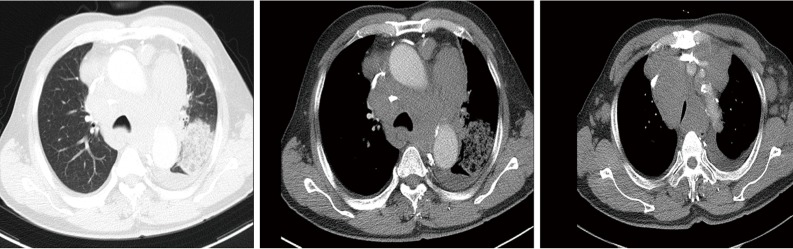
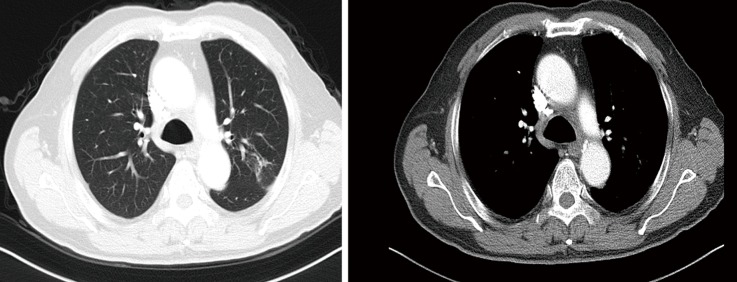
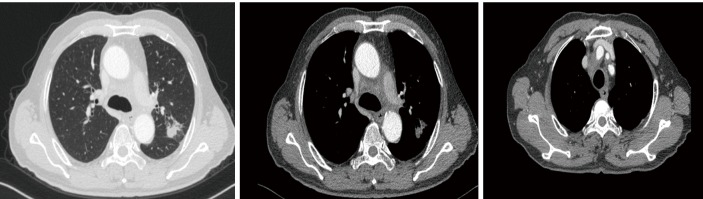
Small cell lung cancer (SCLC), an aggressive disease characterized by rapid progression, early relapse and widespread metastasis, accounts for about 13-15% of lung cancer cases. Despite its initial sensitivity to chemotherapy and radiotherapy, SCLC commonly develops resistance to these treatments and, as such, has high recurrence rates. In recent years, immunotherapy has shown promising antitumor activity and the approach to tumor treatment has been changed, in particular, by programmed death receptor-1/ligand 1 (PD-1/L1) and cytotoxic T-lymphocyte-associated antigen-4 (CTLA-4) checkpoint inhibitors. SCLC has high immunogenicity, a high mutation burden, and other favorable immune factors, meaning immune checkpoint inhibitors (ICIs) could become a breakthrough in the treatment of SCLC. In our case report, we found that ICIs resulted in partial response (PR), and in our review, we focused on clinical trials of immunotherapy, especially in relation to ICIs in SCLC.
小细胞肺癌(SCLC)是一种侵袭性疾病,具有进展迅速、早期复发和广泛转移的特点,约占肺癌病例的13-15%。尽管SCLC最初对化疗和放疗敏感,但它通常会对这些治疗产生耐药性,因此复发率很高。近年来,免疫疗法已显示出有前景的抗肿瘤活性,特别是程序性死亡受体-1/配体1(PD-1/L1)和细胞毒性T淋巴细胞相关抗原4(CTLA-4)检查点抑制剂改变了肿瘤治疗方法。SCLC具有高免疫原性、高突变负荷和其他有利的免疫因素,这意味着免疫检查点抑制剂(ICIs)可能成为SCLC治疗的一个突破。在我们的病例报告中,我们发现ICIs导致了部分缓解(PR),在我们的综述中,我们关注免疫疗法的临床试验,特别是与SCLC中的ICIs相关的试验。