Department of Ultrasound Medicine, The Third Affiliated Hospital of Guangzhou Medical University, 63 Duobao Road, Guangzhou, 510000 Guangdong, China.
Laboratory of Ultrasound Medicine and Artificial Intelligence, Liwan Experimental Center, The Liwan Hospital of the Third Affiliated Hospital of Guangzhou Medical University, 35 Liwan Road, Guangzhou, 510000 Guangdong, China.
Biomed Res Int. 2020 Jan 10;2020:1763803. doi: 10.1155/2020/1763803. eCollection 2020.
The incidence of superficial organ diseases has increased rapidly in recent years. New methods such as computer-aided diagnosis (CAD) are widely used to improve diagnostic efficiency. Convolutional neural networks (CNNs) are one of the most popular methods, and further improvements of CNNs should be considered. This paper aims to develop a multiorgan CAD system based on CNNs for classifying both thyroid and breast nodules and investigate the impact of this system on the diagnostic efficiency of different preprocessing approaches.
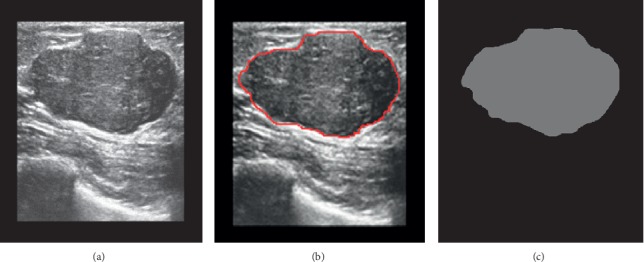
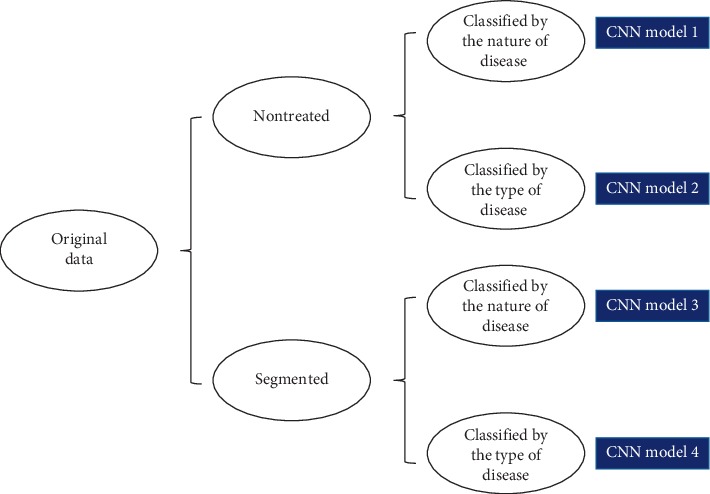
The training and validation sets comprised randomly selected thyroid and breast nodule images. The data were subgrouped into 4 models according to the different preprocessing methods (depending on segmentation and the classification method). A prospective data set was selected to verify the clinical value of the CNN model by comparison with ultrasound guidelines. Diagnostic efficiency was assessed based on receiver operating characteristic (ROC) curves.
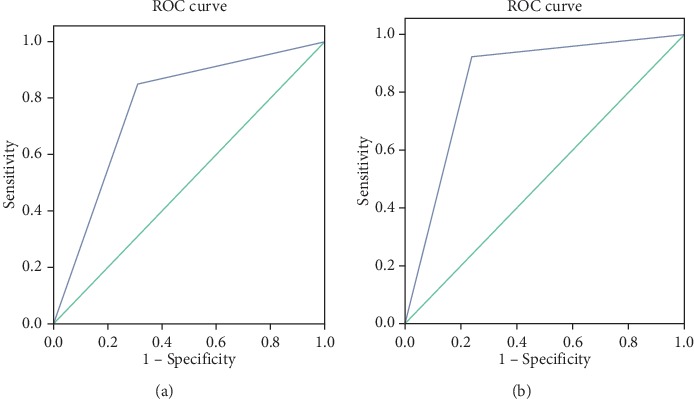
Among the 4 models, the CNN model using segmented images for classification achieved the best result. For the validation set, the sensitivity, specificity, positive predictive value (PPV), negative predictive value (NPV), accuracy, and area under the curve (AUC) of our CNN model were 84.9%, 69.0%, 62.5%, 88.2%, 75.0%, and 0.769, respectively. There was no statistically significant difference between the CNN model and the ultrasound guidelines. The combination of the two methods achieved superior diagnostic efficiency compared with their use individually.
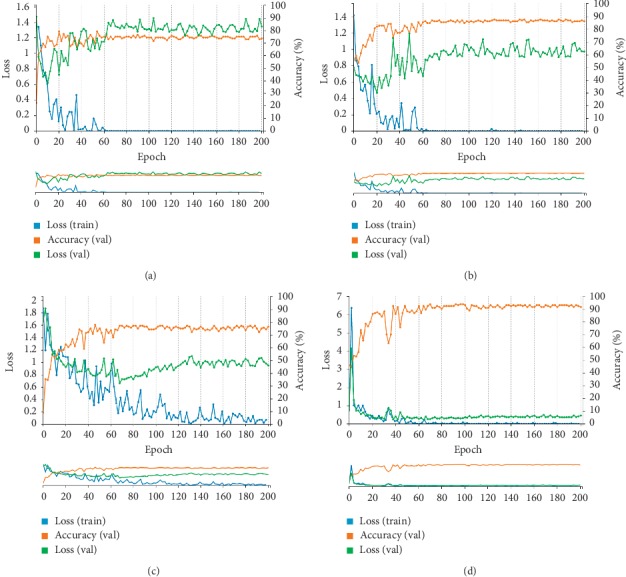
The study demonstrates the probability, feasibility, and clinical value of CAD in the ultrasound diagnosis of multiple organs. The use of segmented images and classification by the nature of the disease are the main factors responsible for the improvement of the CNN model. Moreover, the combination of the CNN model and ultrasound guidelines results in better diagnostic performance, which will contribute to the improved diagnostic efficiency of CAD systems.
近年来,浅层器官疾病的发病率迅速上升。计算机辅助诊断(CAD)等新方法被广泛用于提高诊断效率。卷积神经网络(CNN)是最受欢迎的方法之一,应考虑进一步改进 CNN。本文旨在开发一种基于 CNN 的多器官 CAD 系统,用于分类甲状腺和乳腺结节,并研究该系统对不同预处理方法诊断效率的影响。
训练集和验证集包括随机选择的甲状腺和乳腺结节图像。根据不同的预处理方法(取决于分割和分类方法)将数据分为 4 个模型。选择前瞻性数据集,通过与超声指南进行比较来验证 CNN 模型的临床价值。诊断效率基于受试者工作特征(ROC)曲线进行评估。
在 4 个模型中,使用分割图像进行分类的 CNN 模型取得了最佳结果。对于验证集,我们的 CNN 模型的灵敏度、特异性、阳性预测值(PPV)、阴性预测值(NPV)、准确性和曲线下面积(AUC)分别为 84.9%、69.0%、62.5%、88.2%、75.0%和 0.769。与超声指南相比,CNN 模型没有统计学上的显著差异。两种方法的结合比单独使用时具有更高的诊断效率。
本研究证明了 CAD 在多器官超声诊断中的可能性、可行性和临床价值。使用分割图像和按疾病性质进行分类是提高 CNN 模型的主要因素。此外,CNN 模型与超声指南的结合可提高诊断性能,从而提高 CAD 系统的诊断效率。