School of Electrical Engineering and Computer Science, University of Ottawa, Ottawa, ON K1N 6N5, Canada.
Int J Environ Res Public Health. 2020 May 14;17(10):3437. doi: 10.3390/ijerph17103437.
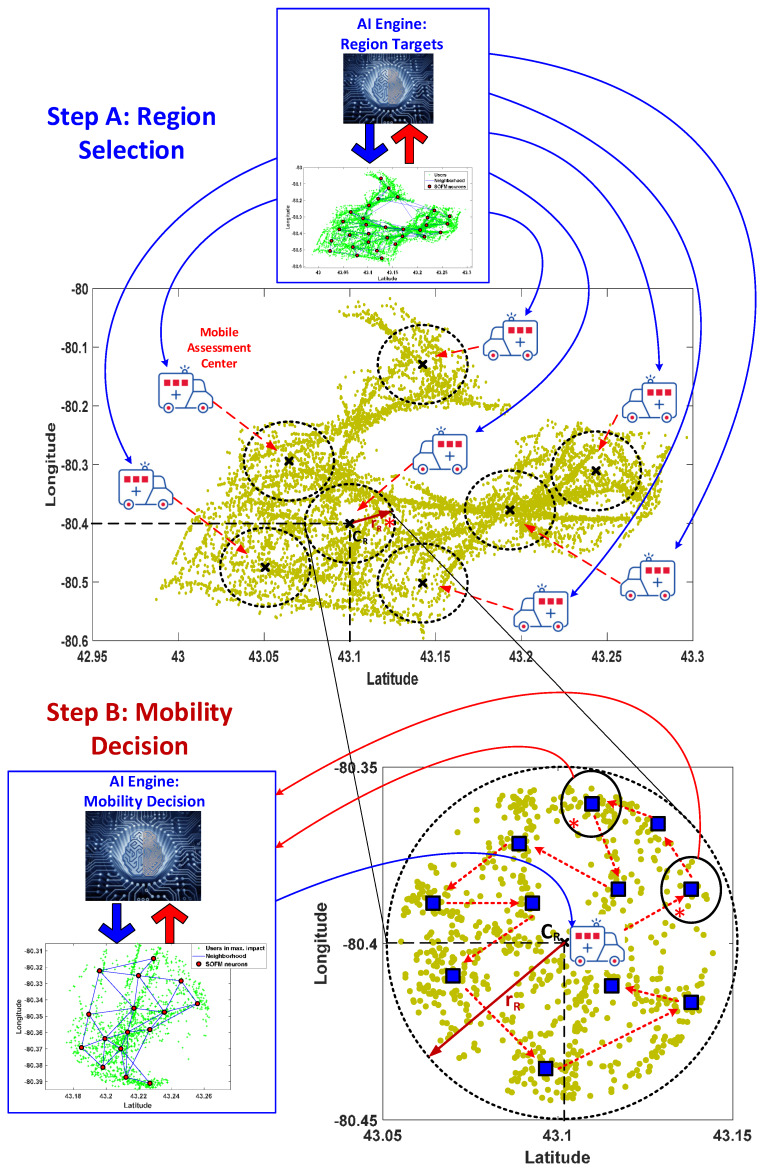
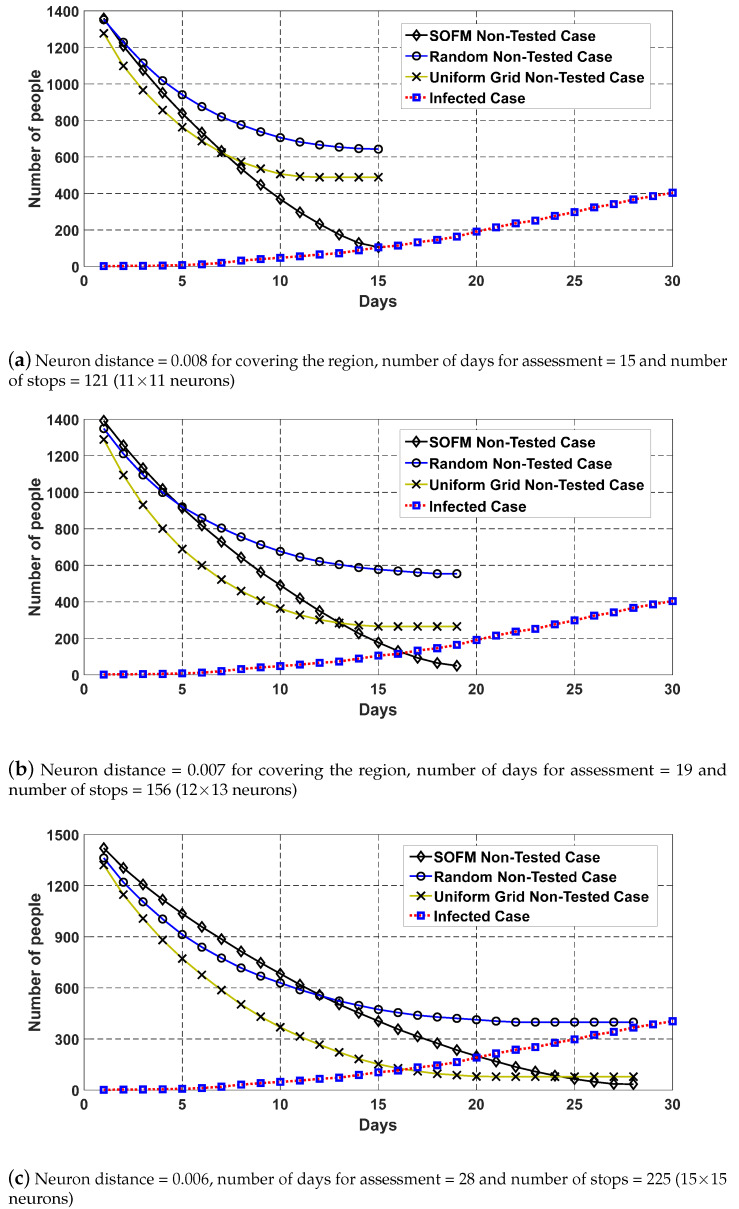
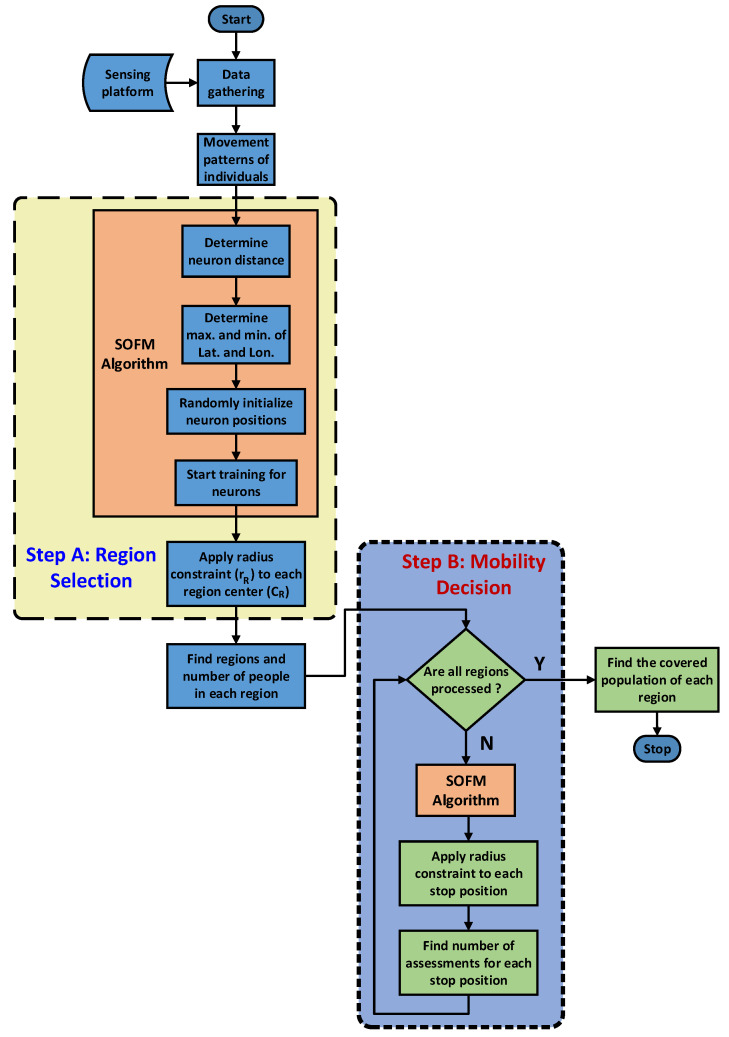
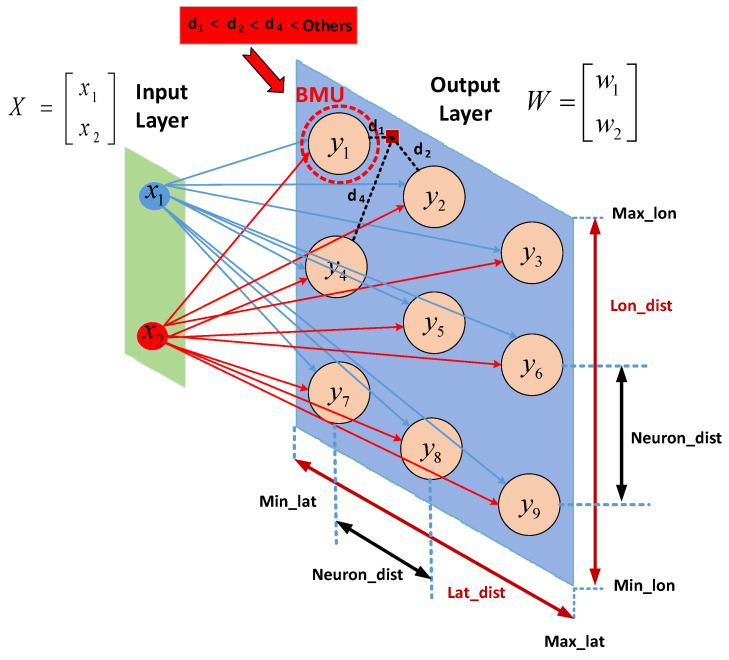
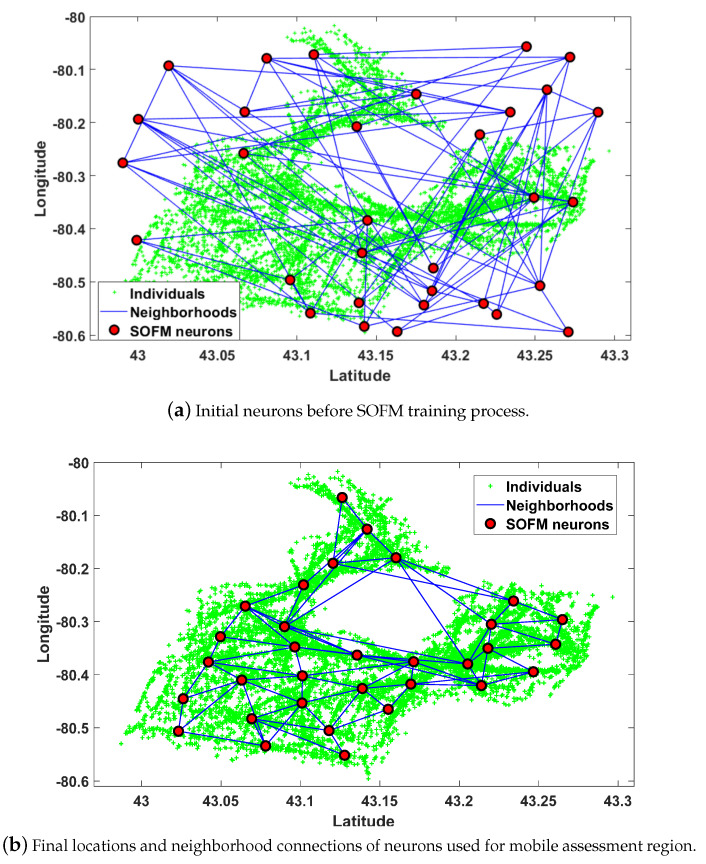
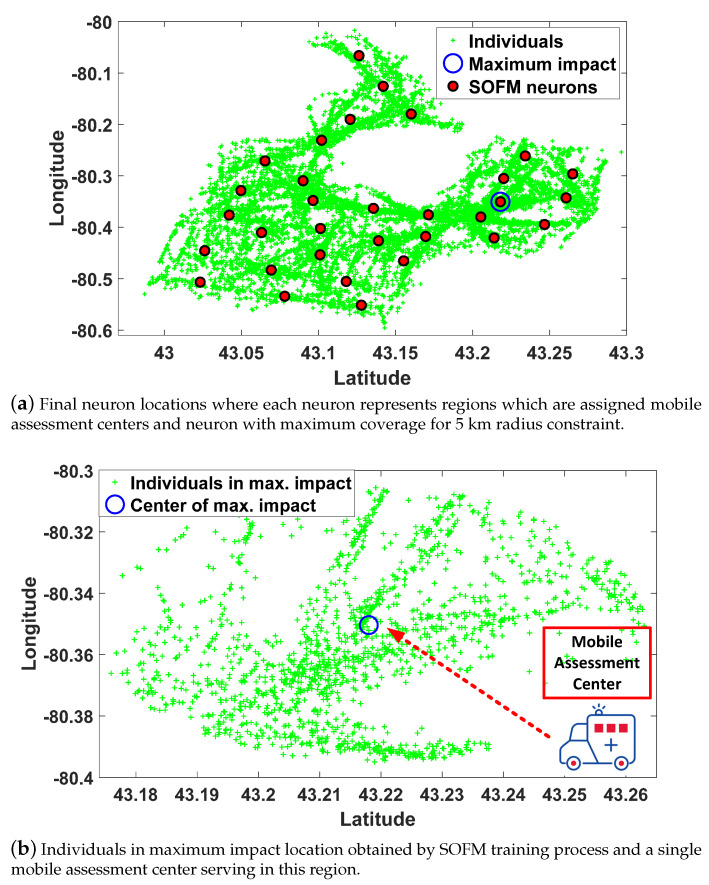
The global outbreak of the Coronavirus Disease 2019 (COVID-19) pandemic has uncovered the fragility of healthcare and public health preparedness and planning against epidemics/pandemics. In addition to the medical practice for treatment and immunization, it is vital to have a thorough understanding of community spread phenomena as related research reports 17.9-30.8% confirmed cases to remain asymptomatic. Therefore, an effective assessment strategy is vital to maximize tested population in a short amount of time. This article proposes an Artificial Intelligence (AI)-driven mobilization strategy for mobile assessment agents for epidemics/pandemics. To this end, a self-organizing feature map (SOFM) is trained by using data acquired from past mobile crowdsensing (MCS) campaigns to model mobility patterns of individuals in multiple districts of a city so to maximize the assessed population with minimum agents in the shortest possible time. Through simulation results for a real street map on a mobile crowdsensing simulator and considering the worst case analysis, it is shown that on the 15th day following the first confirmed case in the city under the risk of community spread, AI-enabled mobilization of assessment centers can reduce the unassessed population size down to one fourth of the unassessed population under the case when assessment agents are randomly deployed over the entire city.
2019 年冠状病毒病(COVID-19)大流行在全球范围内的爆发暴露了医疗保健和公共卫生防范和应对流行病/大流行的脆弱性。除了治疗和免疫接种的医疗实践外,深入了解社区传播现象也至关重要,因为相关研究报告称 17.9%-30.8%的确诊病例仍无症状。因此,制定有效的评估策略对于在短时间内最大限度地扩大检测人群至关重要。本文提出了一种人工智能(AI)驱动的移动评估代理在流行病/大流行中的动员策略。为此,使用从过去的移动众包(MCS)活动中获取的数据来训练自组织特征映射(SOFM),以模拟城市多个区域中个人的移动模式,以便在最短的时间内用最少的代理最大限度地评估人群。通过在移动众包模拟器上的真实街道地图的模拟结果,并考虑最坏情况分析,结果表明,在城市中首例确诊病例发生后的第 15 天,如果评估中心在整个城市范围内随机部署评估代理,那么人工智能驱动的评估中心的动员可以将未评估人群的规模减少到未评估人群的四分之一。