Department of Pharmacology, Faculty of Medicine, University of Helsinki, Helsinki, Finland.
Center for Neuroscience and Cognitive Systems, Istituto Italiano di Tecnologia, Rovereto (TN), Italy.
Transl Psychiatry. 2020 May 18;10(1):150. doi: 10.1038/s41398-020-0833-7.
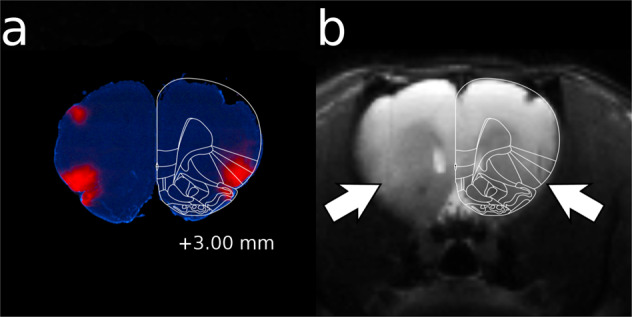
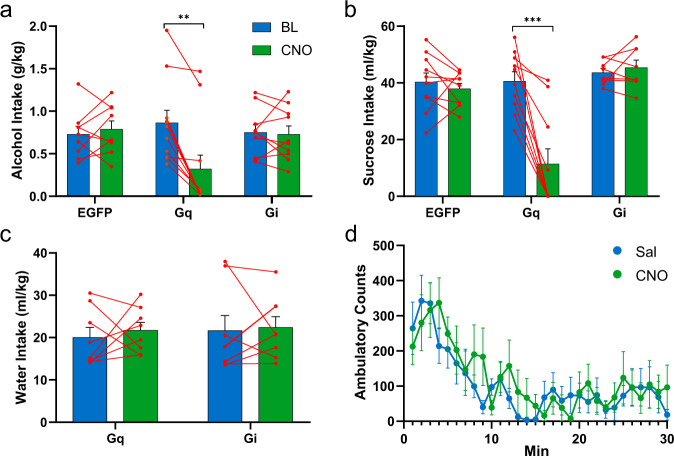
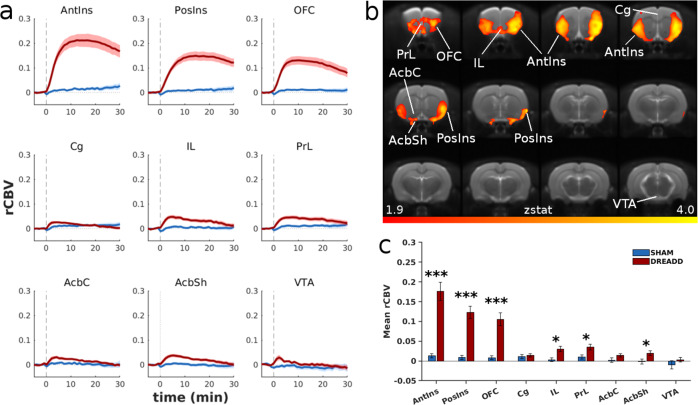
The anterior insular cortex plays a key role in the representation of interoceptive effects of drug and natural rewards and their integration with attention, executive function, and emotions, making it a potential target region for intervention to control appetitive behaviors. Here, we investigated the effects of chemogenetic stimulation or inhibition of the anterior insula on alcohol and sucrose consumption. Excitatory or inhibitory designer receptors (DREADDs) were expressed in the anterior insula of alcohol-preferring rats by means of adenovirus-mediated gene transfer. Rats had access to either alcohol or sucrose solution during intermittent sessions. To characterize the brain network recruited by chemogenetic insula stimulation we measured brain-wide activation patterns using pharmacological magnetic resonance imaging (phMRI) and c-Fos immunohistochemistry. Anterior insula stimulation by the excitatory Gq-DREADDs significantly attenuated both alcohol and sucrose consumption, whereas the inhibitory Gi-DREADDs had no effects. In contrast, anterior insula stimulation failed to alter locomotor activity or deprivation-induced water drinking. phMRI and c-Fos immunohistochemistry revealed downstream activation of the posterior insula and medial prefrontal cortex, as well as of the mediodorsal thalamus and amygdala. Our results show the critical role of the anterior insula in regulating reward-directed behavior and delineate an insula-centered functional network associated with the effects of insula stimulation. From a translational perspective, our data demonstrate the therapeutic potential of circuit-based interventions and suggest that potentiation of insula excitability with neuromodulatory methods, such as repetitive transcranial magnetic stimulation (rTMS), could be useful in the treatment of alcohol use disorders.
岛叶前部在药物和天然奖赏的内脏效应的代表以及与注意力、执行功能和情绪的整合中起着关键作用,使其成为干预控制食欲行为的潜在靶点。在这里,我们研究了化学遗传刺激或抑制岛叶前部对酒精和蔗糖消耗的影响。通过腺病毒介导的基因转移,在嗜酒大鼠的岛叶前部表达兴奋性或抑制性设计受体(DREADDs)。大鼠在间歇期可以接触酒精或蔗糖溶液。为了描述化学遗传刺激岛叶前部所招募的脑网络,我们使用药理学磁共振成像(phMRI)和 c-Fos 免疫组织化学测量全脑激活模式。兴奋性 Gq-DREADDs 对岛叶前部的刺激显著减弱了酒精和蔗糖的消耗,而抑制性 Gi-DREADDs 则没有影响。相比之下,岛叶前部的刺激并不能改变运动活动或剥夺诱导的饮水。phMRI 和 c-Fos 免疫组织化学显示,后部岛叶和内侧前额叶皮层以及中脑背侧丘脑和杏仁核的下游激活。我们的结果表明岛叶前部在调节奖励导向行为中的关键作用,并描绘了与岛叶刺激效应相关的岛叶中心功能网络。从转化的角度来看,我们的数据表明基于回路的干预措施具有治疗潜力,并表明通过神经调节方法(如重复经颅磁刺激(rTMS))增强岛叶兴奋性可能对治疗酒精使用障碍有用。