Rayat Pisheh Hossein, Sani Mahsa
Department of Tissue Engineering and Applied Cell Sciences, School of Advanced Medical Sciences and Technologies, Shiraz University of Medical Sciences, Shiraz, Iran.
Shiraz Institute for Stem Cell & Regenerative Medicine, Shiraz University of Medical Sciences, Shiraz, Iran.
Stem Cell Res Ther. 2025 Jan 23;16(1):16. doi: 10.1186/s13287-024-04123-2.
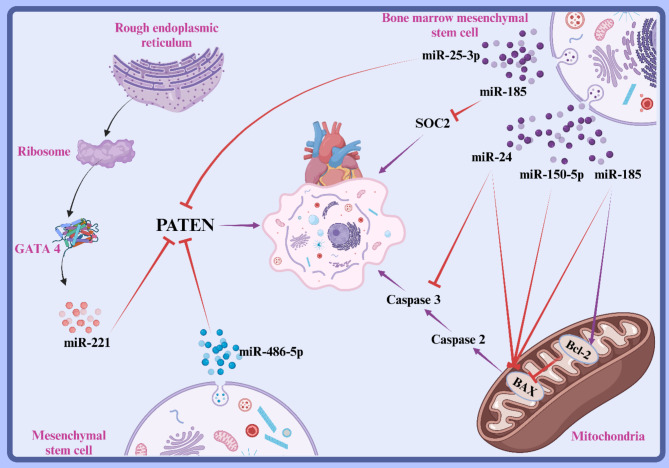
Despite significant strides in medical treatments and surgical procedures for cardiovascular diseases, these conditions continue to be a major global health concern. The persistent need for innovative therapeutic approaches to mend damaged heart tissue highlights the complexity and urgency of this medical challenge. In recent years, stem cells have emerged as a promising tool for tissue regeneration, but challenges such as graft rejection and tumor formation have limited their clinical application. Exosomes, extracellular vesicles containing a diverse array of biomolecules, have garnered significant attention for their potential in regenerative medicine. The cardioprotective and reparative properties of mesenchymal stem cell-derived exosomes hold promise for the treatment of heart diseases. These exosomes can modulate various cellular processes, including angiogenesis, apoptosis, and inflammation, thereby enhancing cardiac function. Despite the growing interest, there remains a lack of comprehensive reviews synthesizing the molecular mechanisms, preclinical, and clinical evidence related to the specific role of MSC-derived exosomes in cardiac therapies. This review aims to fill that gap by exploring the potential of MSC-derived exosomes as a therapeutic strategy for cardiac diseases. This review explores the potential of mesenchymal stem cell-derived exosomes as a therapeutic strategy for cardiac diseases. We discuss the molecular mechanisms underlying their cardioprotective effects, summarize preclinical and clinical studies investigating their efficacy, and address the challenges and future perspectives of exosome-based therapies. The collective evidence suggests that MSC-derived exosomes hold promise as a novel and effective therapeutic approach for cardiac diseases.
尽管在心血管疾病的医学治疗和外科手术方面取得了重大进展,但这些疾病仍然是全球主要的健康问题。持续需要创新的治疗方法来修复受损的心脏组织,这凸显了这一医学挑战的复杂性和紧迫性。近年来,干细胞已成为组织再生的一种有前景的工具,但诸如移植排斥和肿瘤形成等挑战限制了它们的临床应用。外泌体是含有多种生物分子的细胞外囊泡,因其在再生医学中的潜力而备受关注。间充质干细胞衍生的外泌体的心脏保护和修复特性为心脏病治疗带来了希望。这些外泌体可以调节各种细胞过程,包括血管生成、细胞凋亡和炎症,从而增强心脏功能。尽管人们的兴趣日益浓厚,但仍缺乏综合综述来综合与间充质干细胞衍生的外泌体在心脏治疗中的特定作用相关的分子机制、临床前和临床证据。本综述旨在通过探索间充质干细胞衍生的外泌体作为心脏病治疗策略的潜力来填补这一空白。本综述探讨了间充质干细胞衍生的外泌体作为心脏病治疗策略的潜力。我们讨论了其心脏保护作用的分子机制,总结了研究其疗效的临床前和临床研究,并探讨了基于外泌体疗法的挑战和未来前景。综合证据表明,间充质干细胞衍生的外泌体有望成为一种新型有效的心脏病治疗方法。