Division of Cardiology, Centre Hospitalier de l'Université de Montréal (CHUM), Montréal, Québec, Canada.
Università Vita-Salute San Raffaele, Milan, Italy.
Can J Cardiol. 2020 Jul;36(7):1068-1080. doi: 10.1016/j.cjca.2020.05.018. Epub 2020 May 16.
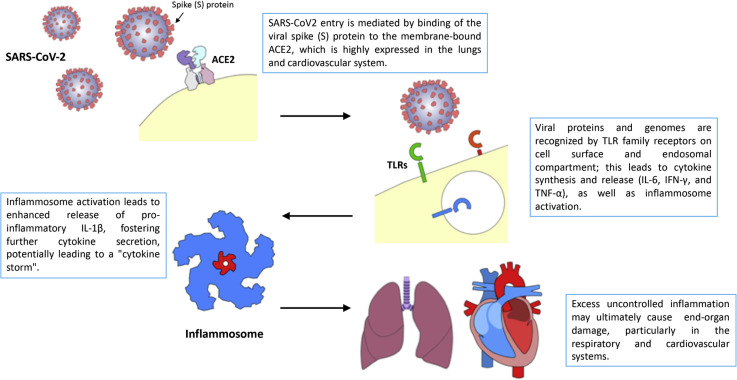
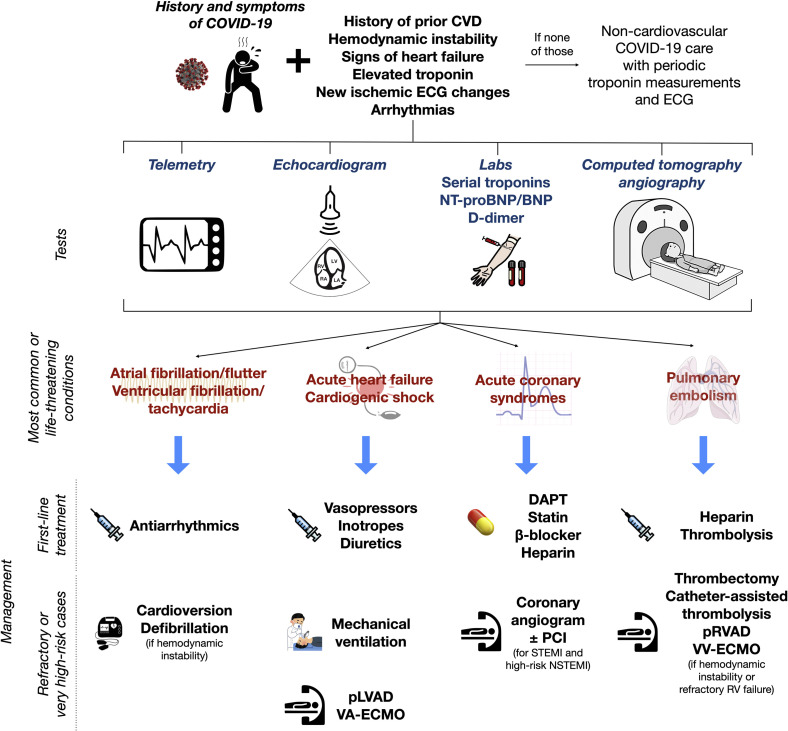
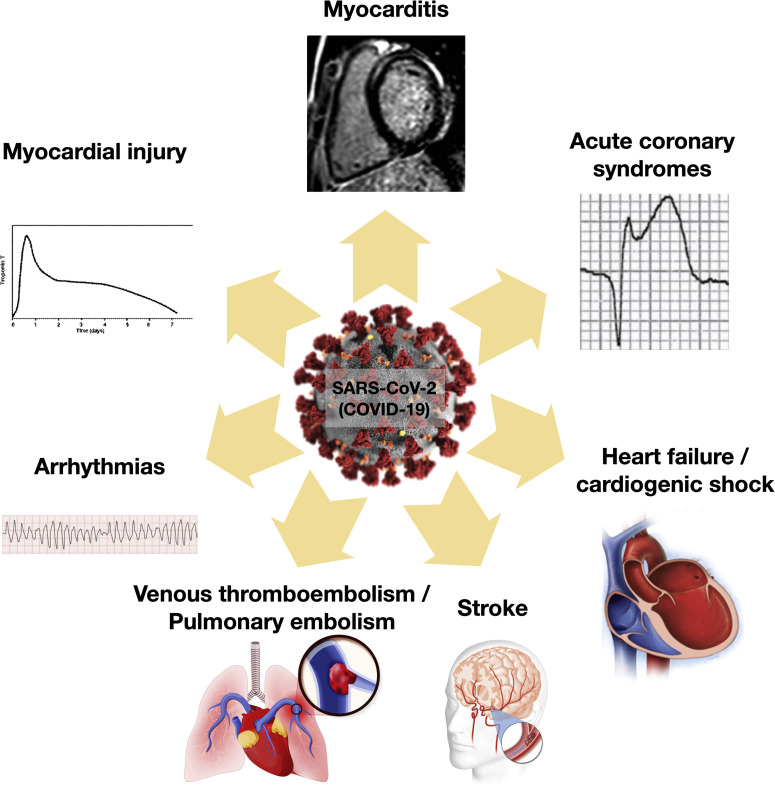
The coronavirus disease 2019 (COVID-19), caused by severe acute respiratory syndrome coronavirus-2 (SARS-CoV-2), represents the pandemic of the century, with approximately 3.5 million cases and 250,000 deaths worldwide as of May 2020. Although respiratory symptoms usually dominate the clinical presentation, COVID-19 is now known to also have potentially serious cardiovascular consequences, including myocardial injury, myocarditis, acute coronary syndromes, pulmonary embolism, stroke, arrhythmias, heart failure, and cardiogenic shock. The cardiac manifestations of COVID-19 might be related to the adrenergic drive, systemic inflammatory milieu and cytokine-release syndrome caused by SARS-CoV-2, direct viral infection of myocardial and endothelial cells, hypoxia due to respiratory failure, electrolytic imbalances, fluid overload, and side effects of certain COVID-19 medications. COVID-19 has profoundly reshaped usual care of both ambulatory and acute cardiac patients, by leading to the cancellation of elective procedures and by reducing the efficiency of existing pathways of urgent care, respectively. Decreased use of health care services for acute conditions by non-COVID-19 patients has also been reported and attributed to concerns about acquiring in-hospital infection. Innovative approaches that leverage modern technologies to tackle the COVID-19 pandemic have been introduced, which include telemedicine, dissemination of educational material over social media, smartphone apps for case tracking, and artificial intelligence for pandemic modelling, among others. This article provides a comprehensive overview of the pathophysiology and cardiovascular implications of COVID-19, its impact on existing pathways of care, the role of modern technologies to tackle the pandemic, and a proposal of novel management algorithms for the most common acute cardiac conditions.
新型冠状病毒病 2019(COVID-19)由严重急性呼吸综合征冠状病毒 2 型(SARS-CoV-2)引起,是本世纪的大流行病,截至 2020 年 5 月,全球约有 350 万例病例和 25 万例死亡。虽然呼吸道症状通常是 COVID-19 的主要临床表现,但目前已知 COVID-19 还可能导致严重的心血管后果,包括心肌损伤、心肌炎、急性冠状动脉综合征、肺栓塞、中风、心律失常、心力衰竭和心源性休克。COVID-19 的心脏表现可能与 SARS-CoV-2 引起的肾上腺素能驱动、全身炎症环境和细胞因子释放综合征、心肌和内皮细胞的直接病毒感染、呼吸衰竭引起的缺氧、电解质失衡、液体超负荷以及某些 COVID-19 药物的副作用有关。COVID-19 通过导致选择性手术取消和降低紧急护理现有途径的效率,深刻地改变了门诊和急性心脏病患者的常规治疗。非 COVID-19 患者对急性疾病的医疗服务使用也有所减少,这归因于对获得院内感染的担忧。已经引入了利用现代技术应对 COVID-19 大流行的创新方法,包括远程医疗、通过社交媒体传播教育材料、用于病例追踪的智能手机应用程序以及用于大流行建模的人工智能等。本文全面概述了 COVID-19 的病理生理学和心血管影响、对现有护理途径的影响、现代技术在应对大流行中的作用以及对最常见急性心脏疾病的新管理算法的建议。