Audi Amani, Soudani Nadia, Dbaibo Ghassan, Zaraket Hassan
Department of Experimental Pathology, Immunology and Microbiology, Faculty of Medicine, American University of Beirut, Beirut, Lebanon.
Center for Infectious Diseases Research, Faculty of Medicine, American University of Beirut, Beirut, Lebanon.
Front Microbiol. 2020 Apr 30;11:612. doi: 10.3389/fmicb.2020.00612. eCollection 2020.
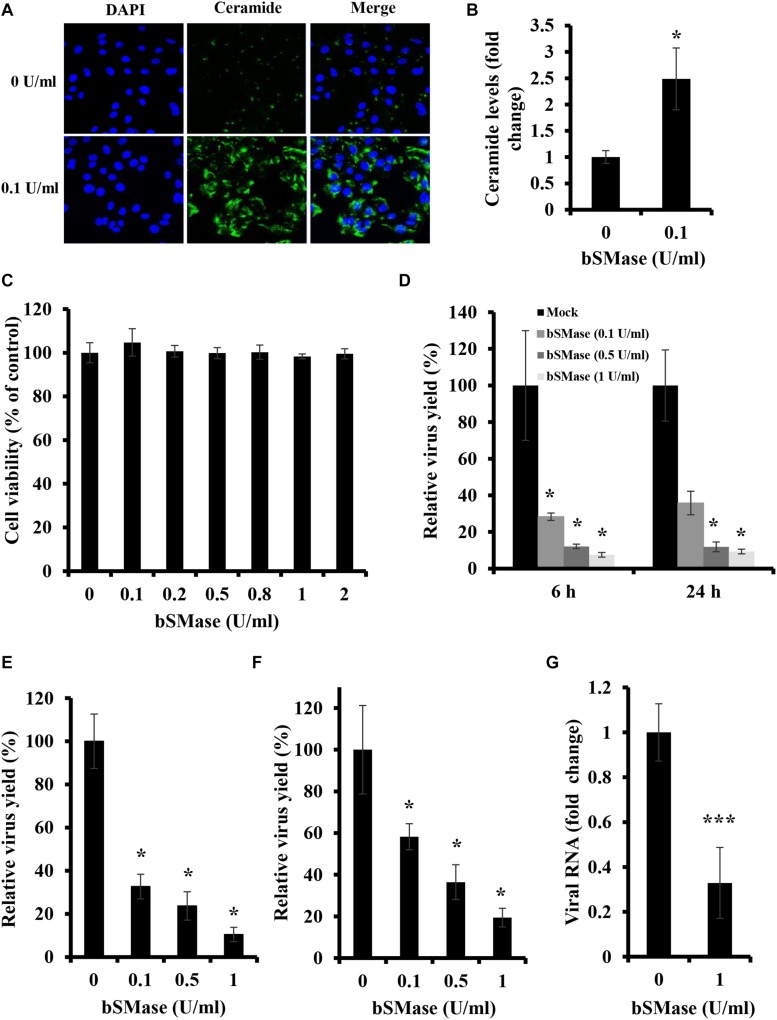
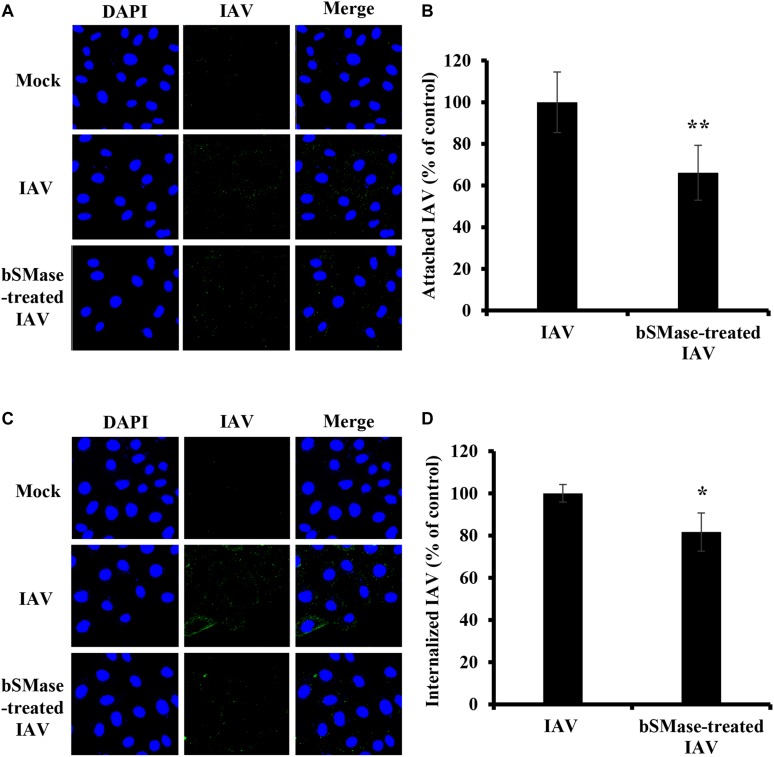
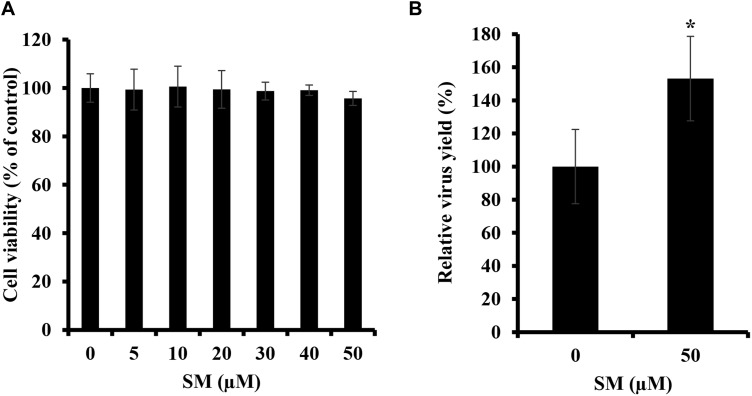
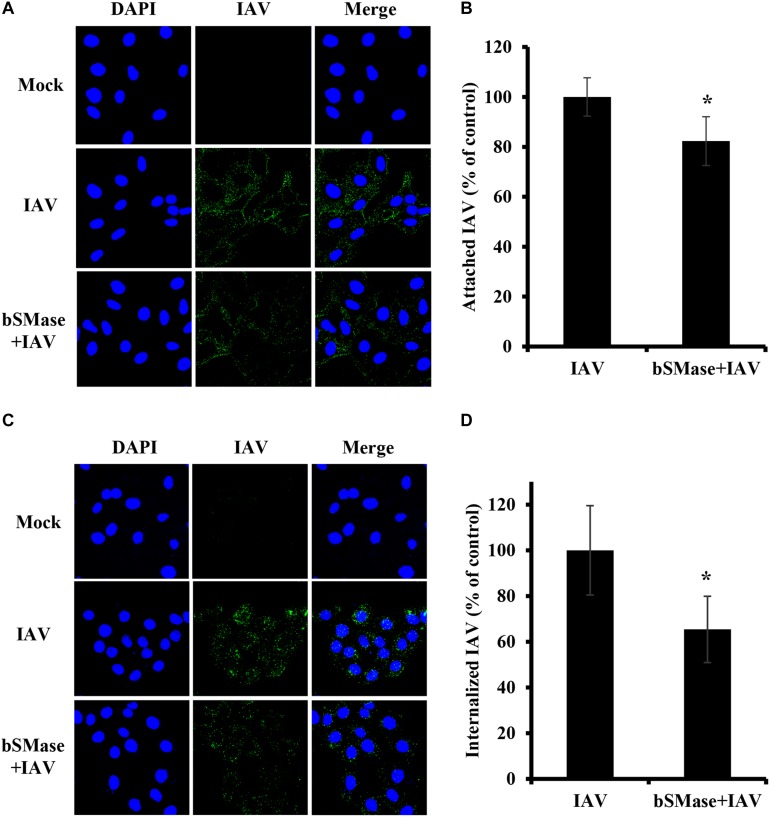
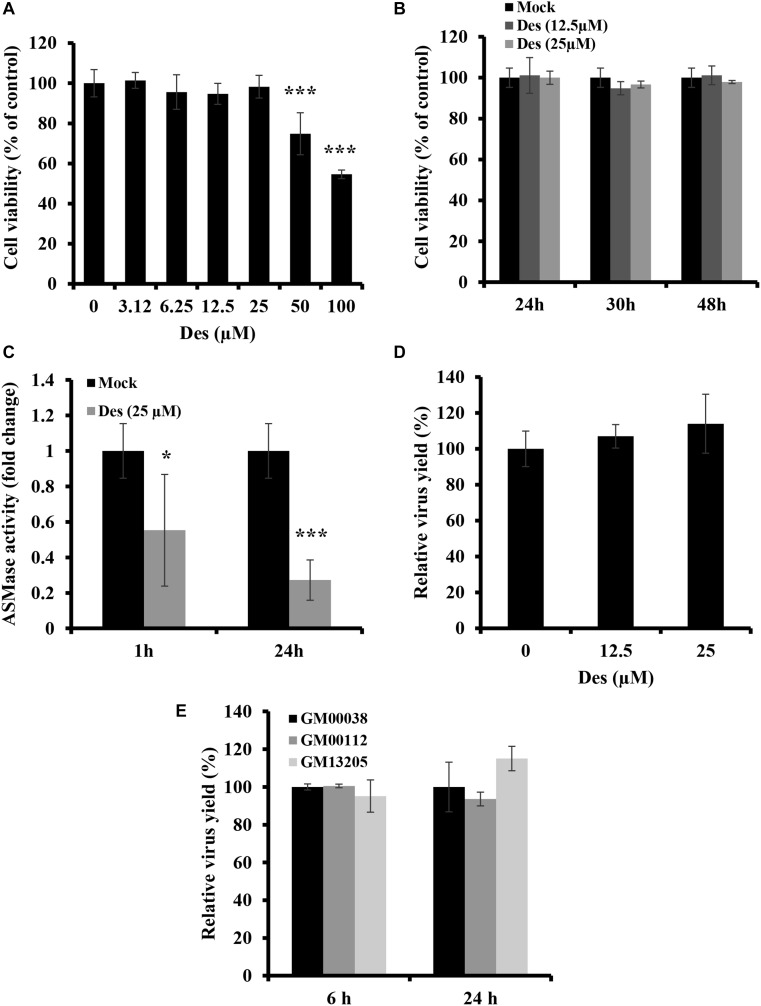
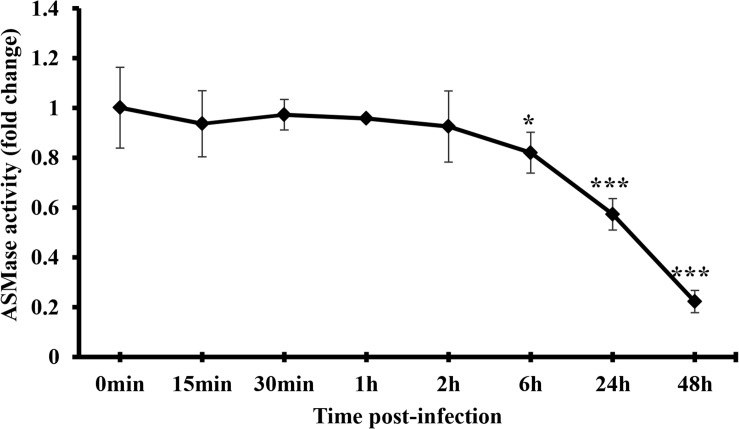
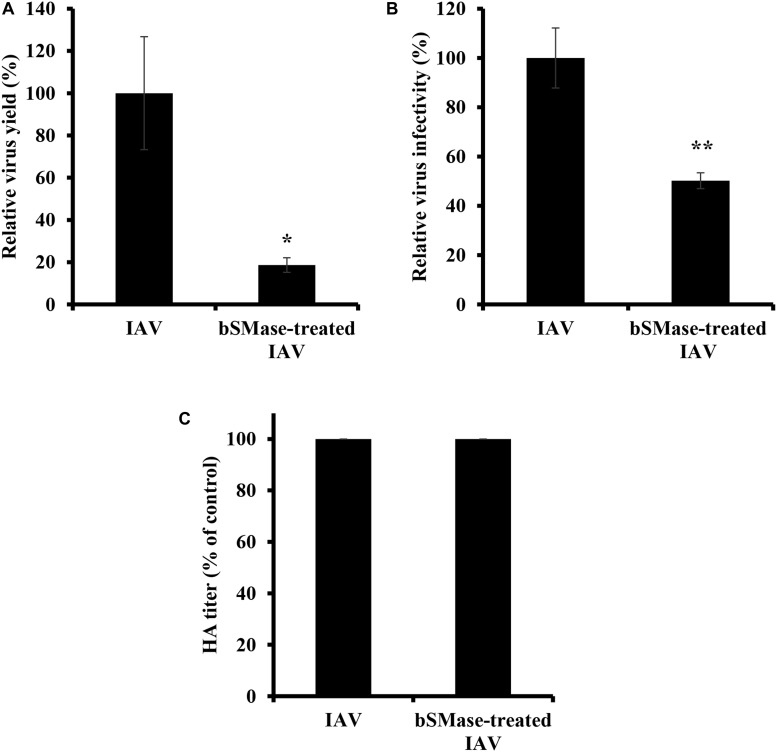
Influenza A virus (IAV) is a major human respiratory pathogen causing annual epidemics as well as periodic pandemics. A complete understanding of the virus pathogenesis and host factors involved in the viral lifecycle is crucial for developing novel therapeutic approaches. Sphingomyelin (SM) is the most abundant membrane sphingolipid. It preferentially associates with cholesterol to form distinct domains named lipid rafts. Sphingomyelinases, including acid sphingomyelinase (ASMase), catalyzes the hydrolysis of membrane SM and consequently transform lipid rafts into ceramide-enriched membrane platforms. In this study, we investigated the effect of SM hydrolysis on IAV propagation. Depleting plasma membrane SM by exogenous bacterial SMase (bSMase) impaired virus infection and reduced virus entry, whereas exogenous SM enhanced infection. Moreover, the depletion of virus envelope SM also reduced virus infectivity and impaired its attachment and internalization. Nonetheless, inhibition of ASMase by desipramine did not affect IAV infection. Similarly, virus replication was not impaired in Niemann-Pick disease type A (NPA) cells, which lack functional ASMase. IAV infection in A549 cells was associated with suppression of ASMase activity starting at 6 h post-infection. Our data reveals that intact cellular and viral envelope SM is required for efficient IAV infection. Therefore, SM metabolism can be a potential target for therapeutic intervention against influenza virus infection.
甲型流感病毒(IAV)是一种主要的人类呼吸道病原体,每年都会引发疫情以及周期性大流行。全面了解病毒发病机制和病毒生命周期中涉及的宿主因素对于开发新的治疗方法至关重要。鞘磷脂(SM)是最丰富的膜鞘脂。它优先与胆固醇结合形成名为脂筏的独特结构域。鞘磷脂酶,包括酸性鞘磷脂酶(ASMase),催化膜SM的水解,从而将脂筏转化为富含神经酰胺的膜平台。在本研究中,我们研究了SM水解对IAV传播的影响。通过外源性细菌鞘磷脂酶(bSMase)消耗质膜SM会损害病毒感染并减少病毒进入,而外源性SM则增强感染。此外,病毒包膜SM的消耗也会降低病毒感染力,并损害其附着和内化。然而,地昔帕明对ASMase的抑制并不影响IAV感染。同样,在缺乏功能性ASMase的A型尼曼-匹克病(NPA)细胞中,病毒复制也未受损。A549细胞中的IAV感染与感染后6小时开始的ASMase活性抑制有关。我们的数据表明,完整的细胞和病毒包膜SM是IAV有效感染所必需的。因此,SM代谢可能是治疗流感病毒感染的潜在治疗靶点。