State Key Laboratory of Quality Research in Chinese Medicine, Macau Institute for Applied Research in Medicine and Health, Macau University of Science and Technology, Taipa, Macau, China.
College of Pharmacy, Gannan Medical University, Ganzhou, 341000, China.
BMC Cancer. 2018 Aug 8;18(1):799. doi: 10.1186/s12885-018-4714-x.
Resistance to chemotherapy drugs (e.g. taxol) has been a major obstacle in successful cancer treatment. In A549 human lung adenocarcinoma, acquired resistance to the first-line chemotherapy taxol has been a critical problem in clinics. Sphingolipid (SPL) controls various aspects of cell growth, survival, adhesion, and motility in cancer, and has been gradually regarded as a key factor in drug resistance. To better understand the taxol-resistant mechanism, a comprehensive sphingolipidomic approach was carried out to investigate the sphingolipid metabolism in taxol-resistant strain of A549 cell (A549T).
A549 and A549T cells were extracted according to the procedure with optimal condition for SPLs. Sphingolipidomic analysis was carried out by using an UHPLC coupled with quadrupole time-of-flight (Q-TOF) MS system for qualitative profiling and an UHPLC coupled with triple quadrupole (QQQ) MS system for quantitative analysis. The differentially expressed sphingolipids between taxol-sensitive and -resistant cells were explored by using multivariate analysis.
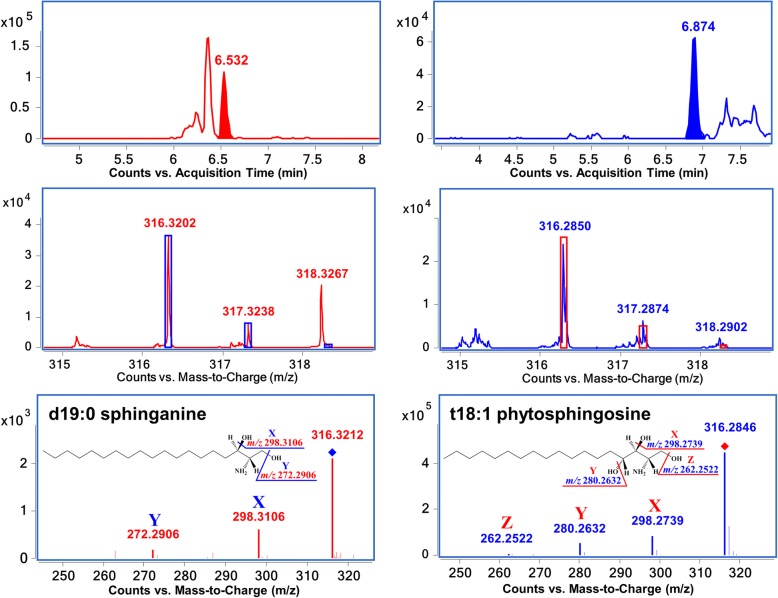
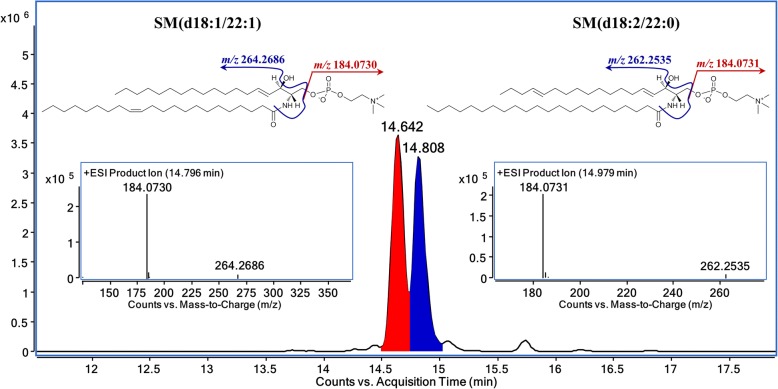
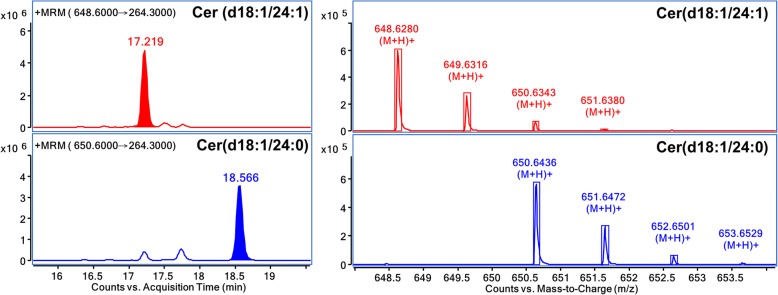
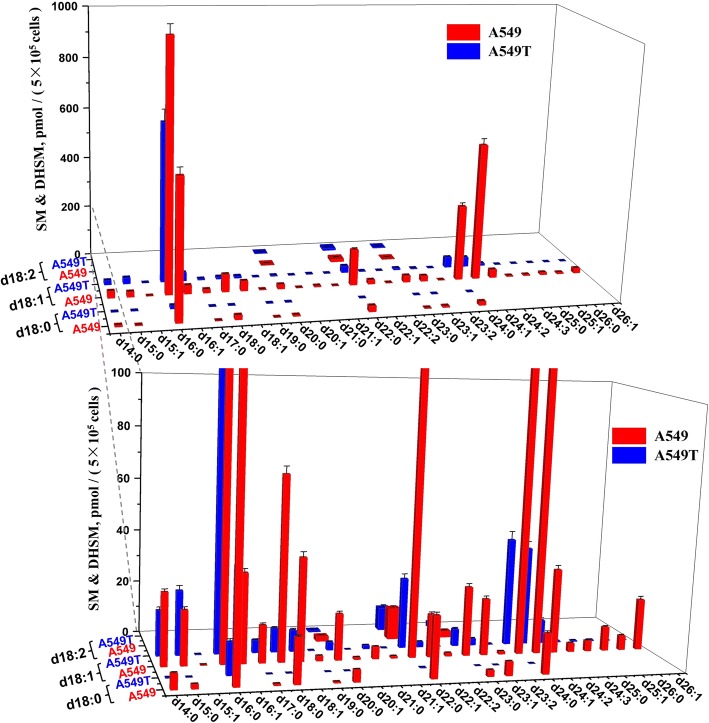
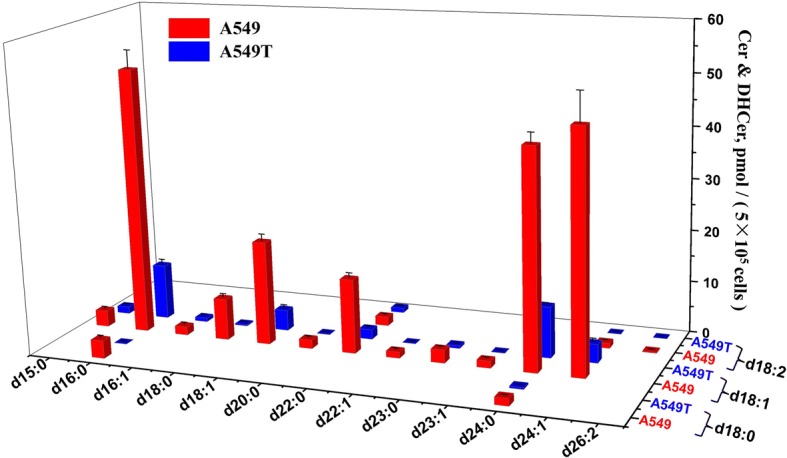
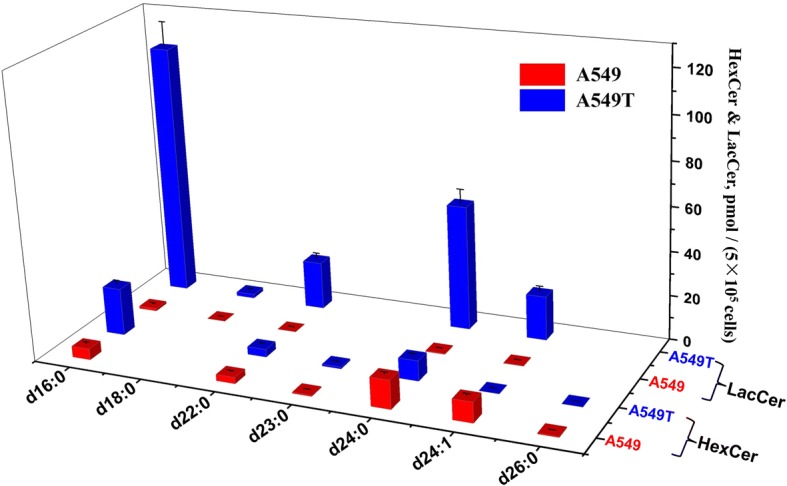
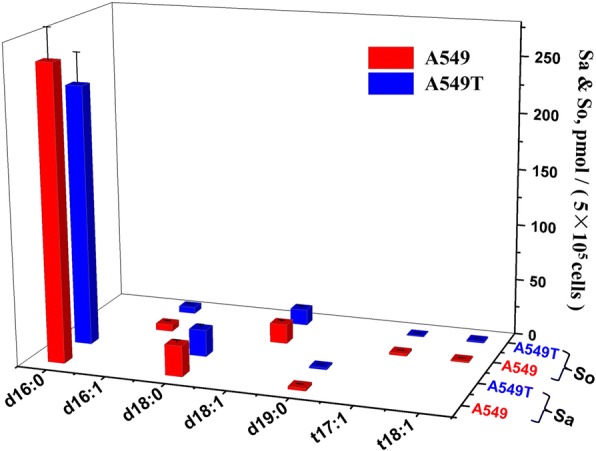
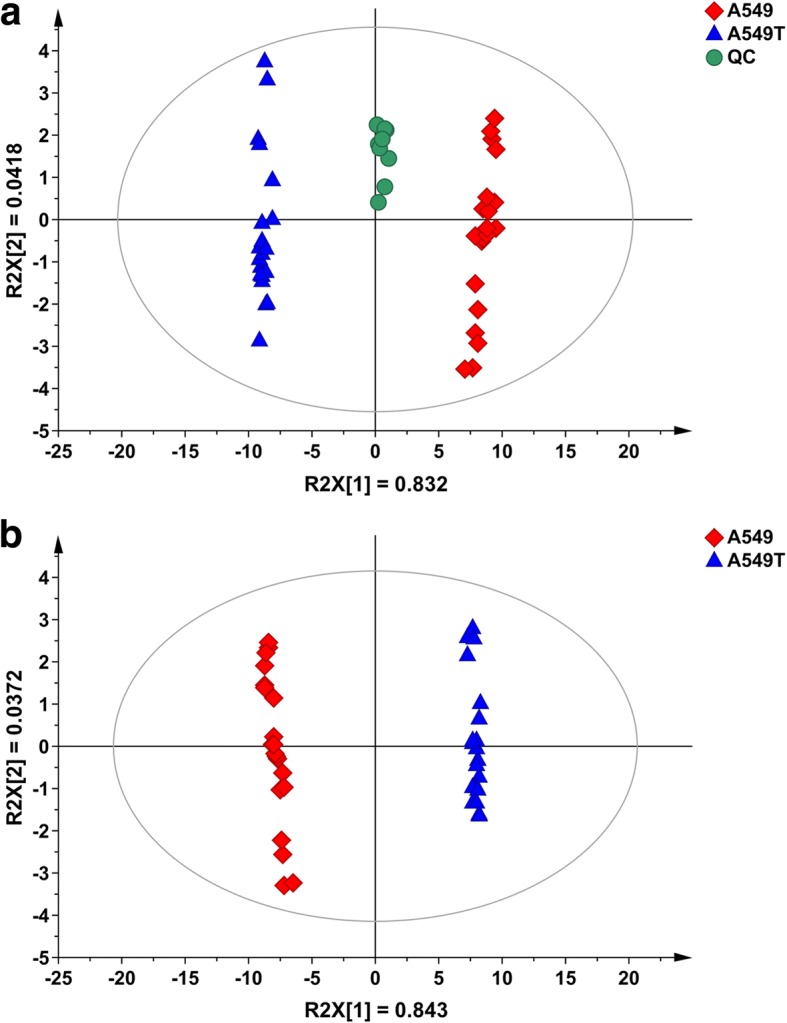
Based on accurate mass and characteristic fragment ions, 114 SPLs, including 4 new species, were clearly identified. Under the multiple reaction monitoring (MRM) mode of QQQ MS, 75 SPLs were further quantified in both A549 and A549T. Multivariate analysis explored that the levels of 57 sphingolipids significantly altered in A549T comparing to those of A549 (p < 0.001 and VIP > 1), including 35 sphingomyelins (SMs), 14 ceramides (Cers), 3 hexosylceramides (HexCers), 4 lactosylceramides (LacCers) and 1 sphingosine. A significant decrease of SM and Cer levels and overall increase of HexCer and LacCer represent the major SPL metabolic characteristic in A549T.
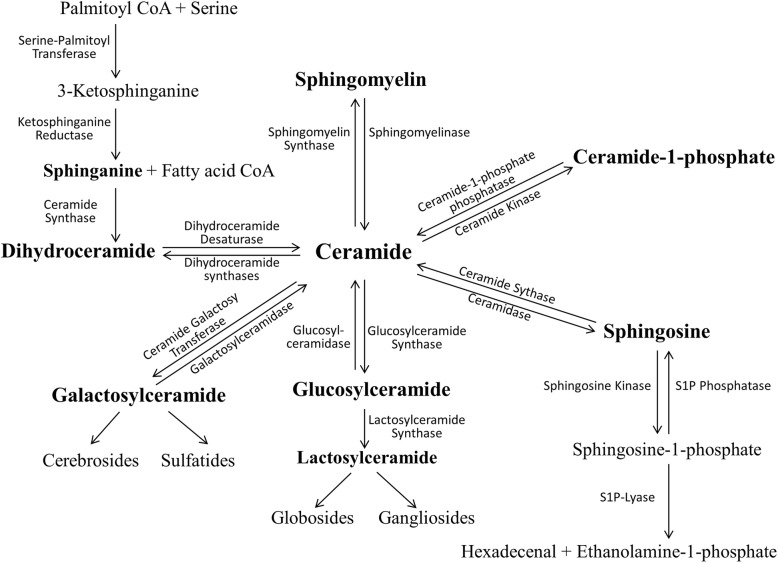
This study investigated sphingolipid profiles in human lung adenocarcinoma cell lines, which is the most comprehensive sphingolipidomic analysis of A549 and A549T. To some extent, the mechanism of taxol-resistance could be attributed to the aberrant sphingolipid metabolism, "inhibition of the de novo synthesis pathway" and "activation of glycosphingolipid pathway" may play the dominant role for taxol-resistance in A549T. This study provides insights into the strategy for clinical diagnosis and treatment of taxol resistant lung cancer.
化疗药物(如紫杉醇)的耐药性一直是癌症治疗成功的主要障碍。在 A549 人肺腺癌细胞中,对一线化疗药物紫杉醇的获得性耐药是临床中的一个关键问题。鞘脂(SPL)控制着癌症中细胞生长、存活、粘附和运动的各个方面,已逐渐被视为耐药性的关键因素。为了更好地了解紫杉醇耐药的机制,采用全面的鞘脂组学方法研究了 A549 细胞(A549T)紫杉醇耐药株的鞘脂代谢。
根据鞘脂最佳提取程序,从 A549 和 A549T 细胞中提取鞘脂。采用 UHPLC 与四极杆飞行时间(Q-TOF)MS 联用系统进行定性分析,采用 UHPLC 与三重四极杆(QQQ)MS 联用系统进行定量分析。采用多元分析方法探讨紫杉醇敏感和耐药细胞之间差异表达的鞘脂。
基于精确质量和特征碎片离子,共鉴定出 114 种鞘脂,包括 4 种新物质。在 QQQ MS 的多重反应监测(MRM)模式下,进一步在 A549 和 A549T 中定量分析了 75 种鞘脂。多元分析发现,与 A549 相比,A549T 中有 57 种鞘脂的水平明显改变(p < 0.001,VIP > 1),包括 35 种鞘磷脂(SMs)、14 种神经酰胺(Cers)、3 种己糖神经酰胺(HexCers)、4 种乳糖神经酰胺(LacCers)和 1 种神经鞘氨醇。SM 和 Cer 水平显著降低,HexCer 和 LacCer 总水平升高,代表 A549T 中鞘脂代谢的主要特征。
本研究对人肺腺癌细胞系的鞘脂谱进行了研究,这是对 A549 和 A549T 最全面的鞘脂组学分析。在某种程度上,紫杉醇耐药的机制可以归因于鞘脂代谢的异常,“抑制从头合成途径”和“激活糖鞘脂途径”可能在 A549T 中对紫杉醇耐药起主导作用。本研究为临床诊断和治疗紫杉醇耐药肺癌提供了新的思路。