Xu Xinjian, Lv Ji, Guo Fang, Li Jing, Jia Yitao, Jiang Da, Wang Na, Zhang Chao, Kong Lingyu, Liu Yabin, Zhang Yanni, Lv Jian, Li Zhongxin
Second Department of Surgery, The Fourth Hospital of Hebei Medical University, Shijiazhuang, China.
Department of Surgery, First Hospital of Qinhuangdao, Qinhuangdao, China.
Front Microbiol. 2020 Apr 30;11:814. doi: 10.3389/fmicb.2020.00814. eCollection 2020.
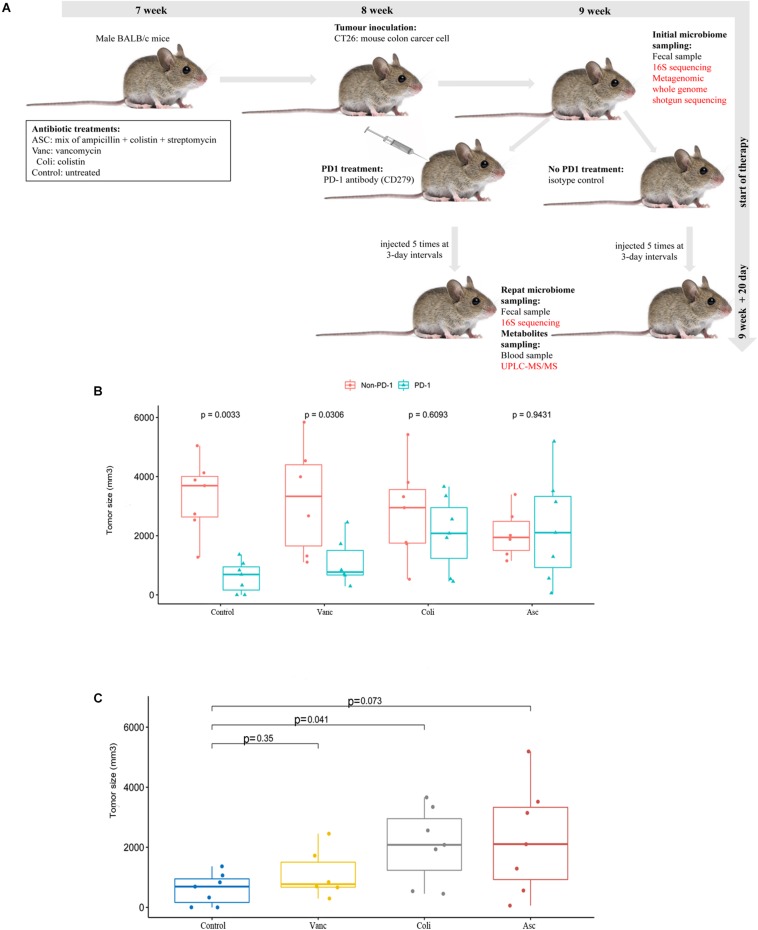
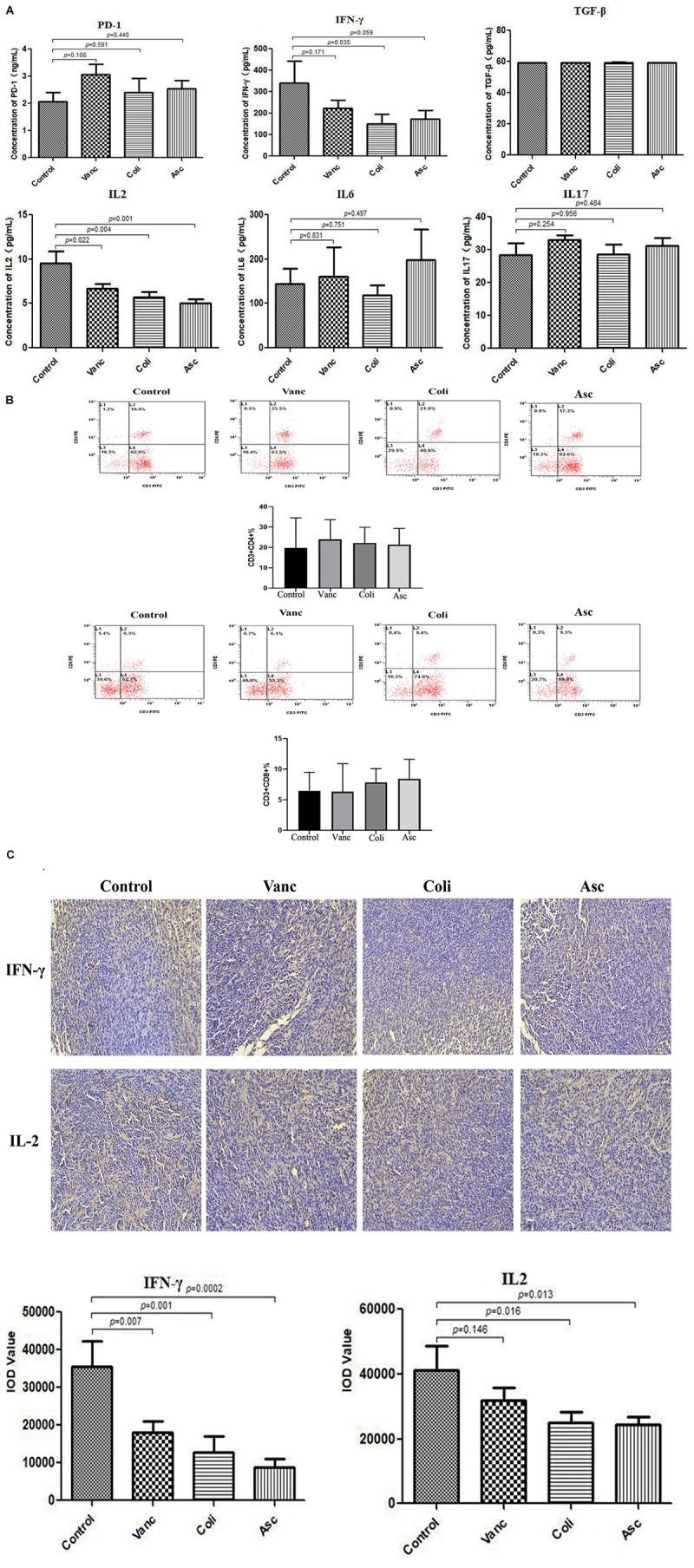
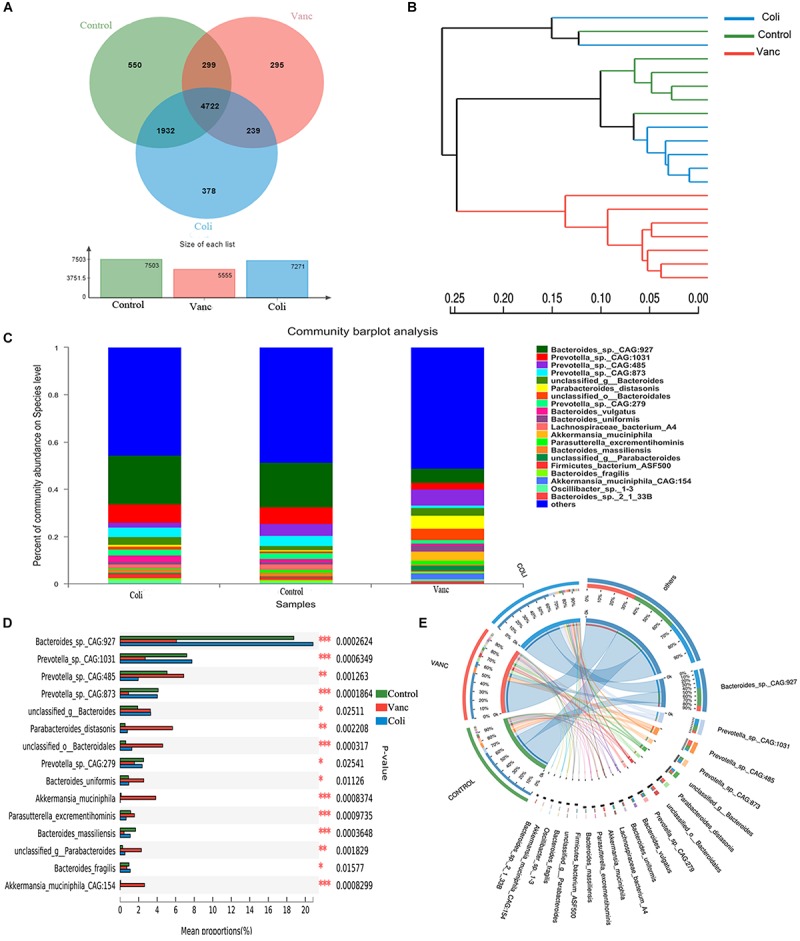
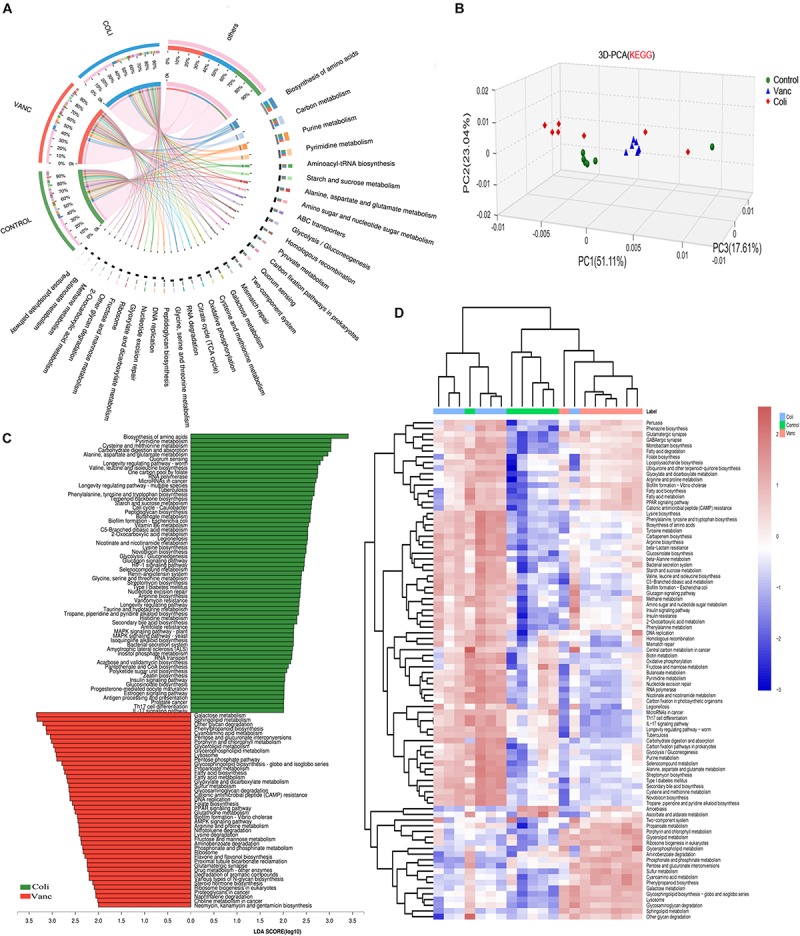
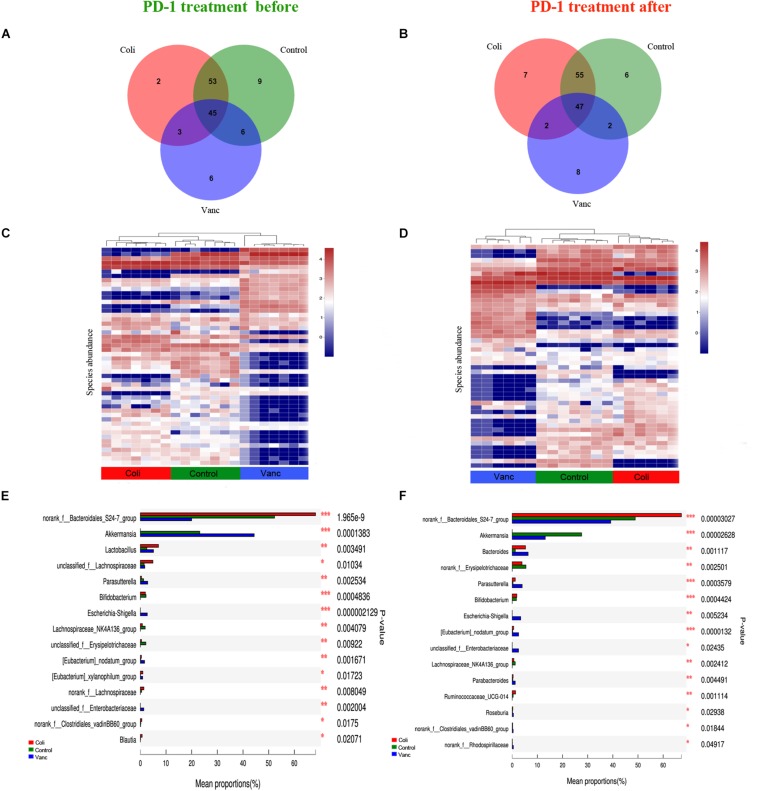
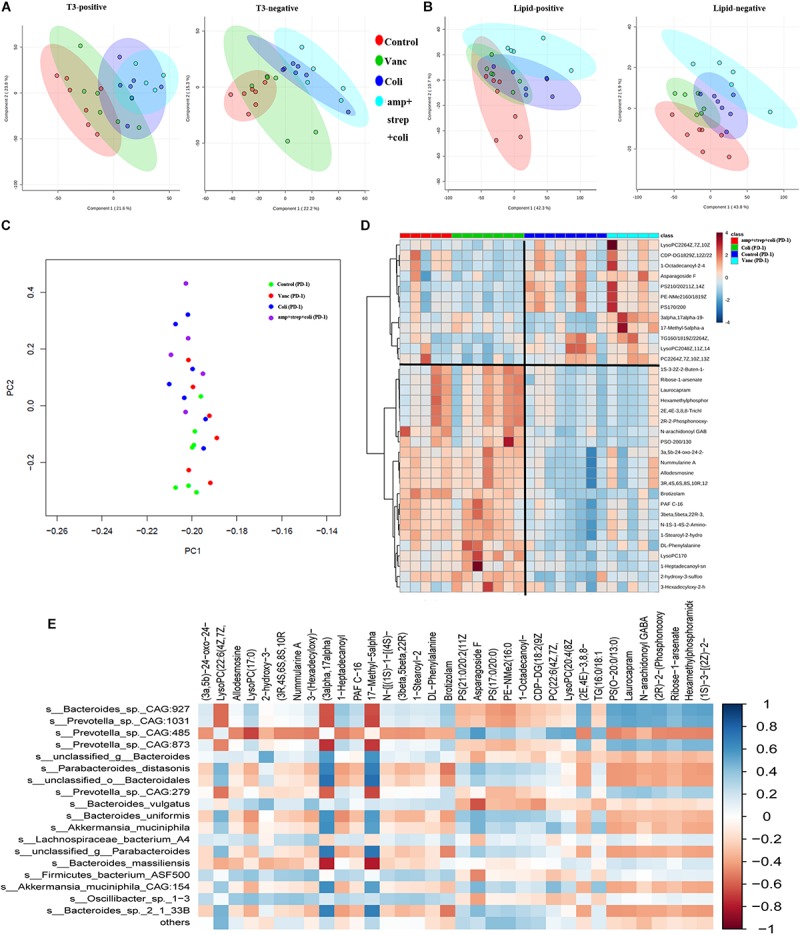
Colorectal cancer (CRC) appears to be rather refractory to checkpoint blockers except the patient with deficient in mismatch repair (dMMR). Therefore, new advances in the treatment of most mismatch repair proficiency (pMMR) (also known as microsatellite stability, MSS) type of CRC patients are considered to be an important clinical issue associated with programmed death 1 (PD-1) inhibitors. In the present study, we evaluated the effects of gut microbiome of MSS-type CRC tumor-bearing mice treated with different antibiotics on PD-1 antibody immunotherapy response. Our results confirmed that the gut microbiome played a key role in the treatment of CT26 tumor-bearing mice with PD-1 antibody. After PD-1 antibody treatment, the injection of antibiotics counteracted the efficacy of PD-1 antibody in inhibiting tumor growth when compared with the Control group (mice were treated with sterile drinking water). Bacteroides_sp._CAG:927 and Bacteroidales_S24-7 were enriched in Control group. Bacteroides_sp._CAG:927, Prevotella_sp._CAG: 1031 and Bacteroides were enriched in Coli group [mice were treated with colistin (2 mg/ml)], Prevotella_sp._CAG:485 and Akkermansia_muciniphila were enriched in Vanc group [mice were treated with vancomycin alone (0.25 mg/ml)]. The metabolites were enriched in the glycerophospholipid metabolic pathway consistent with the metagenomic prediction pathway in Vanc group, Prevotella_sp._CAG:485 and Akkermansia may maintain the normal efficacy of PD-1 antibody by affecting the metabolism of glycerophospholipid. Changes in gut microbiome leaded to changes in glycerophospholipid metabolism level, which may affect the expression of immune-related cytokines IFN-γ and IL-2 in the tumor microenvironment, resulting in a different therapeutic effect of PD-1 antibody. Our findings show that changes in the gut microbiome affect the glycerophospholipid metabolic pathway, thereby regulating the therapeutic potential of PD-1 antibody in the immunotherapy of MSS-type CRC tumor-bearing mice.
除错配修复缺陷(dMMR)患者外,结直肠癌(CRC)似乎对检查点阻断剂相当难治。因此,对于大多数错配修复功能正常(pMMR)(也称为微卫星稳定,MSS)型CRC患者的治疗新进展被认为是与程序性死亡1(PD-1)抑制剂相关的一个重要临床问题。在本研究中,我们评估了用不同抗生素治疗的MSS型CRC荷瘤小鼠的肠道微生物群对PD-1抗体免疫治疗反应的影响。我们的结果证实,肠道微生物群在PD-1抗体治疗CT26荷瘤小鼠中起关键作用。与对照组(小鼠用无菌饮用水处理)相比,PD-1抗体治疗后注射抗生素抵消了PD-1抗体抑制肿瘤生长的疗效。拟杆菌属_CAG:927和拟杆菌目_S24-7在对照组中富集。拟杆菌属_CAG:927、普雷沃氏菌属_CAG:1031和拟杆菌在大肠杆菌组(小鼠用黏菌素(2mg/ml)处理)中富集,普雷沃氏菌属_CAG:485和嗜黏蛋白阿克曼氏菌在万古霉素组(小鼠单独用万古霉素(0.25mg/ml)处理)中富集。在万古霉素组中,代谢物在甘油磷脂代谢途径中富集,与宏基因组预测途径一致,普雷沃氏菌属_CAG:485和嗜黏蛋白阿克曼氏菌可能通过影响甘油磷脂代谢来维持PD-1抗体的正常疗效。肠道微生物群的变化导致甘油磷脂代谢水平的变化,这可能影响肿瘤微环境中免疫相关细胞因子IFN-γ和IL-2的表达,从而导致PD-1抗体产生不同的治疗效果。我们的研究结果表明,肠道微生物群的变化影响甘油磷脂代谢途径,从而调节PD-1抗体在MSS型CRC荷瘤小鼠免疫治疗中的治疗潜力。