Babalola Tesleem K, Moodley Indres
Department of Public Health Medicine, School of Nursing and Public Health, College of Health Sciences, University of KwaZulu-Natal, Durban, South Africa.
Health Serv Res Manag Epidemiol. 2020 Apr 24;7:2333392820919604. doi: 10.1177/2333392820919604. eCollection 2020 Jan-Dec.
The provision of health-care services is dependent on the effective and efficient functioning of various components of a health-care system. It is therefore important to evaluate the functioning of these various components. Hence, the aim of this study was to review studies on health-care facilities efficiency in sub-Saharan Africa (SSA) with respect to the methodologies used as well as outcomes and factors influencing efficiency.
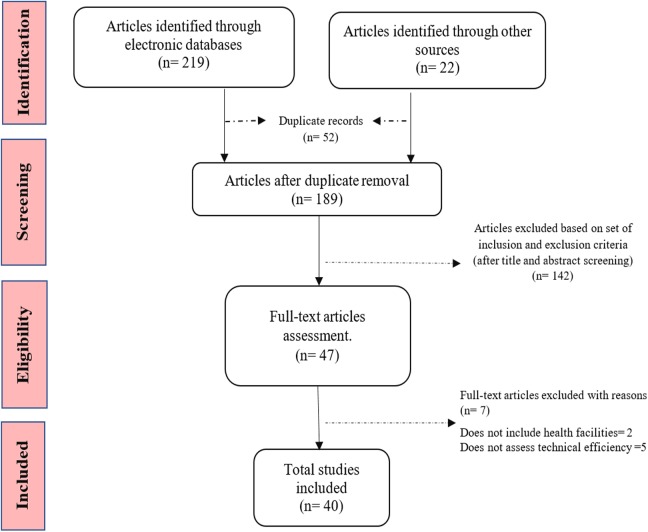
The review was conducted through a comprehensive search of electronic databases which included PubMed, Web of science, academic search complete via EBSCOhost, Science Direct, and Google scholar. A search was also conducted by looking into citations in the reference list of selected articles and through gray literature. Studies were screened by examining their titles, abstracts, and full-text based on stated inclusion and exclusion criteria. The concurrent screening and data extraction were conducted by the two authors.
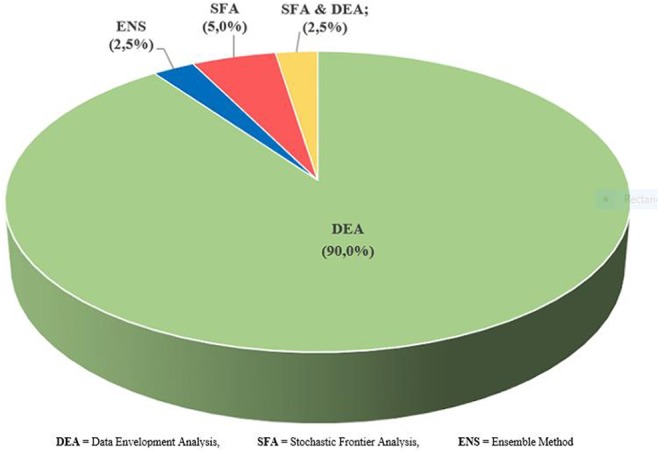
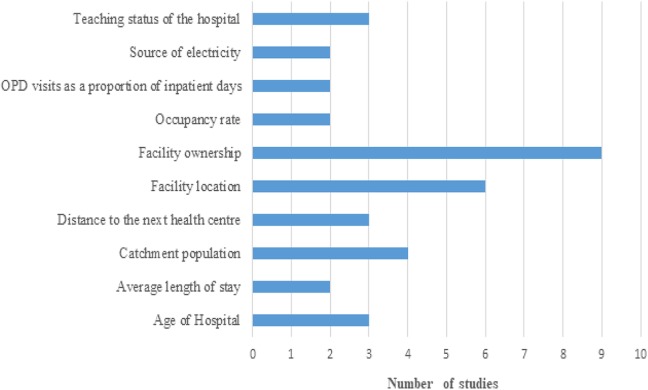
A total of 40 studies were shortlisted for the review. The majority (90.0%) of the studies employed the data envelopment analysis technique for their efficiency measurements. The input and output variables utilized by most of the studies were predominantly human resources and health-related services respectively. The outcome from majority of the studies showed that less than 40% of the studied facilities were efficient. The leading influencing factors reported by the studies were catchment population, facility ownership, and location.
The review showed that there was a marked degree of inefficiency across the health-care facilities. Consequently, due to severe resource constraints facing SSA, there is a need to determine how to use the available resources optimally to improve health systems performance.
医疗服务的提供依赖于医疗系统各个组成部分的有效且高效运作。因此,评估这些不同组成部分的运作情况很重要。因此,本研究的目的是回顾撒哈拉以南非洲(SSA)医疗设施效率方面的研究,涉及所使用的方法以及影响效率的结果和因素。
通过全面检索电子数据库进行综述,这些数据库包括PubMed、科学网、通过EBSCOhost的学术搜索完整版、Science Direct和谷歌学术。还通过查看所选文章参考文献列表中的引用以及灰色文献进行搜索。根据既定的纳入和排除标准,通过检查文章标题、摘要和全文对研究进行筛选。两位作者同时进行筛选和数据提取。
共有40项研究入围此次综述。大多数研究(90.0%)采用数据包络分析技术进行效率测量。大多数研究使用的投入和产出变量分别主要是人力资源和与健康相关的服务。大多数研究的结果表明,在所研究的设施中,不到40%的设施是高效的。这些研究报告的主要影响因素是集水区人口、设施所有权和位置。
综述表明,整个医疗设施存在明显的低效率情况。因此,由于撒哈拉以南非洲面临严重的资源限制,有必要确定如何最佳利用现有资源来改善卫生系统绩效。