Medical Research Council Integrative Epidemiology Unit, University of Bristol, Bristol BS8 2BN, UK.
Bristol Medical School, University of Bristol, Oakfield House, Oakfield Grove, Bristol BS8 2BN, UK.
Sci Adv. 2020 Apr 15;6(16):eaay0328. doi: 10.1126/sciadv.aay0328. eCollection 2020 Apr.
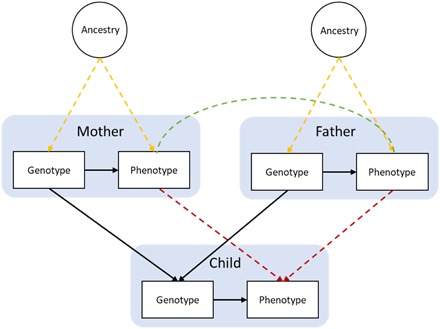
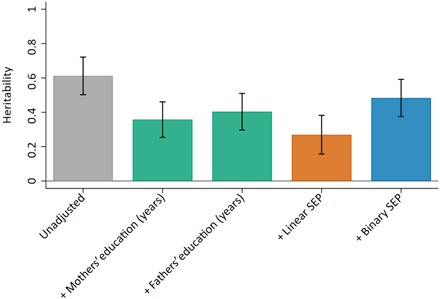
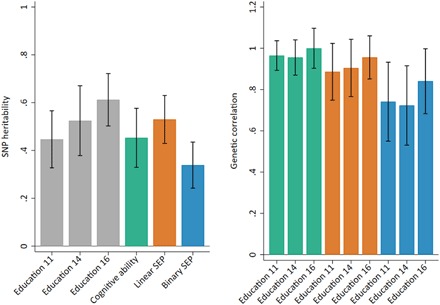
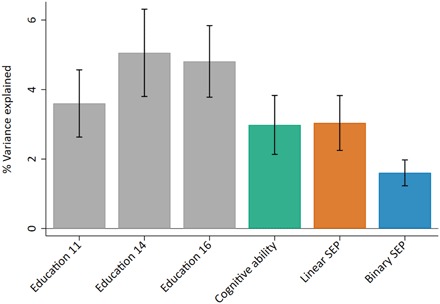
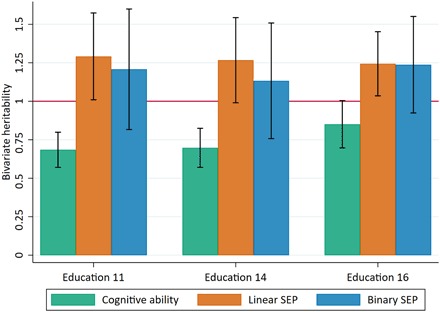
Heritability, genetic correlation, and genetic associations estimated from samples of unrelated individuals are often perceived as confirmation that genotype causes the phenotype(s). However, these estimates can arise from indirect mechanisms due to population phenomena including population stratification, dynastic effects, and assortative mating. We introduce these, describe how they can bias or inflate genotype-phenotype associations, and demonstrate methods that can be used to assess their presence. Using data on educational achievement and parental socioeconomic position as an exemplar, we demonstrate that both heritability and genetic correlation may be biased estimates of the causal contribution of genotype. These results highlight the limitations of genotype-phenotype estimates obtained from samples of unrelated individuals. Use of these methods in combination with family-based designs may offer researchers greater opportunities to explore the mechanisms driving genotype-phenotype associations and identify factors underlying bias in estimates.
遗传力、遗传相关和从无关个体样本中估计的遗传关联通常被认为是基因型导致表型的确认。然而,由于包括群体分层、王朝效应和选择性交配在内的群体现象,这些估计可能来自间接机制。我们介绍了这些机制,描述了它们如何偏置或夸大基因型-表型关联,并演示了可用于评估它们存在的方法。我们使用教育成就和父母社会经济地位的数据作为范例,证明了遗传力和遗传相关性都可能是基因型对表型因果贡献的有偏估计。这些结果突出了从无关个体样本中获得的基因型-表型估计的局限性。结合基于家庭的设计使用这些方法可能为研究人员提供更多机会来探索驱动基因型-表型关联的机制,并确定估计中偏倚的因素。