Institute of Sports and Sports Science, Karlsruhe Institute of Technology, Karlsruhe, Germany.
Translational Neuroscience and Aging Laboratory, Mayo Clinic, Scottsdale, AZ, USA.
BMC Public Health. 2020 May 19;20(1):726. doi: 10.1186/s12889-020-08715-4.
A growing body of studies that investigated the longitudinal association between physical activity (PA) and the outcome of incident obesity, coronary heart disease (CHD), diabetes and hypertension has become available in recent years. Thus, the purpose of this systematic review was to provide an update on the association between PA and onset of obesity, CHD, diabetes and hypertension in individuals aged ≥18 years who were free of the respective conditions at baseline.
We systematically searched OVID, Pubmed, and Web of Science databases for pertinent literature published between January of 2012 and February of 2019. To ensure that conclusions are based on high quality evidence, we only included longitudinal studies conducted in samples of ≥500 participants and with ≥5 years of follow-up.
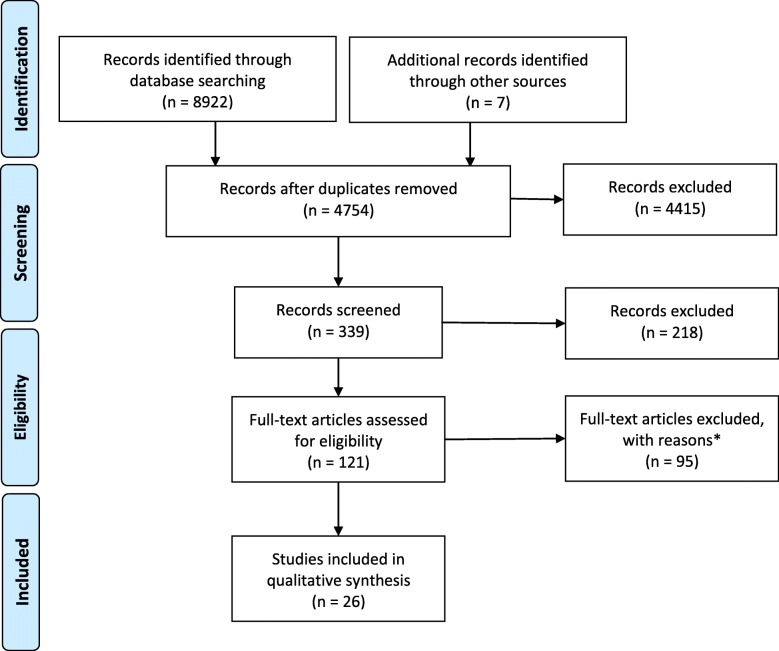
The search yielded 8929 records of which 26 were included in this review. Three studies were conducted on the outcome of incident obesity, eight on incident CHD, nine on incident diabetes, four on incident hypertension, one on the outcome of both diabetes and hypertension, and one on the outcome of CHD, diabetes and hypertension. Overall, there was an association between PA and lower risk of incident obesity, CHD and diabetes, but not hypertension. Higher levels or amount of PA were associated with a reduced risk of new onset of the respective diseases in 20 studies (77%). Whereas four studies reported an elevated risk of incidence of diseases with lower PA levels (15%). PA was not associated with incidence of diseases in two studies (8%).
Higher levels of PA are likely associated with a lower risk of becoming obese, develop CHD or diabetes. These findings replicate and strengthen conclusions from earlier reviews underlining the importance of promoting PA in adults. The associations between PA and incident hypertension were less consistent. More research, particularly using prospective cohort designs in large population-based samples, is needed to further untangle the association between PA and incident hypertension.
CRD42019124474 (PROSPERO Protocol registration). Date of registration in PROSPERO 27 February 2019.
近年来,越来越多的研究调查了体力活动(PA)与肥胖、冠心病(CHD)、糖尿病和高血压发病之间的纵向关联。因此,本系统综述的目的是提供关于 18 岁及以上无相应疾病基线人群中 PA 与肥胖、CHD、糖尿病和高血压发病之间关联的最新信息。
我们系统地检索了 OVID、Pubmed 和 Web of Science 数据库,以获取 2012 年 1 月至 2019 年 2 月期间发表的相关文献。为确保结论基于高质量证据,我们仅纳入了在≥500 名参与者样本中进行且随访时间≥5 年的纵向研究。
搜索共产生了 8929 条记录,其中 26 条被纳入本综述。三项研究观察肥胖的发病结果,八项研究观察 CHD 的发病结果,九项研究观察糖尿病的发病结果,四项研究观察高血压的发病结果,一项研究观察糖尿病和高血压的发病结果,一项研究观察 CHD、糖尿病和高血压的发病结果。总体而言,PA 与肥胖、CHD 和糖尿病发病风险较低相关,但与高血压无关。20 项研究(77%)表明,较高水平或运动量的 PA 与相应疾病新发病例风险降低相关。四项研究(15%)报告了较低 PA 水平与疾病发病风险增加相关。两项研究(8%)未发现 PA 与疾病发病之间存在关联。
较高水平的 PA 可能与肥胖、CHD 或糖尿病发病风险降低相关。这些发现复制并加强了早期综述的结论,强调了促进成年人 PA 的重要性。PA 与高血压发病之间的关联则不太一致。需要更多的研究,特别是在大型基于人群的样本中使用前瞻性队列设计,以进一步阐明 PA 与高血压发病之间的关系。
CRD42019124474(PROSPERO 方案注册)。在 PROSPERO 中的注册日期为 2019 年 2 月 27 日。