Cancer Center, University of Illinois at Chicago, Chicago, Illinois.
Department of Surgery, University of Illinois at Chicago College of Medicine, Chicago, Illinois.
Clin Cancer Res. 2020 Aug 15;26(16):4339-4348. doi: 10.1158/1078-0432.CCR-19-2896. Epub 2020 May 19.
Low-dose CT screening can reduce lung cancer-related mortality. However, CT screening has an FDR of nearly 96%. We sought to assess whether urine samples can be a source for DNA methylation-based detection of non-small cell lung cancer (NSCLC).
This nested case-control study of subjects with suspicious nodules on CT imaging obtained plasma and urine samples preoperatively. Cases ( = 74) had pathologic confirmation of NSCLC. Controls ( = 27) had a noncancer diagnosis. We detected promoter methylation in plasma and urine samples using methylation on beads and quantitative methylation-specific real-time PCR for cancer-specific genes (, and ).
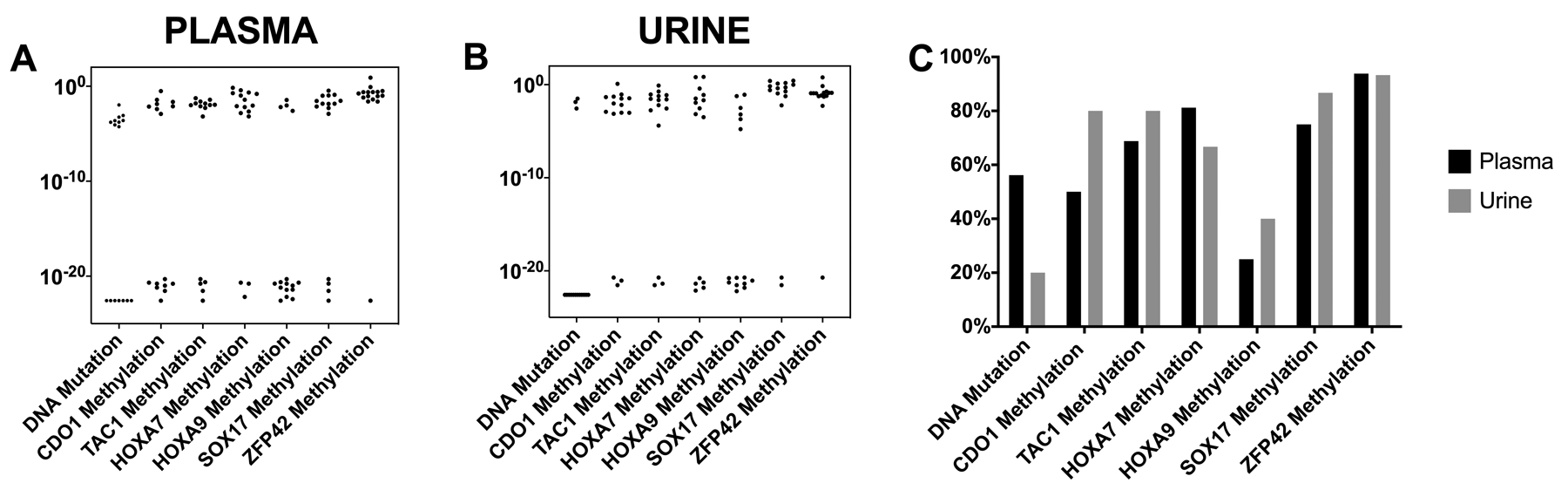
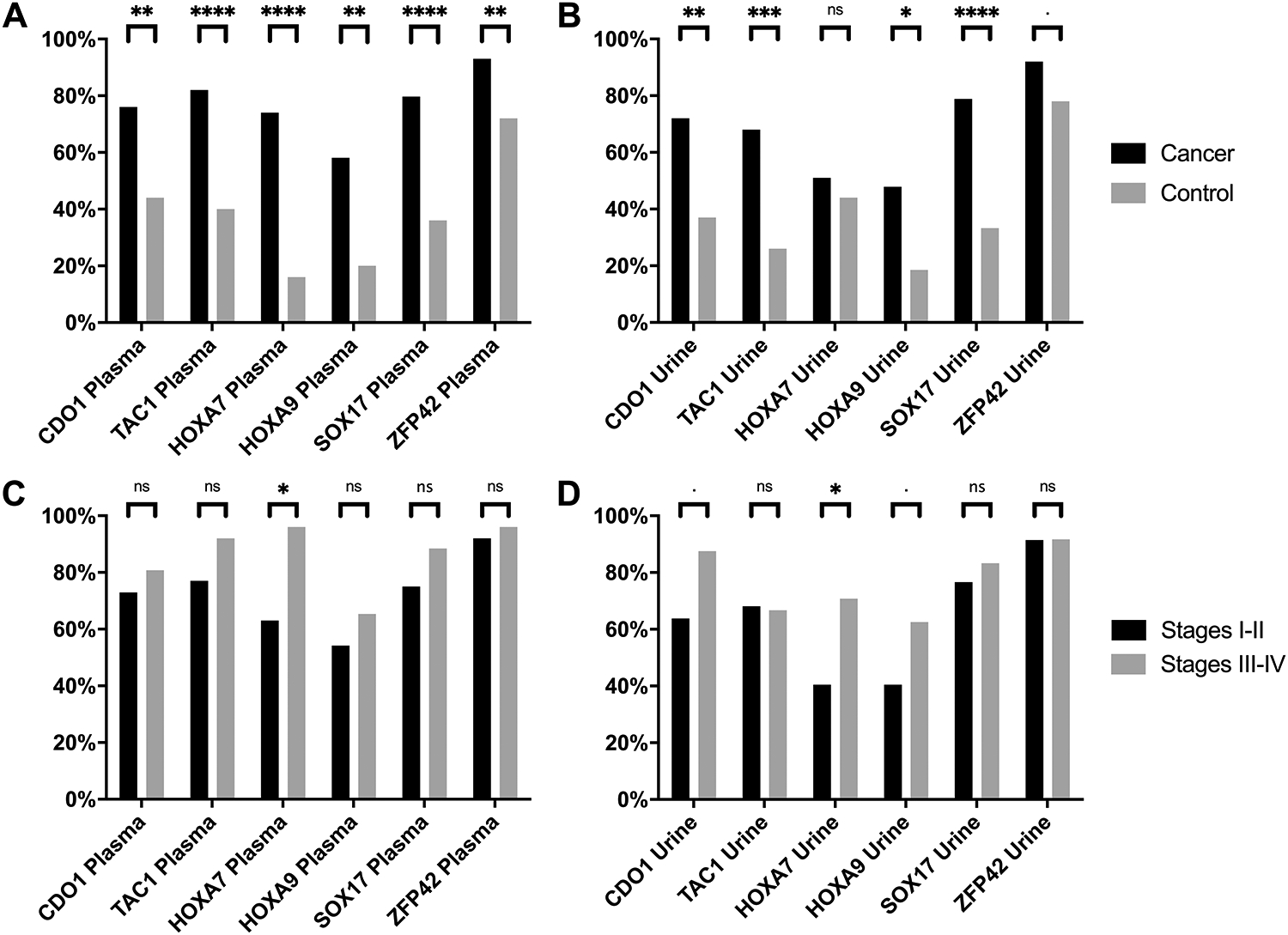
DNA methylation at cancer-specific loci was detected in both plasma and urine, and was more frequent in patients with cancer compared with controls for all six genes in plasma and in , and in urine. Univariate and multivariate logistic regression analysis showed that methylation detection in each one of six genes in plasma and , and in urine were significantly associated with the diagnosis of NSCLC, independent of age, race, and smoking pack-years. When methylation was detected for three or more genes in both plasma and urine, the sensitivity and specificity for lung cancer diagnosis were 73% and 92%, respectively.
DNA methylation-based biomarkers in plasma and urine could be useful as an adjunct to CT screening to guide decision-making regarding further invasive procedures in patients with pulmonary nodules.
低剂量 CT 筛查可降低与肺癌相关的死亡率。然而,CT 筛查的假阳性率(false discovery rate,FDR)接近 96%。我们试图评估尿液样本是否可作为非小细胞肺癌(non-small cell lung cancer,NSCLC)基于 DNA 甲基化检测的来源。
本研究为 CT 成像可疑结节患者的巢式病例对照研究,术前获得血浆和尿液样本。病例(n=74)有 NSCLC 的病理证实。对照(n=27)有非癌症诊断。我们使用珠子上的甲基化和用于癌症特异性基因(、和)的定量甲基化特异性实时 PCR 检测血浆和尿液样本中的启动子甲基化。
在血浆和尿液中均检测到癌症特异性基因座的 DNA 甲基化,与对照组相比,所有 6 个基因在血浆中,以及在 、和 中在尿液中的癌症患者中更为频繁。单变量和多变量逻辑回归分析显示,在血浆中 6 个基因中的每一个、以及在尿液中 、和 的甲基化检测与 NSCLC 的诊断显著相关,与年龄、种族和吸烟包年数无关。当在血浆和尿液中均检测到 3 个或更多基因的甲基化时,肺癌诊断的灵敏度和特异性分别为 73%和 92%。
血浆和尿液中的基于 DNA 甲基化的生物标志物可能有助于 CT 筛查,指导有肺结节患者进一步有创性程序的决策。