McNamara Michelle, Turner-Bowker Diane M, Westhead Hal, Yaworsky Andrew, Palladino Andrew, Gross Hillary, Pleil Andy, Loftus Jane
Adelphi Research, Doylestown, PA, USA.
Adelphi Values, Boston, MA, USA.
Patient Prefer Adherence. 2020 Apr 30;14:781-793. doi: 10.2147/PPA.S239196. eCollection 2020.
The daily injection burden of recombinant human growth hormone (r-hGH) replacement therapy to treat growth hormone deficiency (GHD) may reduce compliance and limit treatment benefit. Research is needed to evaluate patient preferences for GHD injection regimen and device features.
Quantitatively evaluate factors driving preferences for r-hGH injection regimen and device features among pediatric (3-17 years, and caregivers) and adult (≥25 years) patients with GHD using a discrete choice experiment (DCE) approach.
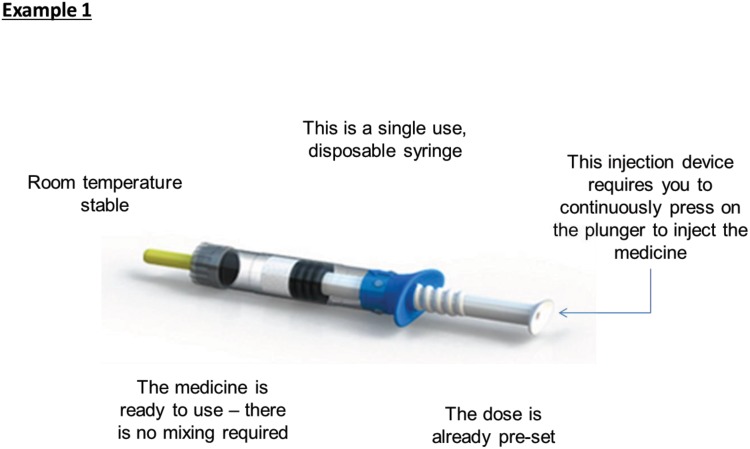
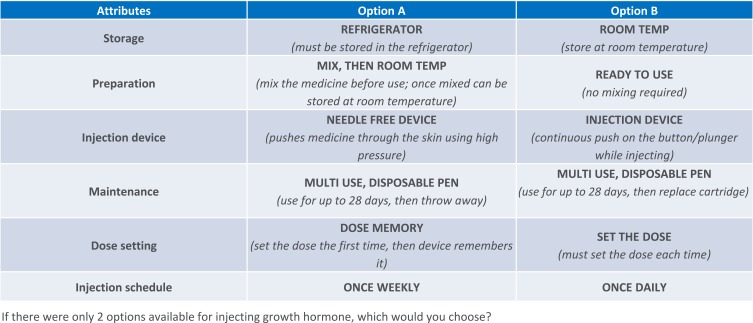
The DCE was part of a broader, cross-sectional observational field study to develop clinical outcome assessments (COAs) that assess the experience of patients taking r-hGH injections. Following ethics approval, discrete choice data were collected through an online questionnaire from consented participants recruited from eight sites in the United States. Participants were presented with 20 choice tasks, each comprising different combinations of two profiles. Participants were then shown the same set of three hypothetical device and injection profiles (ie, storage, preparation, injection type device, maintenance, dose setting, injection schedule) and asked whether they would choose each profile over their current device and schedule. Choice-based conjoint analyses were used to estimate the marginal utilities and values for treatment attributes. Subject preferences were estimated at individual and aggregate levels.
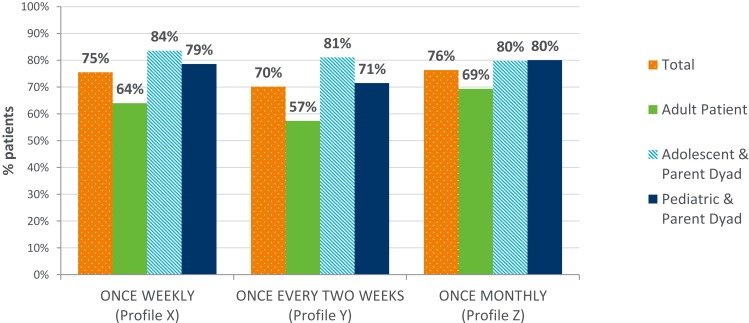
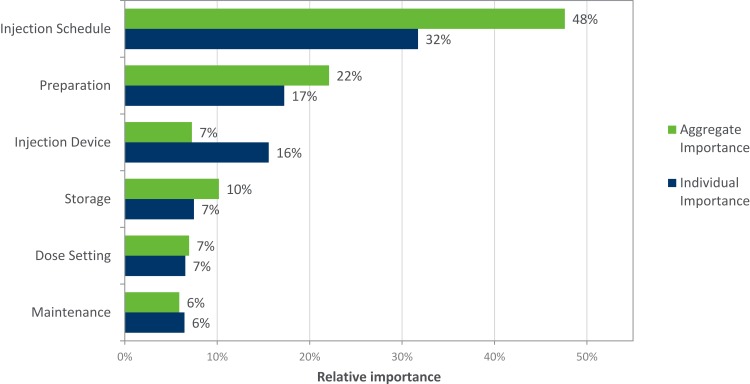
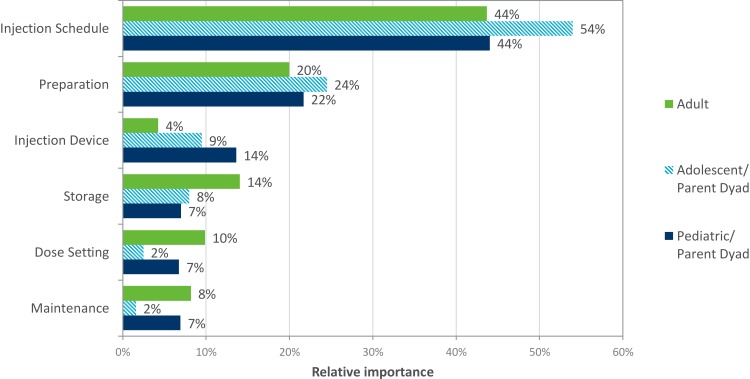
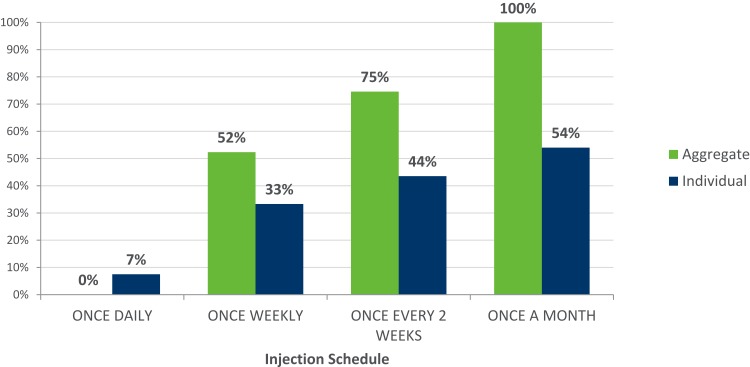
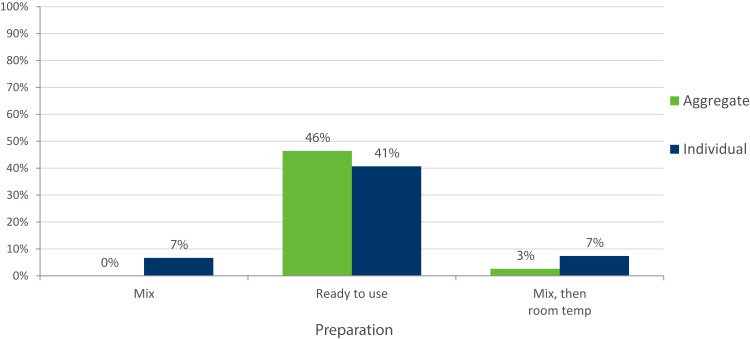
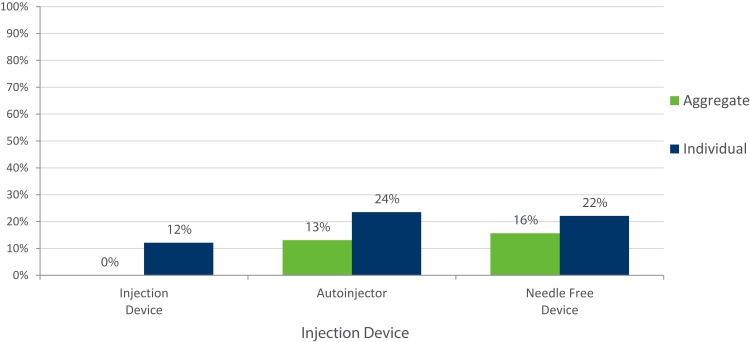
Two hundred and twenty-four participants completed the DCE (n=75 adults, n=79 adolescent/caregiver dyads, n=70 child/caregiver dyads). Injection schedule was the strongest predictor of choice for the total sample and each patient group. Less frequent injection schedules were more likely to be chosen by participants. A "ready to use" injection was preferred, with no preference for auto-injector versus needle-free device. Most participants would choose the hypothetical injection devices and less frequent dosing over their current daily administered device schedule.
Patients prefer a less frequent injection regimen for treating GHD. Addressing patient preferences may improve compliance, adherence, and ultimately, clinical outcomes.
重组人生长激素(r-hGH)替代疗法用于治疗生长激素缺乏症(GHD)时,每日注射带来的负担可能会降低患者的依从性并限制治疗效果。需要开展研究来评估患者对GHD注射方案和设备特性的偏好。
采用离散选择实验(DCE)方法,定量评估影响患有GHD的儿科患者(3至17岁)及其照料者以及成年患者(≥25岁)对r-hGH注射方案和设备特性偏好的因素。
该DCE是一项更广泛的横断面观察性现场研究的一部分,旨在开发临床结局评估(COA),以评估接受r-hGH注射的患者的体验。在获得伦理批准后,通过在线问卷从美国八个地点招募的同意参与者中收集离散选择数据。向参与者展示20个选择任务,每个任务包含两种配置文件的不同组合。然后向参与者展示同一组三个假设的设备和注射配置文件(即储存、准备、注射类型设备、维护、剂量设定、注射时间表),并询问他们是否会选择每个配置文件而不是他们当前的设备和时间表。基于选择的联合分析用于估计治疗属性的边际效用和价值。在个体和总体水平上估计受试者偏好。
224名参与者完成了DCE(75名成年人,79对青少年/照料者二元组,70对儿童/照料者二元组)。注射时间表是总样本和每个患者组选择的最强预测因素。注射频率较低的时间表更有可能被参与者选择。首选“即用型”注射方式,对自动注射器与无针设备没有偏好。大多数参与者会选择假设的注射设备和比他们当前每日给药设备时间表更低的给药频率。
患者更喜欢较低频率的注射方案来治疗GHD。考虑患者偏好可能会提高依从性、坚持性,并最终改善临床结局。