Xu Xinyi, Guo Yingying, Du Getao, Liu Huifang, Wang Lin, Chen Dan
Engineering Research Center of Molecular and Neuroimaging, Ministry of Education, School of Life Science and Technology, Xidian University, Xi'an, China.
School of Information Sciences and Technology, Northwest University, Xi'an, China.
Front Pharmacol. 2020 May 5;11:575. doi: 10.3389/fphar.2020.00575. eCollection 2020.
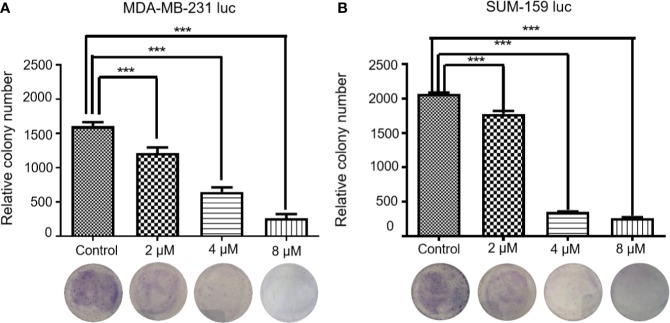
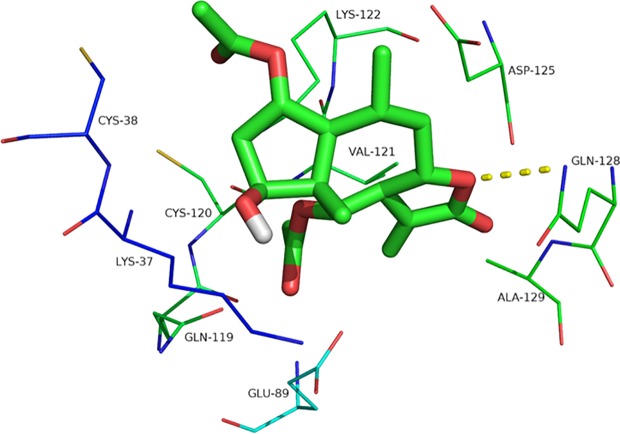
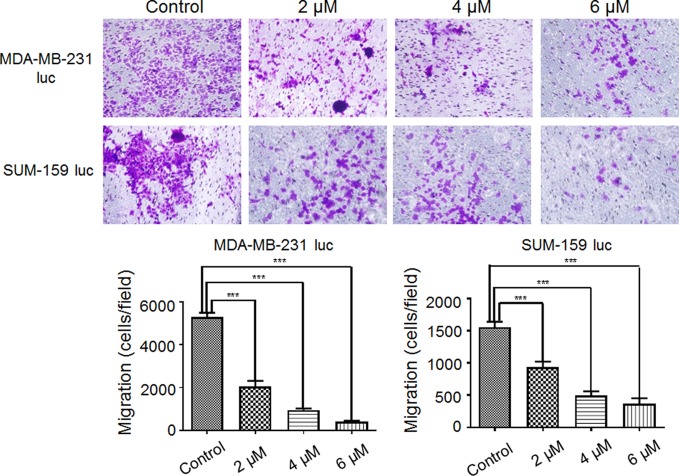
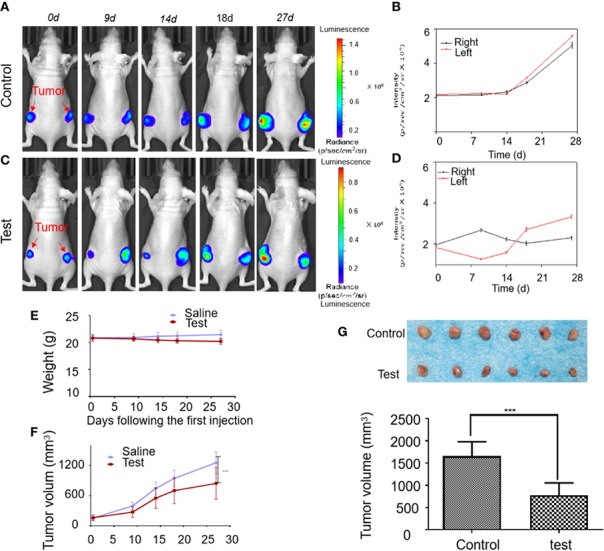
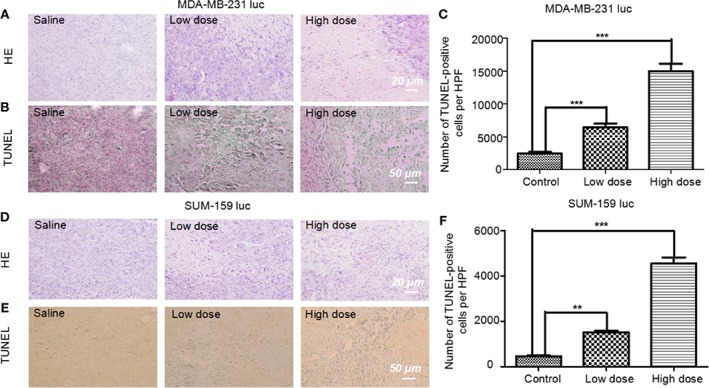
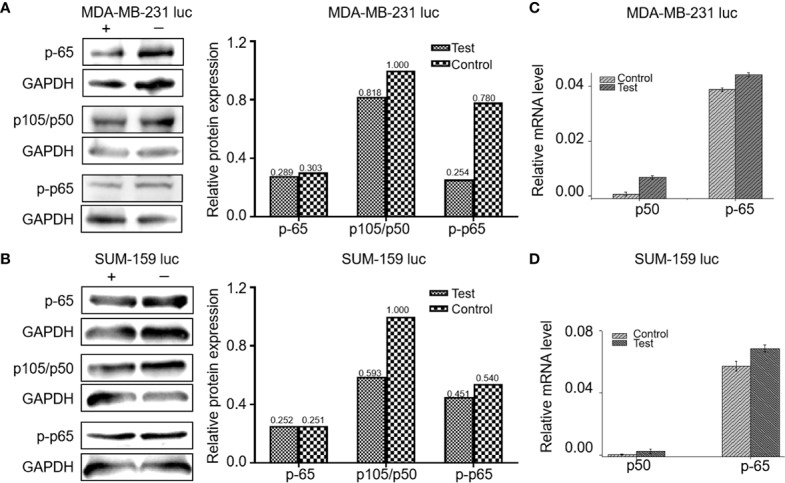
Britanin has been reported to have therapeutic effects on neurodegenerative and inflammation-based diseases. However, whether it is involved in the regulation of triple-negative breast cancer development has not been elucidated. In this study, we investigated the anti-tumor activity against triple-negative breast cancer tumor of Britanin by bioluminescence imaging using athymic (nu/nu) mice implanted with MDA-MB-231 and SUM-159 cells expressing a luciferase reporter gene, and explored the anti-tumor mechanism of Britanin. The results showed that Britanin treatment inhibited triple-negative breast cancer cell proliferation , and Cell Counting Kit-8 (IC values are 4.27 and 5.05 μM) and colony formation tests (P < 0.001) confirmed this result. Transwell assays were conducted to verify that Britanin treatment inhibited cell migration and invasion (P < 0.001). Apoptosis was determined by TdT-mediated dUTP nick-end labeling method. Western blot and qRT-PCR analysis showed that Britanin treatment caused a decrease in the member expression of NF-kappa B signaling pathway. Computational modeling showed that Britanin could directly bind to a p-65 core region composed of Cys38, Cys120, and Gln128 residues. The results showed that the inhibitory mechanisms of Britanin on cancer cells may be by ways of inhibiting the NF-kappa B pathway. In addition, bioluminescence imaging screening system is useful for accelerating the application of Britanin in the antitumor field, and provides a useful tool for evaluating the phytochemicals efficacy in inhibiting cancer cell proliferation in animal models.
据报道,不列颠宁对神经退行性疾病和炎症性疾病具有治疗作用。然而,其是否参与三阴性乳腺癌的发展调控尚未阐明。在本研究中,我们通过生物发光成像,利用植入了表达荧光素酶报告基因的MDA-MB-231和SUM-159细胞的无胸腺(nu/nu)小鼠,研究了不列颠宁对三阴性乳腺癌肿瘤的抗肿瘤活性,并探讨了不列颠宁的抗肿瘤机制。结果表明,不列颠宁处理可抑制三阴性乳腺癌细胞增殖,细胞计数试剂盒-8(IC值分别为4.27和5.05 μM)和集落形成试验(P < 0.001)证实了这一结果。进行Transwell分析以验证不列颠宁处理可抑制细胞迁移和侵袭(P < 0.001)。采用TdT介导的dUTP缺口末端标记法测定细胞凋亡。蛋白质印迹和qRT-PCR分析表明,不列颠宁处理导致NF-κB信号通路成员表达降低。计算模型显示,不列颠宁可直接结合由Cys38、Cys120和Gln128残基组成的p-65核心区域。结果表明,不列颠宁对癌细胞的抑制机制可能是通过抑制NF-κB途径。此外,生物发光成像筛选系统有助于加速不列颠宁在抗肿瘤领域的应用,并为评估植物化学物质在动物模型中抑制癌细胞增殖的功效提供了有用的工具。