Duke Molecular Physiology Institute, School of Medicine, Duke University, Durham, NC, United States.
Division of Medical Oncology, School of Medicine, Duke University, Durham, NC, United States.
Front Immunol. 2020 May 5;11:729. doi: 10.3389/fimmu.2020.00729. eCollection 2020.
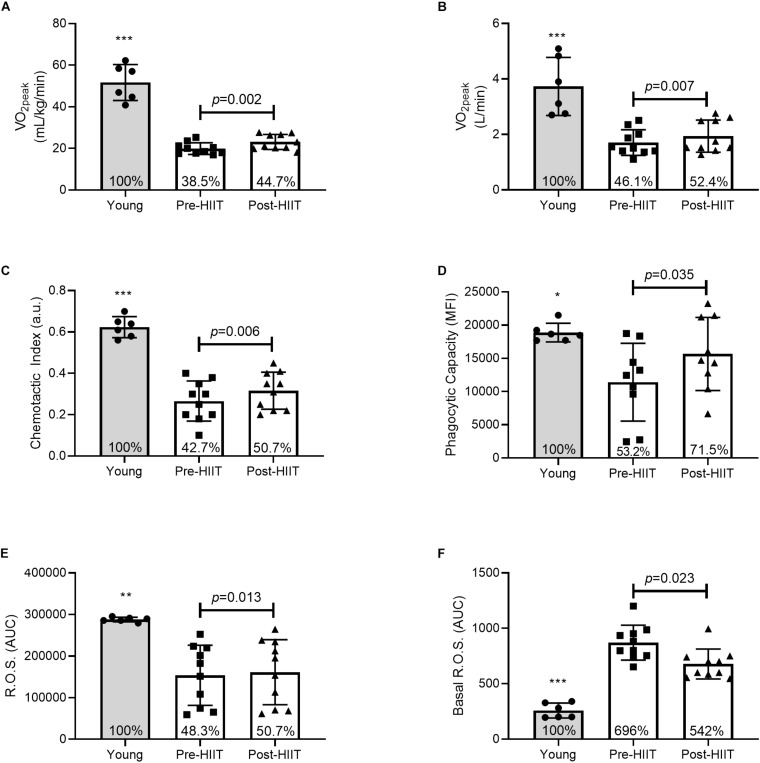
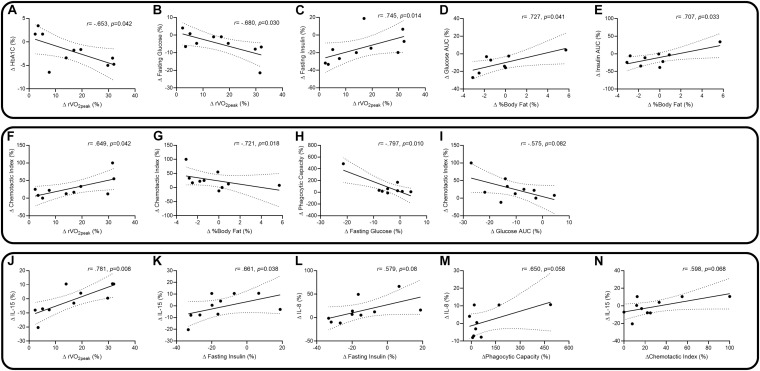
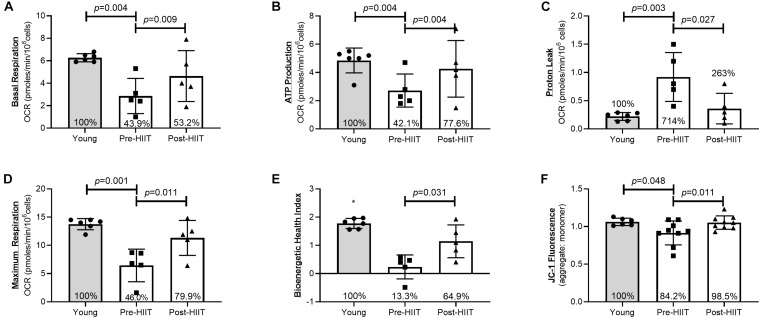
Neutrophil dysfunction is a common feature of aging, and is associated with the pathogenesis of many age-related diseases, including type 2 diabetes mellitus (T2DM). Although exercise training improves metabolic health, decreases risk of T2DM, and is associated with improving neutrophil functions, involvement in regular physical activity declines with age. The aim of this study was to determine if neutrophil functions could be improved in association with changes in fitness and metabolic parameters in older adults at risk for T2DM using 10-weeks of low volume high-intensity interval exercise training (HIIT). Ten older (71 ± 5 years) sedentary adults with prediabetes (HbA1c: 6.1 ± 0.3%) completed 10 weeks of a supervised HIIT program. Three 30 min sessions/week consisted of ten 60 s intervals of low intensity [50-60% heart rate reserve (HRR)] separated with similar durations of high intensity intervals (80-90% HRR). Before and after training, glucose and insulin sensitivity, neutrophil chemotaxis, bacterial phagocytosis, reactive oxygen species (ROS) production, and mitochondrial functions were assessed. Exercise-mediated changes in cardiorespiratory fitness (VO) and neutrophil functions were compared to six young (23 ± 1 years) healthy adults. Following training, significant reductions in fasting glucose and insulin were accompanied by improved glucose control and insulin sensitivity (all < 0.05). Before exercise training, VO in the old participants was significantly less than that of the young controls ( < 0.001), but increased by 16 ± 11% following training ( = 0.002) resulting in a 6% improvement of the deficit. Neutrophil chemotaxis, phagocytosis and stimulated ROS production were significantly less than that of the young controls, while basal ROS were higher before training (all < 0.05). Following training, chemotaxis, phagocytosis and stimulated ROS increased while basal ROS decreased, similar to levels observed in the young controls (all < 0.05) and reducing the deficit of the young controls between 2 and 154%. In five of the adults with prediabetes, neutrophil mitochondrial functions were significantly poorer than the six young controls before training. Following training, mitochondrial functions improved toward those observed in young controls (all < 0.05), reducing the deficit of the young controls between 14.3 and 451%. Ten weeks of HIIT in older adults at risk for T2DM reduced disease risk accompanied by improved primary and bioenergetic neutrophil functions. Our results are consistent with a reduced risk of infections mediated by relationships in exercise induced systemic and cellular metabolic features. www.ClinicalTrials.gov, identifier NCT02441205, registered on May 12th, 2015.
中性粒细胞功能障碍是衰老的一个常见特征,与许多与年龄相关的疾病的发病机制有关,包括 2 型糖尿病(T2DM)。尽管运动训练可以改善代谢健康,降低 T2DM 的风险,并与改善中性粒细胞功能有关,但随着年龄的增长,人们参与有规律的体育活动的意愿会下降。本研究的目的是确定在有患 T2DM 风险的老年人中,通过 10 周低容量高强度间歇训练(HIIT),是否可以改善与体能和代谢参数相关的中性粒细胞功能。10 名年龄较大(71 ± 5 岁)的久坐成年人(HbA1c:6.1 ± 0.3%)完成了 10 周的监督 HIIT 计划。每周 3 次 30 分钟的课程,由 10 个 60 秒的低强度间隔(50-60%心率储备(HRR))组成,间隔时间相同的高强度间隔(80-90% HRR)。在训练前后,评估了葡萄糖和胰岛素敏感性、中性粒细胞趋化性、细菌吞噬作用、活性氧物质(ROS)产生和线粒体功能。将运动介导的心肺功能(VO)和中性粒细胞功能的变化与 6 名年轻(23 ± 1 岁)健康成年人进行了比较。训练后,空腹血糖和胰岛素显著降低,同时改善了血糖控制和胰岛素敏感性(均 < 0.05)。在运动训练之前,老年人的 VO 明显低于年轻对照组( < 0.001),但训练后增加了 16 ± 11%( = 0.002),从而使缺陷提高了 6%。中性粒细胞趋化性、吞噬作用和刺激 ROS 产生明显低于年轻对照组,而基础 ROS 在训练前较高(均 < 0.05)。训练后,趋化性、吞噬作用和刺激 ROS 增加,而基础 ROS 减少,与年轻对照组观察到的水平相似(均 < 0.05),并将年轻对照组之间的缺陷减少了 2%至 154%。在 10 名患有前驱糖尿病的成年人中,中性粒细胞线粒体功能在训练前明显差于 6 名年轻对照组。训练后,线粒体功能朝着年轻对照组的水平改善(均 < 0.05),将年轻对照组之间的缺陷减少了 14.3%至 451%。在有患 T2DM 风险的老年人中进行 10 周的 HIIT 训练可降低疾病风险,同时改善主要和生物能量中性粒细胞功能。我们的结果与感染风险降低有关,这与运动诱导的全身和细胞代谢特征有关。www.ClinicalTrials.gov,标识符 NCT02441205,于 2015 年 5 月 12 日注册。