Department of Veterinary Resources, Children's Hospital of Philadelphia, Philadelphia, Pennsylvania.
Unit for Laboratory Animal Medicine, University of Michigan, Ann Arbor, Michigan.
Shock. 2020 Nov;54(5):688-696. doi: 10.1097/SHK.0000000000001551.
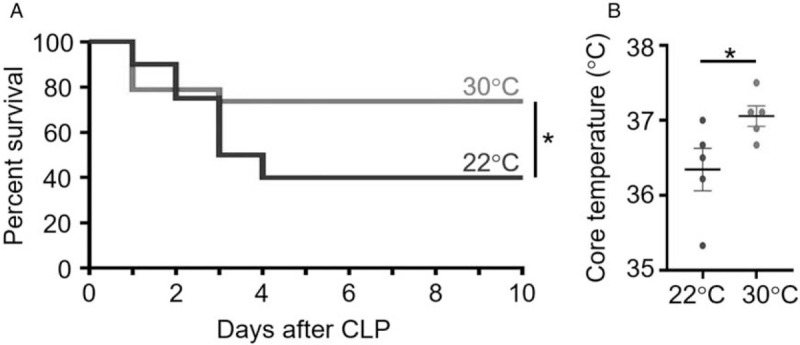
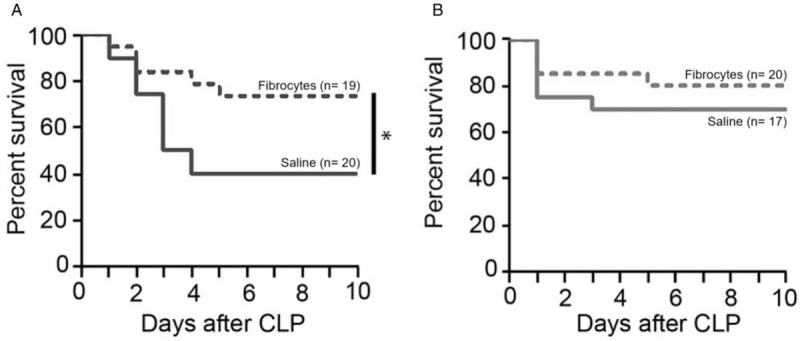
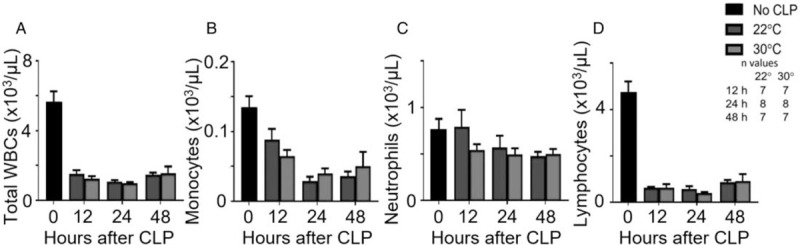
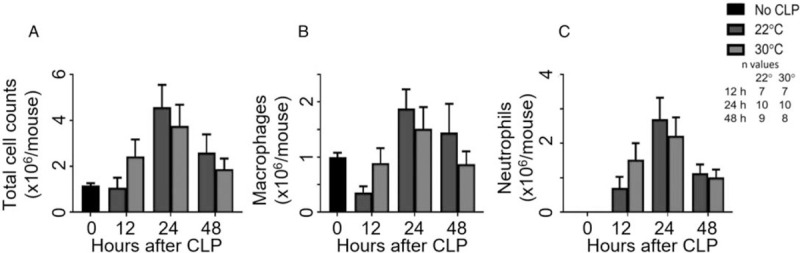
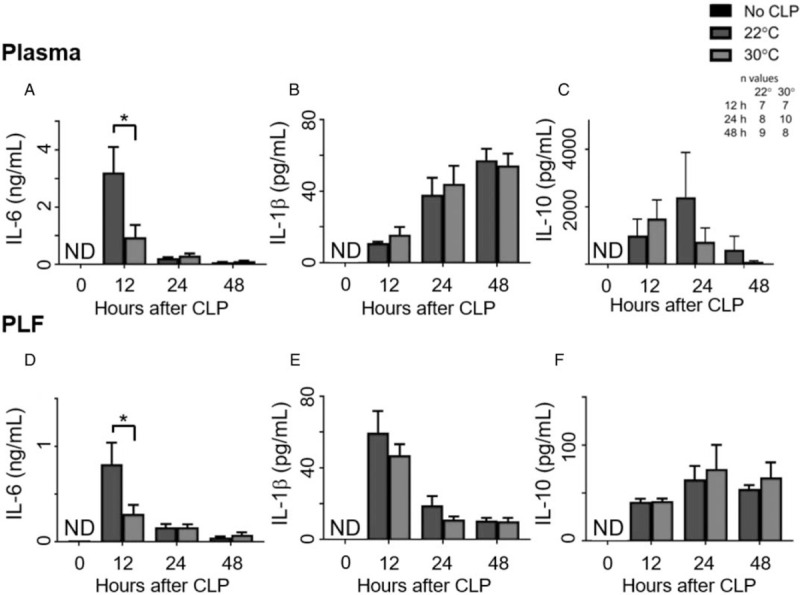
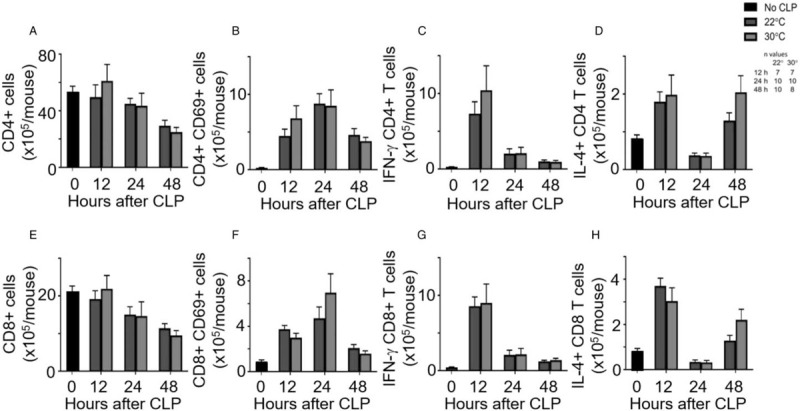
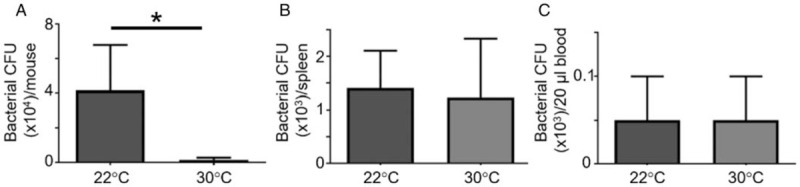
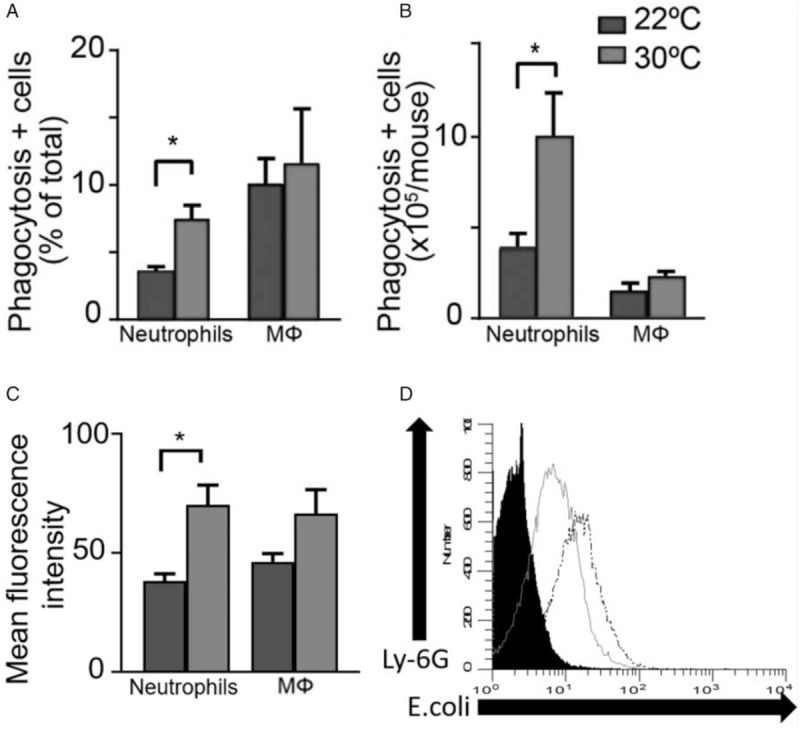
Regulatory guidelines mandate housing for laboratory mice at temperatures below their thermoneutral zone, creating chronic cold stress. However, increases in housing temperature could alter immune responses. We hypothesized housing mice at temperatures within their thermoneutral zone would improve sepsis survival and alter immune responses. Male C57BL/6 mice were housed at 22°C or 30°C after cecal ligation and puncture (CLP) for 10 days. Survival of mice housed at 30°C (78%) after CLP was significantly increased compared with mice housed at 22°C (40%). Experimental groups were repeated with mice euthanized at 0, 12, 24, and 48 h post-surgery to examine select immune parameters. Raising housing temperature minimally altered systemic, peritoneal, or splenic cell counts. However, IL-6 levels in plasma and peritoneal lavage fluid were significantly lower at 12 h post-surgery in mice housed at 30°C compared with 22°C. Bacterial colony counts from peritoneal lavage fluid were significantly lower in mice housed at 30°C and in vivo studies suggested this was the result of increased phagocytosis by neutrophils. As previously demonstrated, adoptive transfer of fibrocytes significantly increased sepsis survival compared with saline at 22°C. However, there was no additive effect when adoptive transfer was performed at 30°C. Overall, the results demonstrated that thermoneutral housing improves survival after CLP by increasing local phagocytic activity and technical revisions may be necessary to standardize the severity of the model across different housing temperatures. These findings stress the pronounced impact housing temperature has on the CLP model and the importance of reporting housing temperature.
监管指南要求将实验小鼠的住所温度控制在其热中性区以下,以造成慢性冷应激。然而,增加住所温度可能会改变免疫反应。我们假设将小鼠安置在其热中性区内会提高脓毒症的存活率并改变免疫反应。雄性 C57BL/6 小鼠在盲肠结扎和穿刺(CLP)后 10 天内分别被安置在 22°C 或 30°C 的环境中。与安置在 22°C 的小鼠(40%)相比,安置在 30°C 的小鼠(78%)在 CLP 后的存活率显著提高。实验组重复进行,在手术后 0、12、24 和 48 小时处死小鼠,以检查选定的免疫参数。将饲养温度提高到最低限度改变了全身、腹膜或脾脏细胞计数。然而,与 22°C 相比,安置在 30°C 的小鼠在手术后 12 小时的血浆和腹膜灌洗液中的 IL-6 水平显著降低。安置在 30°C 的小鼠的腹膜灌洗液中的细菌菌落计数显著降低,体内研究表明这是由于中性粒细胞吞噬作用增加所致。如前所述,与 22°C 时的生理盐水相比,纤维细胞的过继转移显著提高了脓毒症的存活率。然而,当在 30°C 进行过继转移时,没有附加效果。总的来说,这些结果表明,通过增加局部吞噬活性,热中性饲养可提高 CLP 后的存活率,并且可能需要对技术修订以在不同的饲养温度下标准化模型的严重程度。这些发现强调了饲养温度对 CLP 模型的显著影响以及报告饲养温度的重要性。