Departments of Cancer Biology, Boston, MA, USA.
Medical Oncology, Dana-Farber Cancer Institute and Harvard Medical School, Boston, MA, 02215, USA.
Nat Commun. 2020 May 20;11(1):2517. doi: 10.1038/s41467-020-16399-y.
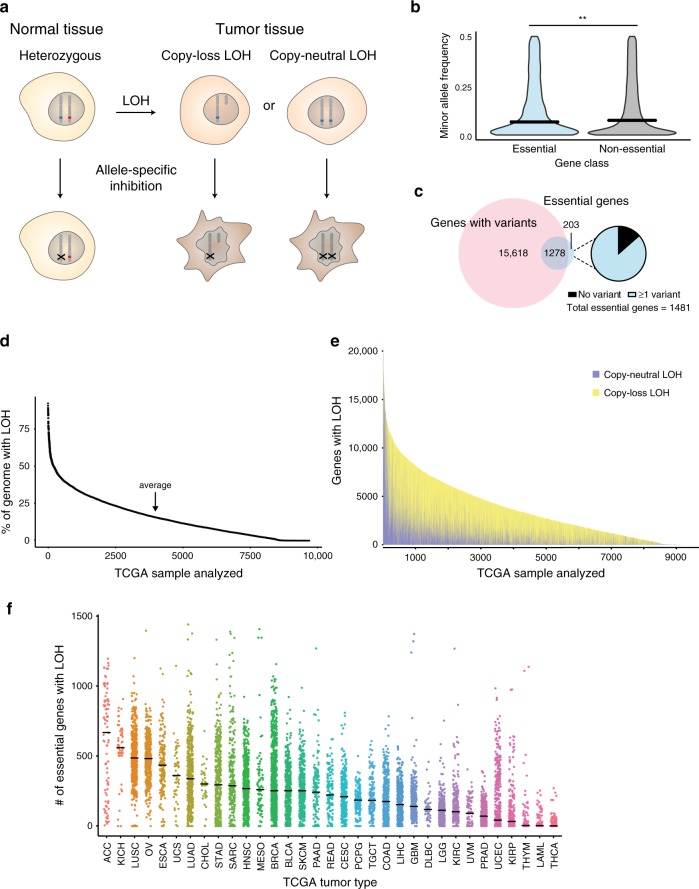
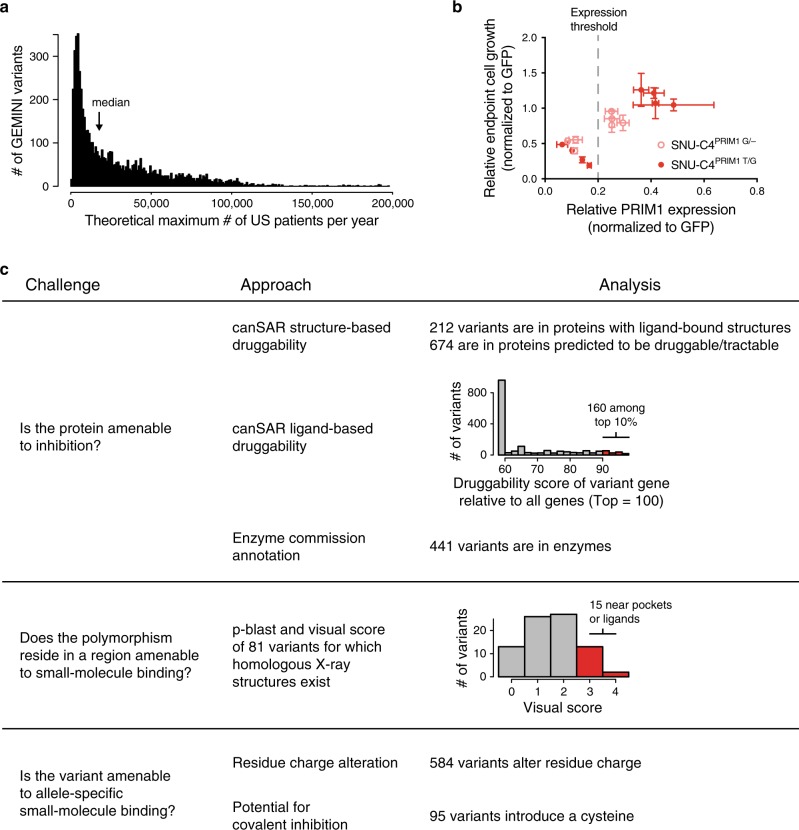
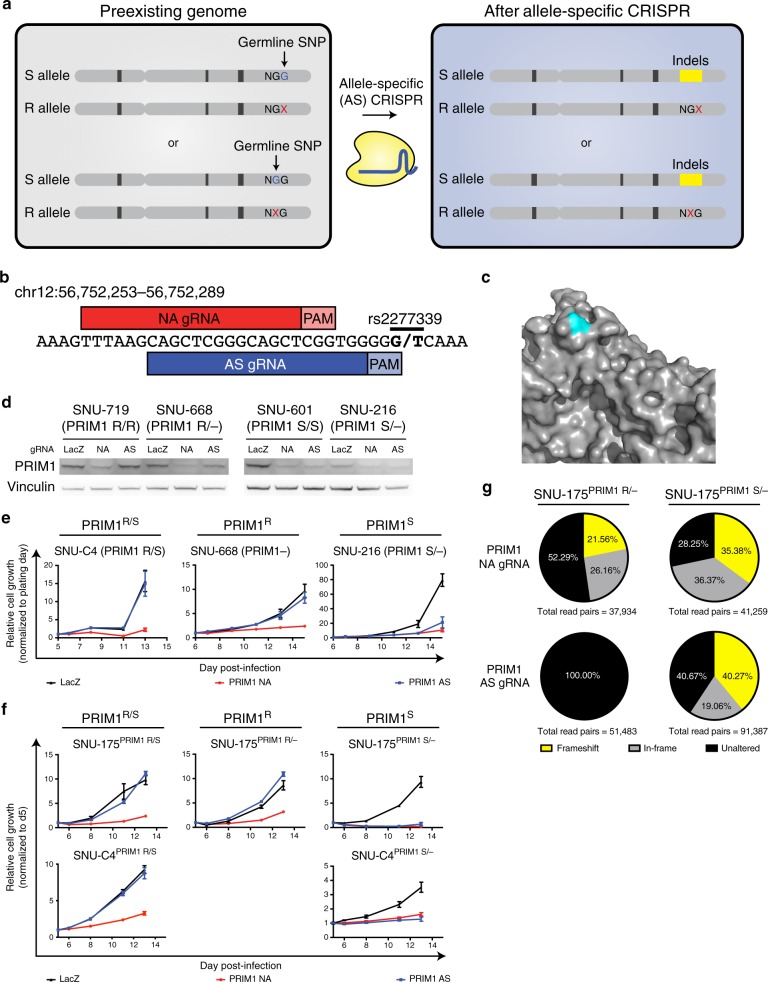
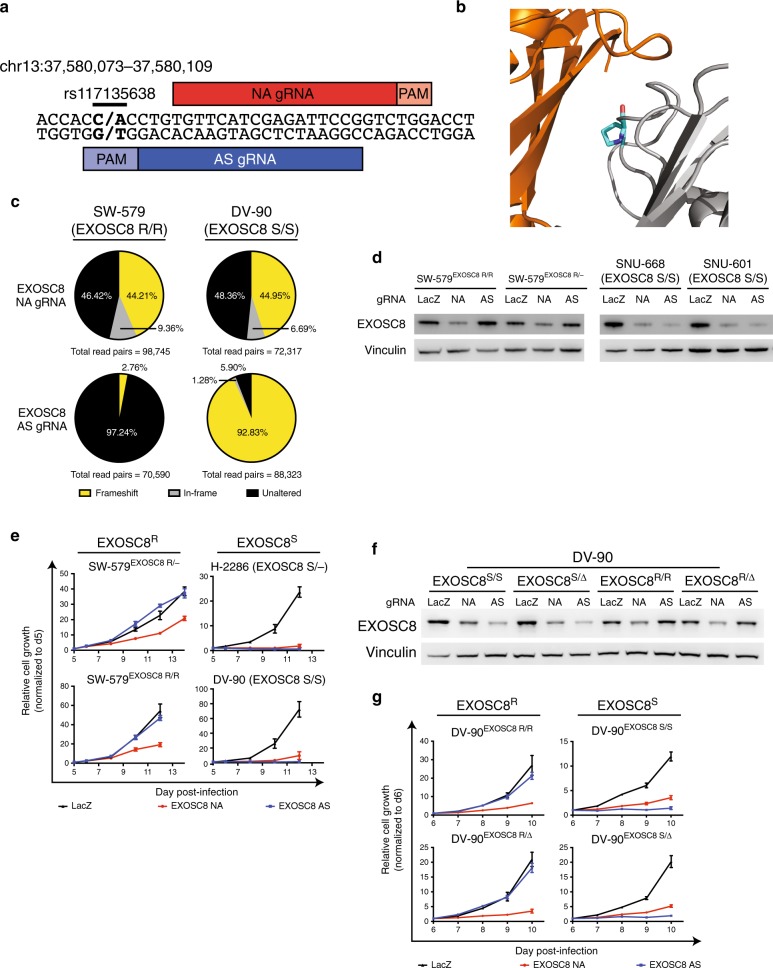
Alterations in non-driver genes represent an emerging class of potential therapeutic targets in cancer. Hundreds to thousands of non-driver genes undergo loss of heterozygosity (LOH) events per tumor, generating discrete differences between tumor and normal cells. Here we interrogate LOH of polymorphisms in essential genes as a novel class of therapeutic targets. We hypothesized that monoallelic inactivation of the allele retained in tumors can selectively kill cancer cells but not somatic cells, which retain both alleles. We identified 5664 variants in 1278 essential genes that undergo LOH in cancer and evaluated the potential for each to be targeted using allele-specific gene-editing, RNAi, or small-molecule approaches. We further show that allele-specific inactivation of either of two essential genes (PRIM1 and EXOSC8) reduces growth of cells harboring that allele, while cells harboring the non-targeted allele remain intact. We conclude that LOH of essential genes represents a rich class of non-driver cancer vulnerabilities.
非驱动基因的改变代表了癌症中一类新兴的潜在治疗靶点。每个肿瘤中都有数百到数千个非驱动基因发生杂合性丢失 (LOH) 事件,从而在肿瘤和正常细胞之间产生明显的差异。在这里,我们研究了必需基因中多态性的 LOH 作为一类新的治疗靶点。我们假设,肿瘤中保留的等位基因的单等位基因失活可以选择性地杀死癌细胞而不杀死保留两个等位基因的体细胞。我们在癌症中发生 LOH 的 1278 个必需基因中鉴定出 5664 个变体,并评估了使用等位基因特异性基因编辑、RNAi 或小分子方法靶向每个变体的潜力。我们进一步表明,两个必需基因 (PRIM1 和 EXOSC8) 中的任一个的等位基因特异性失活都会降低携带该等位基因的细胞的生长,而携带非靶向等位基因的细胞则保持完整。我们得出结论,必需基因的 LOH 代表了一类丰富的非驱动癌症脆弱性。