Institute of Cell Biology and Immunology, University of Stuttgart, 70569, Stuttgart, Germany.
Dr. Margarete Fischer-Bosch Institute of Clinical Pharmacology and University of Tuebingen, 70376, Stuttgart, Germany.
Cell Death Differ. 2020 Nov;27(11):3037-3052. doi: 10.1038/s41418-020-0559-3. Epub 2020 May 20.
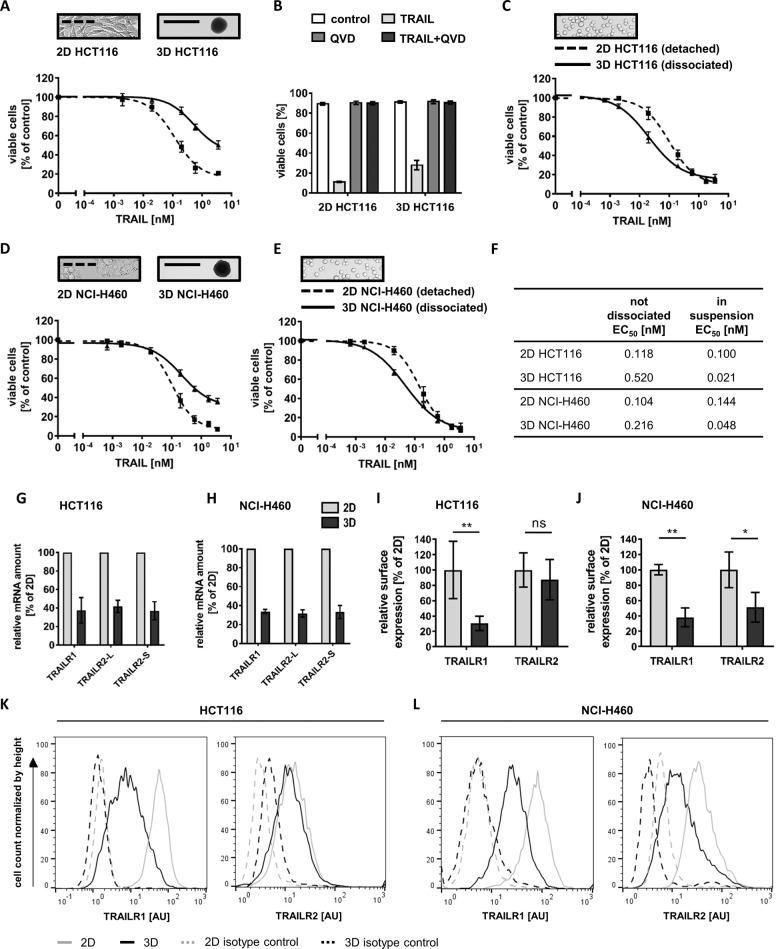
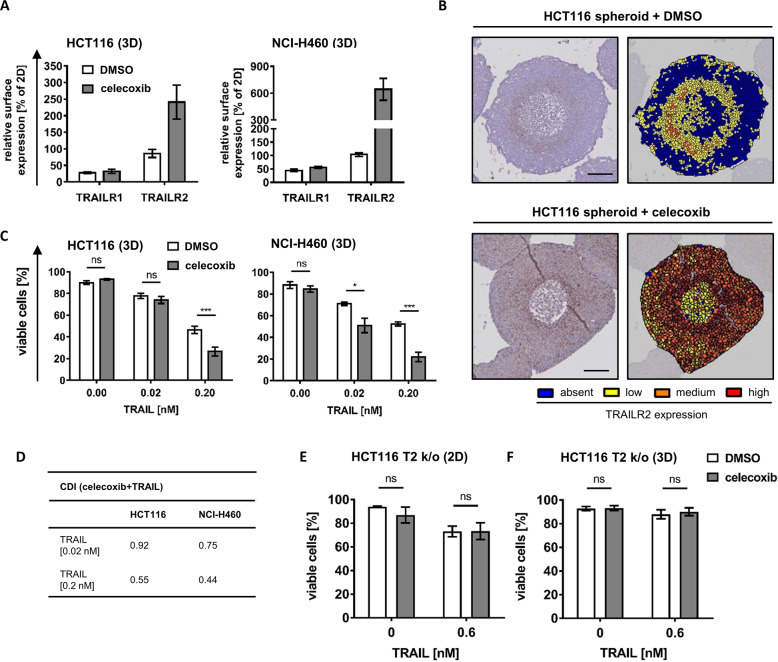
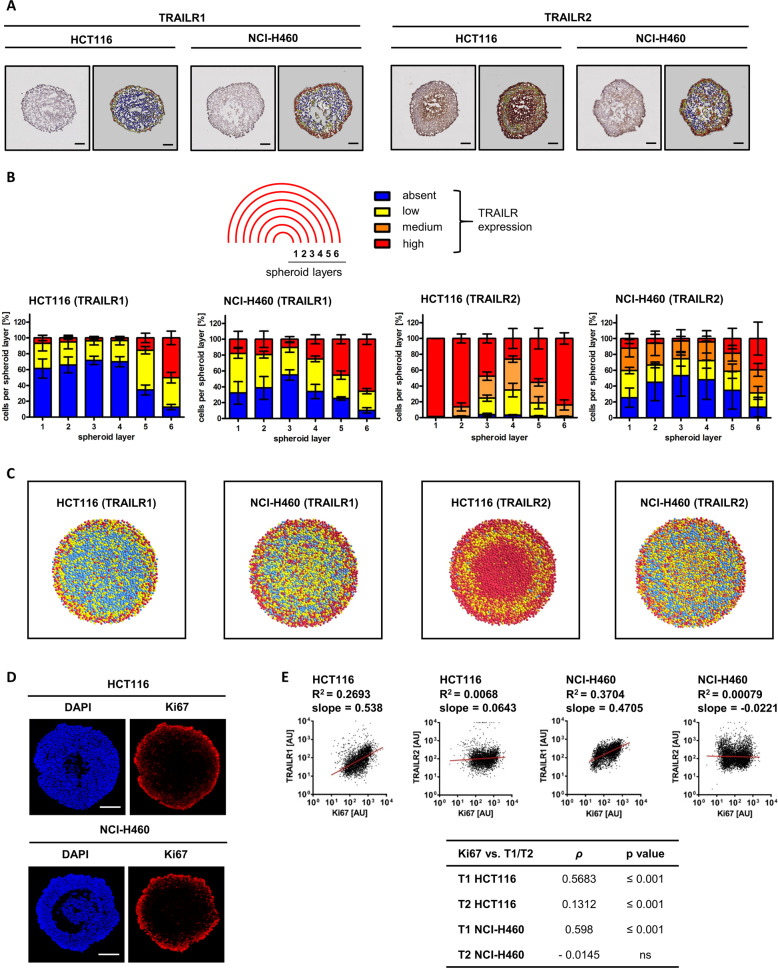
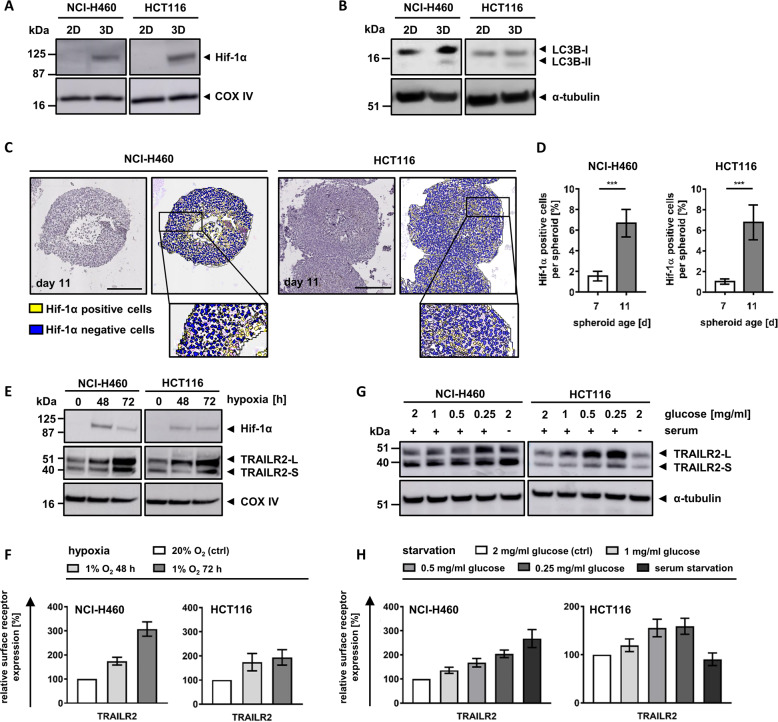
The influence of 3D microenvironments on apoptosis susceptibility remains poorly understood. Here, we studied the susceptibility of cancer cell spheroids, grown to the size of micrometastases, to tumor necrosis factor-related apoptosis-inducing ligand (TRAIL). Interestingly, pronounced, spatially coordinated response heterogeneities manifest within spheroidal microenvironments: In spheroids grown from genetically identical cells, TRAIL-resistant subpopulations enclose, and protect TRAIL-hypersensitive cells, thereby increasing overall treatment resistance. TRAIL-resistant layers form at the interface of proliferating and quiescent cells and lack both TRAILR1 and TRAILR2 protein expression. In contrast, oxygen, and nutrient deprivation promote high amounts of TRAILR2 expression in TRAIL-hypersensitive cells in inner spheroid layers. COX-II inhibitor celecoxib further enhanced TRAILR2 expression in spheroids, likely resulting from increased ER stress, and thereby re-sensitized TRAIL-resistant cell layers to treatment. Our analyses explain how TRAIL response heterogeneities manifest within well-defined multicellular environments, and how spatial barriers of TRAIL resistance can be minimized and eliminated.
三维微环境对细胞凋亡易感性的影响仍知之甚少。在这里,我们研究了大小达到微转移灶的肿瘤细胞球体对肿瘤坏死因子相关凋亡诱导配体(TRAIL)的敏感性。有趣的是,在球形微环境中表现出明显的、空间协调的反应异质性:在由遗传上相同的细胞生长而成的球体中,TRAIL 耐药亚群包围并保护 TRAIL 敏感细胞,从而增加整体治疗耐药性。TRAIL 耐药层形成于增殖细胞和静止细胞的交界处,缺乏 TRAILR1 和 TRAILR2 蛋白表达。相比之下,缺氧和营养剥夺促进 TRAIL 敏感细胞在球体内层中大量表达 TRAILR2。环氧化酶 -2 抑制剂塞来昔布进一步增强了球体中 TRAILR2 的表达,可能是由于内质网应激增加所致,从而使 TRAIL 耐药细胞层重新对治疗敏感。我们的分析解释了 TRAIL 反应异质性如何在明确定义的多细胞环境中表现出来,以及如何最小化和消除 TRAIL 耐药的空间障碍。