Department of Biological and Agricultural Engineering, Faculty of Engineering, Universiti Putra Malaysia, 43400, UPM Serdang, Selangor DE, Malaysia.
Faculty of Agricultural and Engineering Technology, Bangladesh Agricultural University, Mymensingh 2202, Bangladesh.
Sci Rep. 2020 May 20;10(1):8336. doi: 10.1038/s41598-020-65114-w.
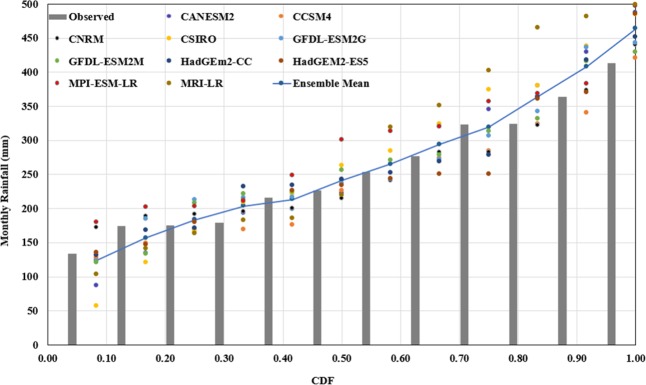
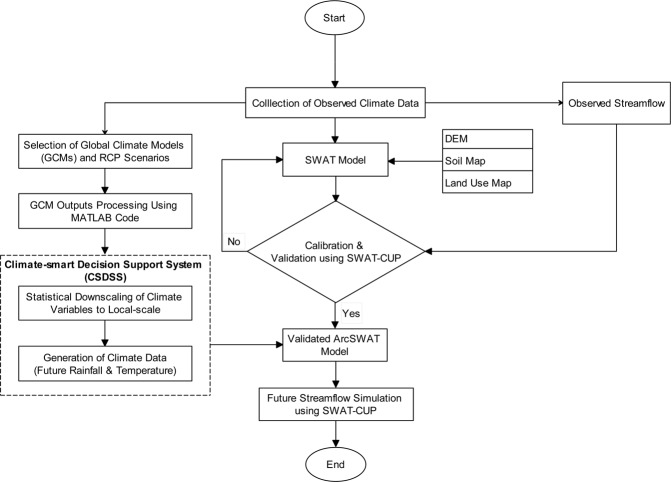
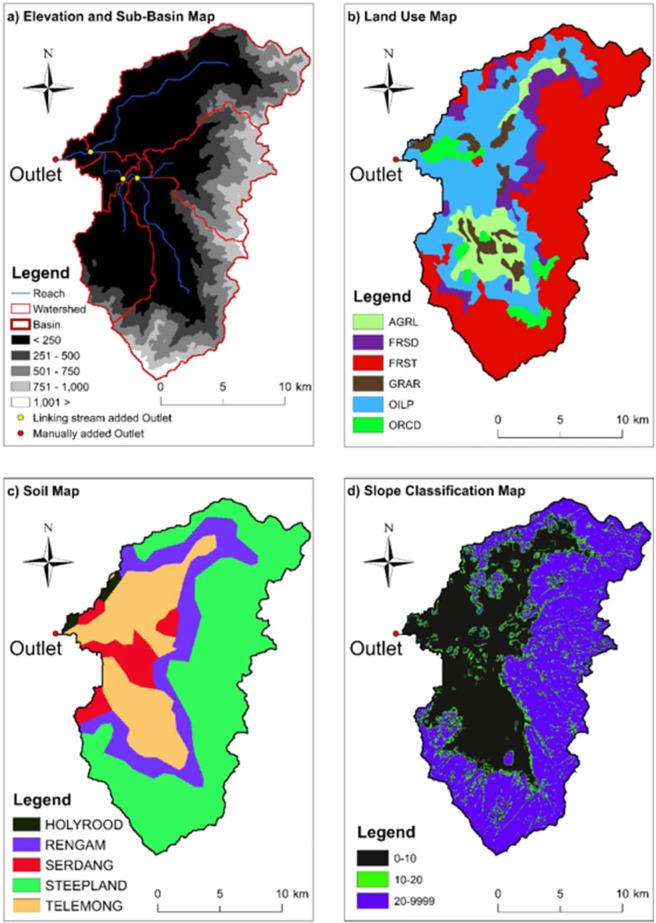
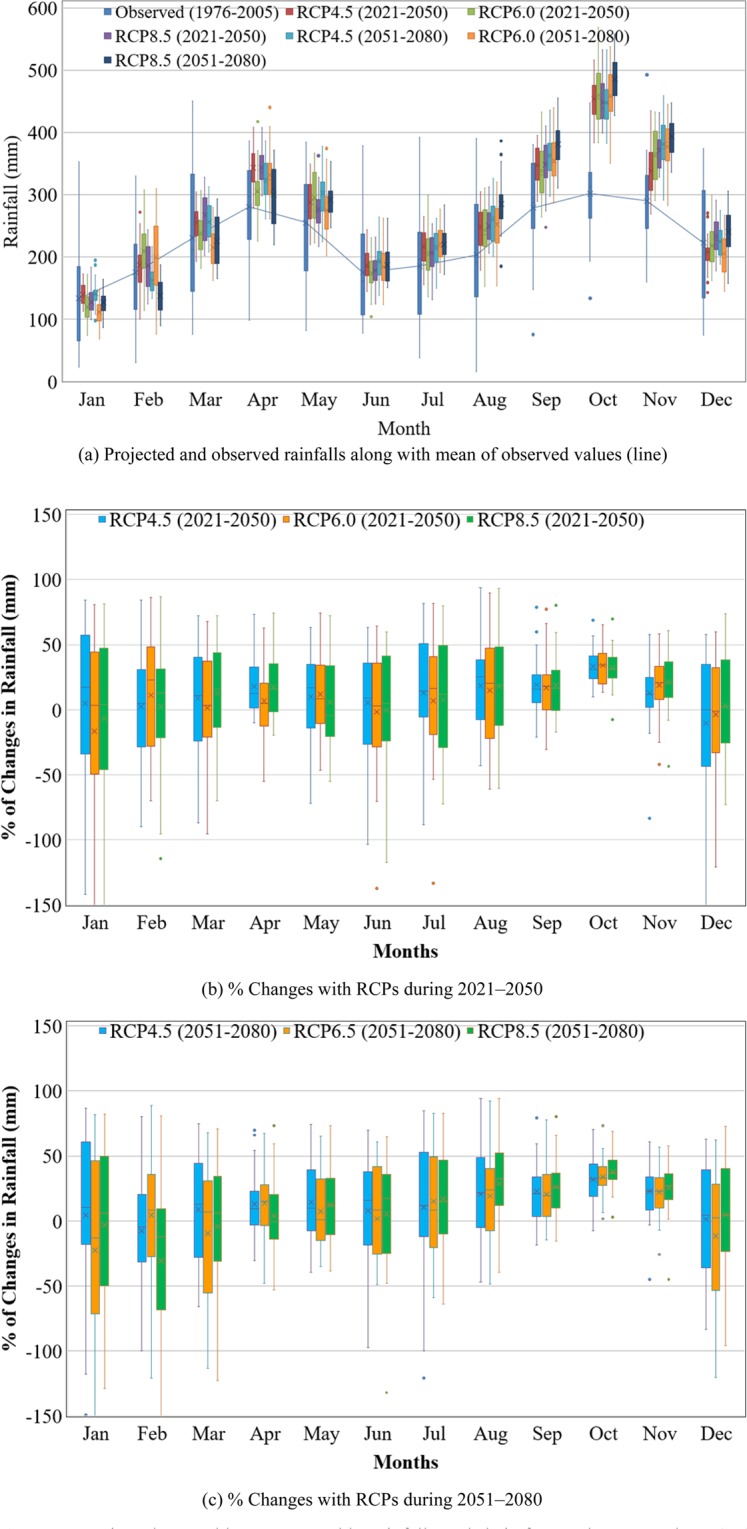
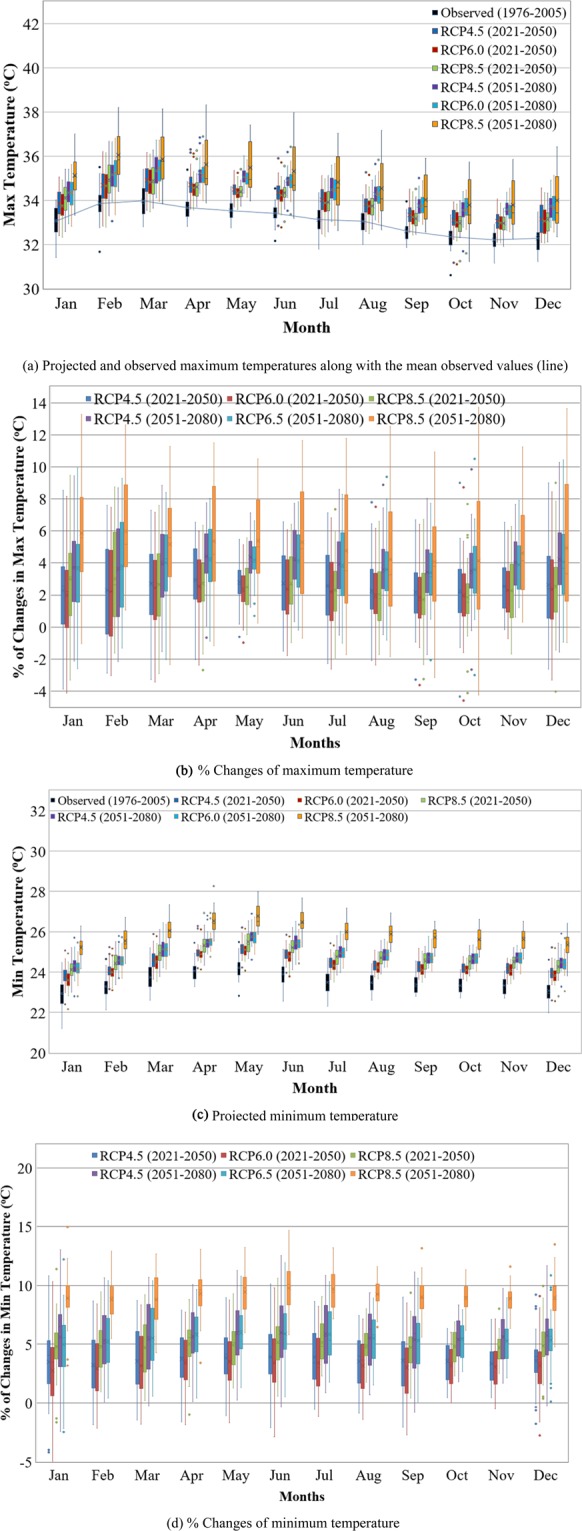
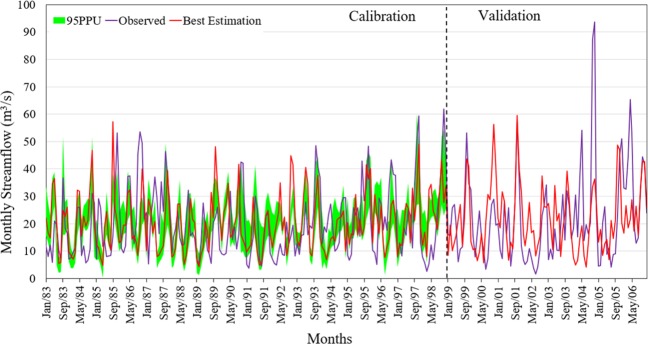
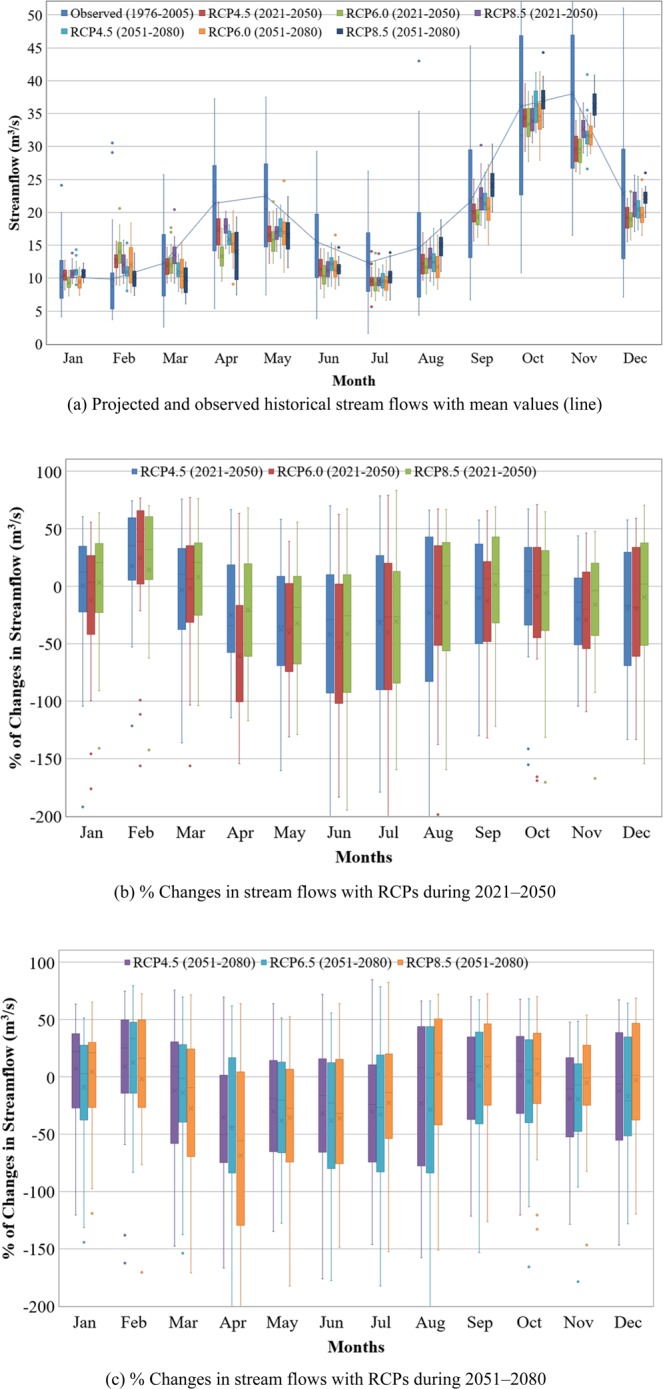
Climate change-induced spatial and temporal variability of stremflow has significant implications for hydrological processes and water supplies at basin scale. This study investigated the impacts of climate change on streamflow of the Kurau River Basin in Malaysia using a Climate-Smart Decision Support System (CSDSS) to predict future climate sequences. For this, we used 25 reliazations consisting from 10 Global Climate Models (GCMs) and three IPCC Representative Concentration Pathways (RCP4.5, RCP6.0 and RCP8.5). The generated climate sequences were used as input to Soil and Water Assessment Tool (SWAT) to simulate projected changes in hydrological processes in the basin over the period 2021-2080. The model performed fairly well for the Kurau River Basin, with coefficient of determination (R), Nash-Sutcliffe Efficiency (NSE) and Percent Bias (PBIAS) of 0.65, 0.65 and -3.0, respectively for calibration period (1981-1998) and 0.60, 0.59 and -4.6, respectively for validation period (1996-2005). Future projections over 2021-2080 period show an increase in rainfall during August to January (relatively wet season, called the main irrigation season) but a decrease in rainfall during February to July (relatively dry season, called the off season). Temperature projections show increase in both the maximum and minimum temperatures under the three RCP scenarios, with a maximum increase of 2.5 °C by 2021-2080 relative to baseline period of 1976-2005 under RCP8.5 scenario. The model predicted reduced streamflow under all RCP scenarios compared to the baseline period. Compared to 2021-2050 period, the projected streamflow will be higher during 2051-2080 period by 1.5 m/s except in February for RCP8.5. The highest streamflow is predicted during August to December for both future periods under RCP8.5. The seasonal changes in streamflow range between -2.8% and -4.3% during the off season, and between 0% (nil) and -3.8% during the main season. The assessment of the impacts of climatic variabilities on the available water resources is necessary to identify adaptation strategies. It is supposed that such assessment on the Kurau River Basin under changing climate would improve operation policy for the Bukit Merah reservoir located at downstream of the basin. Thus, the predicted streamflow of the basin would be of importance to quantify potential impacts of climate change on the Bukit Merah reservoir and to determine the best possible operational strategies for irrigation release.
气候变化引起的基流时空变化对流域尺度上的水文过程和水资源供应有重大影响。本研究使用气候智能决策支持系统(CSDSS)来预测未来气候序列,研究了气候变化对马来西亚古劳流域基流的影响。为此,我们使用了由 10 个全球气候模型(GCMs)和三个 IPCC 代表性浓度路径(RCP4.5、RCP6.0 和 RCP8.5)组成的 25 个实现方案。生成的气候序列被用作土壤和水评估工具(SWAT)的输入,以模拟该流域 2021-2080 年期间水文过程的预测变化。该模型在古劳流域表现相当不错,校准期(1981-1998 年)的决定系数(R)、纳什-苏特克里夫效率(NSE)和偏度百分比(PBIAS)分别为 0.65、0.65 和-3.0,验证期(1996-2005 年)分别为 0.60、0.59 和-4.6。2021-2080 年期间的未来预测显示,8 月至 1 月期间(相对湿润季节,称为主要灌溉季节)降雨量增加,但 2 月至 7 月期间(相对干燥季节,称为淡季)降雨量减少。温度预测显示,在三种 RCP 情景下,最高和最低温度都有所上升,与 1976-2005 年基线相比,RCP8.5 情景下 2021-2080 年期间的最高温度将上升 2.5°C。与基线期相比,所有 RCP 情景下的模型都预测到基流量减少。与 2021-2050 年期间相比,除 8 月外,2051-2080 年期间的预计流量将增加 1.5 m/s。在 RCP8.5 下,未来两个时期的最高流量都预计在 8 月至 12 月之间。在淡季期间,流量的季节性变化在-2.8%至-4.3%之间,在主季期间在 0%(无)至-3.8%之间。评估气候变率对可用水资源的影响对于确定适应策略是必要的。据推测,在气候变化下对古劳流域进行这样的评估将改进位于流域下游的武吉美拉水库的运营政策。因此,流域的预测流量对于量化气候变化对武吉美拉水库的潜在影响以及确定灌溉释放的最佳运营策略将非常重要。