Department of General Surgery (Breast and Thyroid Surgery), Shaoxing People's Hospital (Shaoxing Hospital, Zhejiang University School of Medicine), Zhejiang, 312000, China.
Department of Nephrology, Shaoxing People's Hospital (Shaoxing Hospital, Zhejiang University School of Medicine), Zhejiang, 312000, China.
BMC Cancer. 2020 May 20;20(1):454. doi: 10.1186/s12885-020-06966-3.
Activated eosinophils have been deemed to affect carcinogenesis and tumor progression via various mechanisms in tumor microenvironment. However, the prognostic role of tumor-associated tissue eosinophilia (TATE) in human cancers remains controversial. Therefore, we conducted this meta-analysis to better comprehend the association between TATE and clinical outcomes of patients.
We searched PubMed, Embase and EBSCO to determine the researches assessing the association between TATE and overall survival (OS) and/or disease-free survival (DFS) in patients with cancer, then combined relevant data into hazard ratios (HRs) or odds ratio (OR) for OS, DFS and clinicopathological features including lymph node metastasis etc. with STATA 12.0.
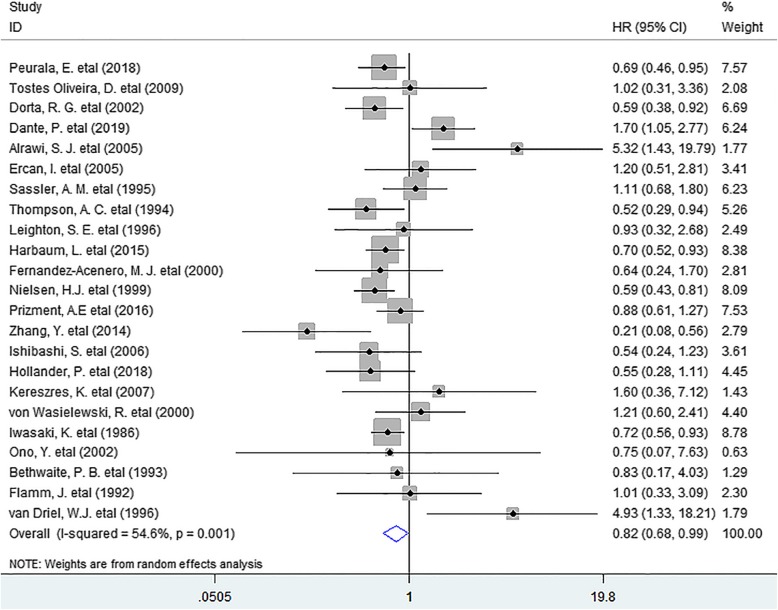
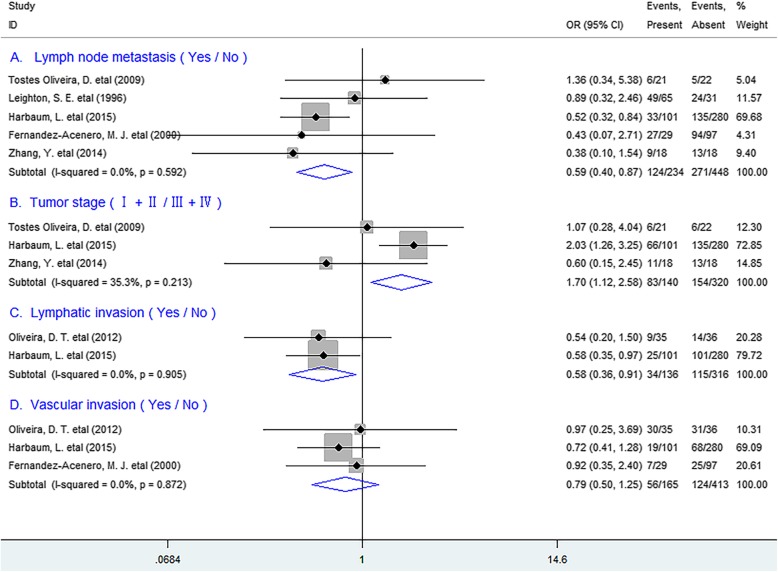
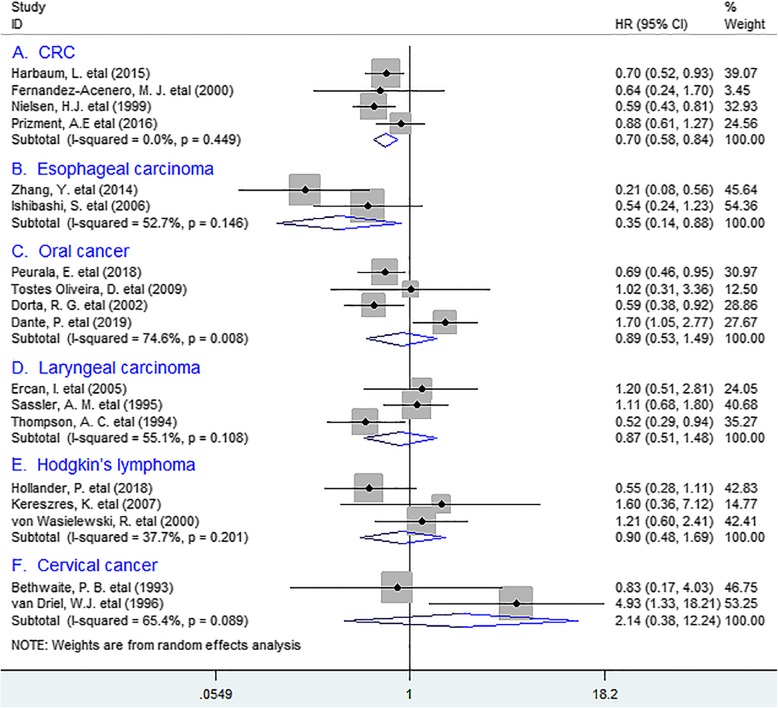
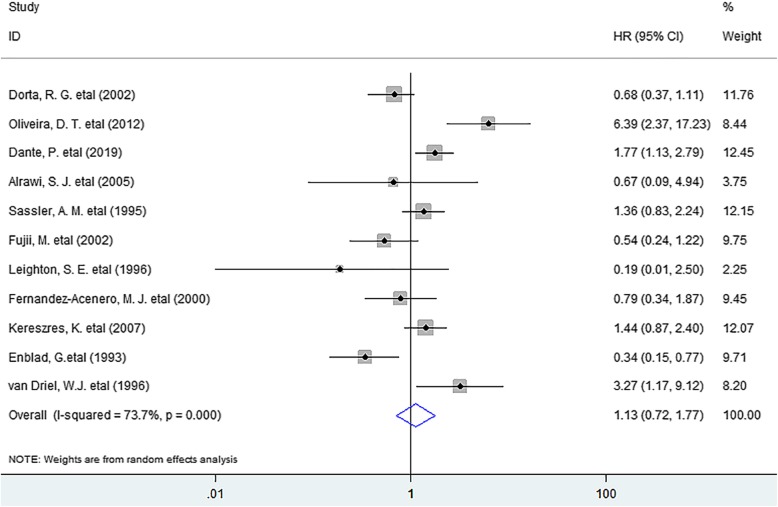
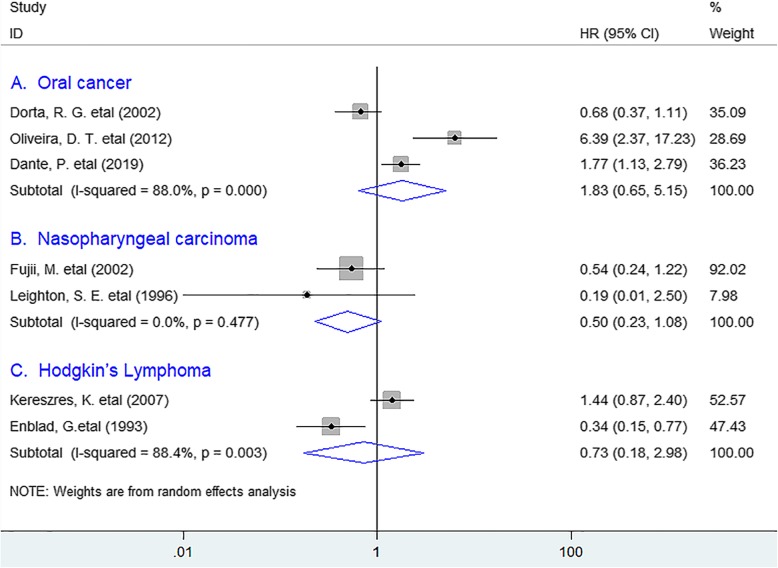
Twenty six researches with 6384 patients were included in this meta-analysis. We found that the presence of TATE was significantly associated with improved OS, but not with DFS in all types of cancers. In stratified analyses based on cancer types, pooled results manifested that the infiltration of eosinophils was remarkably associated with better OS in esophageal carcinoma and colorectal cancer. In addition, TATE significantly inversely correlated with lymph node metastasis, tumor stage and lymphatic invasion of cancer.
TATE promotes survival in cancer patients, suggesting that it is a valuable prognostic biomarker and clinical application of biological response modifiers or agonists promoting TATE may be the novel therapeutic strategy for patients.
在肿瘤微环境中,活化的嗜酸性粒细胞通过多种机制被认为会影响致癌作用和肿瘤进展。然而,肿瘤相关组织嗜酸性粒细胞浸润(TATE)在人类癌症中的预后作用仍存在争议。因此,我们进行了这项荟萃分析,以更好地理解 TATE 与癌症患者临床结局之间的关系。
我们检索了 PubMed、Embase 和 EBSCO,以确定评估 TATE 与癌症患者总生存(OS)和/或无病生存(DFS)之间相关性的研究,然后使用 STATA 12.0 将相关数据合并为 OS、DFS 和临床病理特征(包括淋巴结转移等)的风险比(HRs)或比值比(OR)。
这项荟萃分析纳入了 26 项研究,共 6384 名患者。我们发现,TATE 的存在与所有类型癌症的 OS 改善显著相关,但与 DFS 无关。基于癌症类型的分层分析显示,嗜酸性粒细胞浸润与食管癌和结直肠癌的 OS 显著相关。此外,TATE 与淋巴结转移、肿瘤分期和癌症的淋巴浸润显著负相关。
TATE 促进癌症患者的生存,表明它是一种有价值的预后生物标志物,促进 TATE 的生物反应调节剂或激动剂的临床应用可能是患者的新治疗策略。