Ragon Institute of MGH, MIT, and Harvard, Cambridge, Massachusetts, USA.
Department of Immunology and Infectious Diseases, Harvard T. H. Chan School of Public Health, Boston, Massachusetts, USA.
mSphere. 2020 May 20;5(3):e00104-20. doi: 10.1128/mSphere.00104-20.
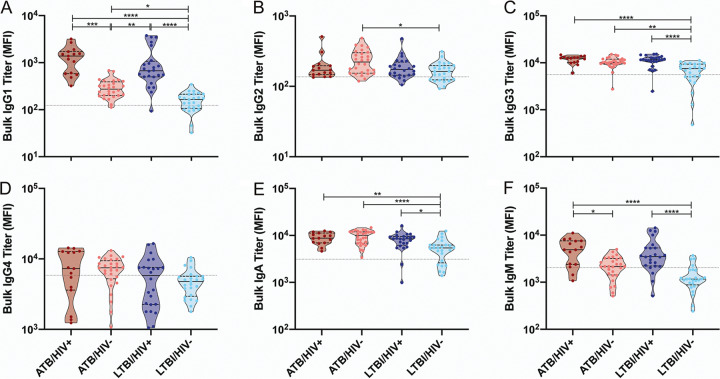
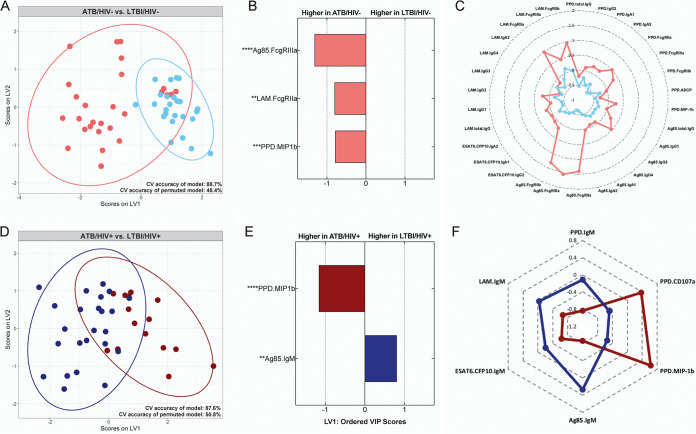
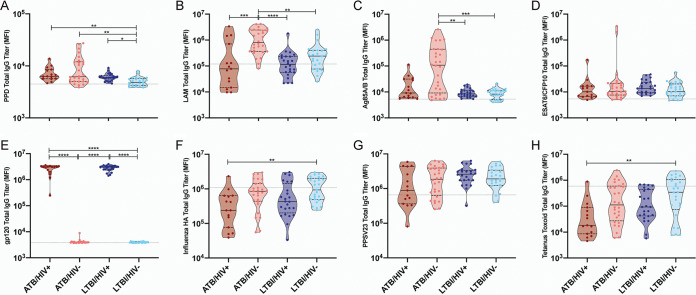
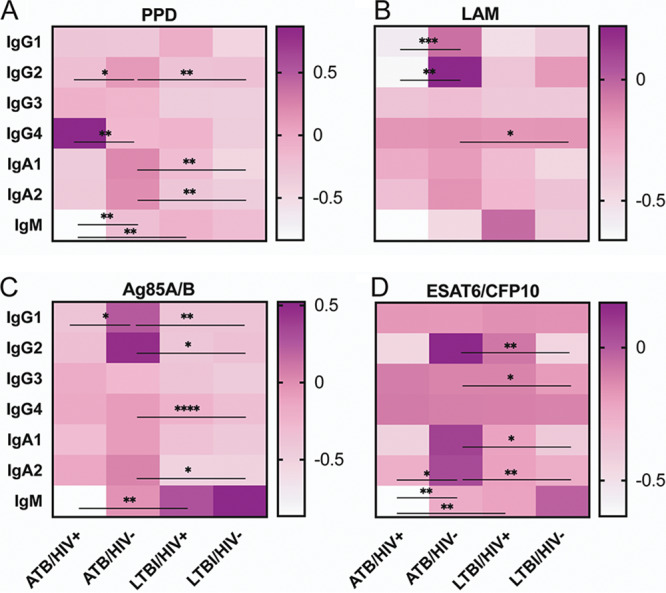
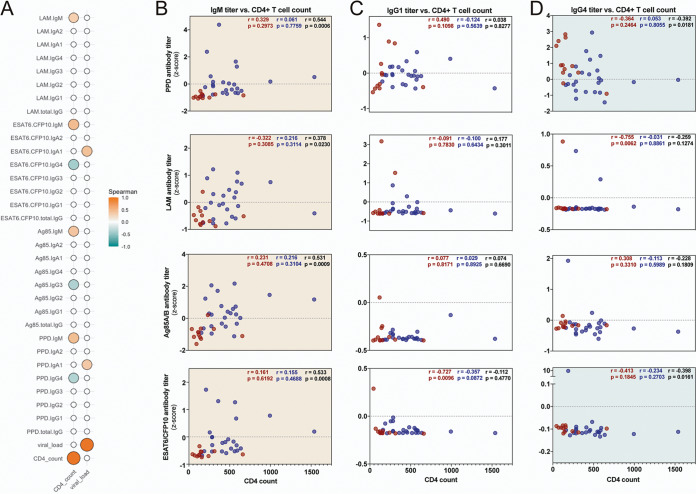
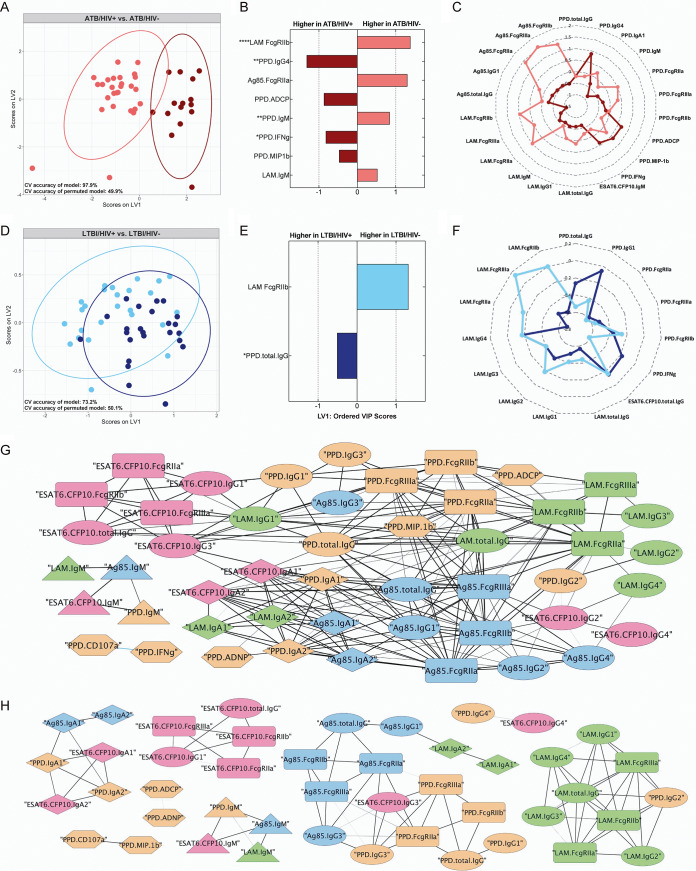
Tuberculosis (TB) represents the largest cause of death in human immunodeficiency virus (HIV)-infected individuals in part due to HIV-related CD4 T cell loss, rendering patients immunocompromised and susceptible to a loss of control. However, in light of increasing data pointing to a role for humoral immunity in controlling infection, here, we aimed to define whether HIV infection also alters the humoral immune response in subjects with active and latent TB. We show that in the setting of active TB, HIV-positive individuals have significantly lower IgG responses to LAM and Ag85 than HIV-negative individuals. Furthermore, significant isotype/subclass-specific differences were frequently observed, with active TB, HIV-positive individuals demonstrating compromised antigen-specific IgM titers. HIV-infected individuals with active TB also exhibited a significant loss of influenza hemagglutinin- and tetanus toxoid-specific antibody titers at the isotype/subclass level, a symptom of broad humoral immune dysfunction likely precipitated by HIV infection. Finally, we illustrated that despite the influence of HIV infection, differences in -specific antibody profiles persist between latent and active TB disease. Taken together, these findings reveal significant HIV-associated disruptions of the humoral immune response in HIV/TB-coinfected individuals. TB is the leading cause of death from a single infectious agent globally, followed by HIV. Furthermore, TB represents the leading cause of death among people with HIV. HIV is known to cause severe defects in T cell immunity, rendering HIV/TB-coinfected individuals more susceptible to TB disease progression and complicating accurate TB disease diagnosis. Here, we demonstrate that HIV infection is additionally associated with severely compromised antibody responses, particularly in individuals with active TB. Moreover, despite the influence of HIV infection, antibody profiles still allow accurate classification of individuals with active versus latent TB. These findings reveal novel immunologic challenges associated with HIV/TB coinfection and additionally provide a basis with which to leverage the key antibody features identified to potentially combat TB globally via next-generation therapeutic or diagnostic design.
结核病(TB)是人类免疫缺陷病毒(HIV)感染个体死亡的主要原因,部分原因是 HIV 相关的 CD4 T 细胞丢失,使患者免疫功能低下,容易失控。然而,鉴于越来越多的数据表明体液免疫在控制感染方面发挥作用,在这里,我们旨在确定 HIV 感染是否也会改变活动性和潜伏性结核病患者的体液免疫反应。我们发现,在活动性结核病的情况下,HIV 阳性个体对 LAM 和 Ag85 的 IgG 反应明显低于 HIV 阴性个体。此外,经常观察到显著的同种型/亚类特异性差异,活动性结核病患者 HIV 阳性个体表现出抗原特异性 IgM 滴度受损。活动性结核病 HIV 感染个体还表现出流感血凝素和破伤风类毒素特异性抗体滴度在同种型/亚类水平的显著丧失,这是 HIV 感染引发的广泛体液免疫功能障碍的症状。最后,我们说明,尽管受到 HIV 感染的影响,潜伏性和活动性结核病之间的特异性抗体谱仍存在差异。综上所述,这些发现揭示了 HIV/TB 合并感染个体中体液免疫反应的显著 HIV 相关破坏。结核病是全球单一感染源导致死亡的主要原因,其次是 HIV。此外,结核病是 HIV 感染者死亡的主要原因。已知 HIV 会导致 T 细胞免疫严重缺陷,使 HIV/TB 合并感染个体更容易发生结核病进展,并使结核病的准确诊断复杂化。在这里,我们证明 HIV 感染还与严重受损的抗体反应相关,尤其是在活动性结核病患者中。此外,尽管受到 HIV 感染的影响,抗体谱仍然可以准确地区分活动性和潜伏性结核病患者。这些发现揭示了与 HIV/TB 合并感染相关的新的免疫挑战,并为利用所确定的关键抗体特征提供了基础,通过下一代治疗或诊断设计,有可能在全球范围内对抗结核病。