Di Marzo Maurizio, Roig-Villanova Irma, Zanchetti Eva, Caselli Francesca, Gregis Veronica, Bardetti Paola, Chiara Matteo, Guazzotti Andrea, Caporali Elisabetta, Mendes Marta Adelina, Colombo Lucia, Kater Martin M
Dipartimento di Bioscienze, Università degli Studi di Milano, Milan, Italy.
Front Plant Sci. 2020 May 6;11:526. doi: 10.3389/fpls.2020.00526. eCollection 2020.
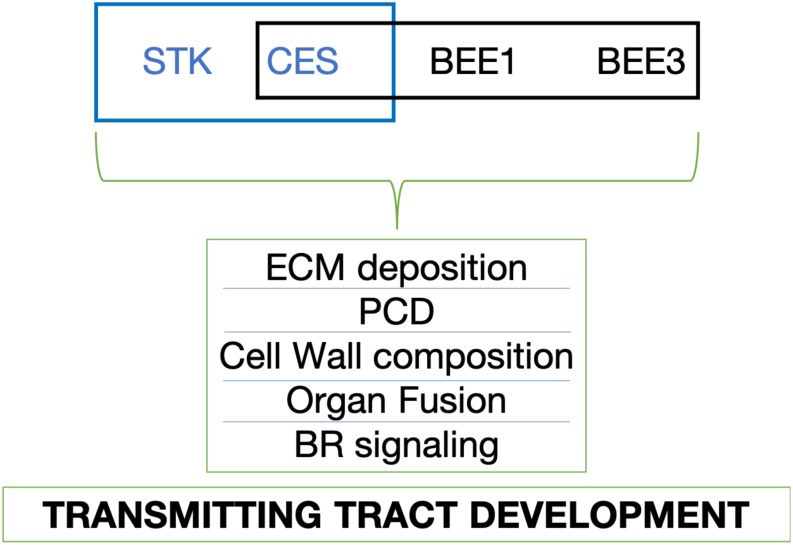
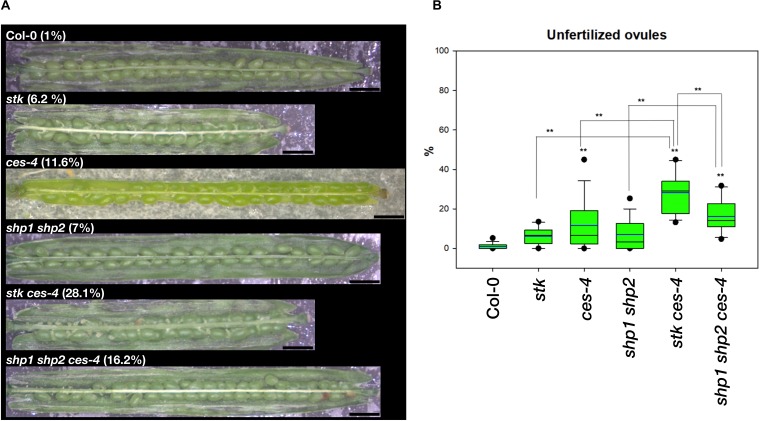
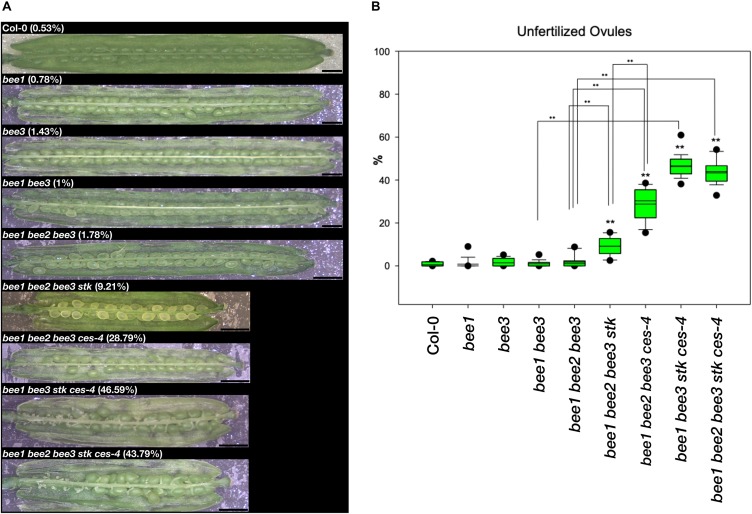
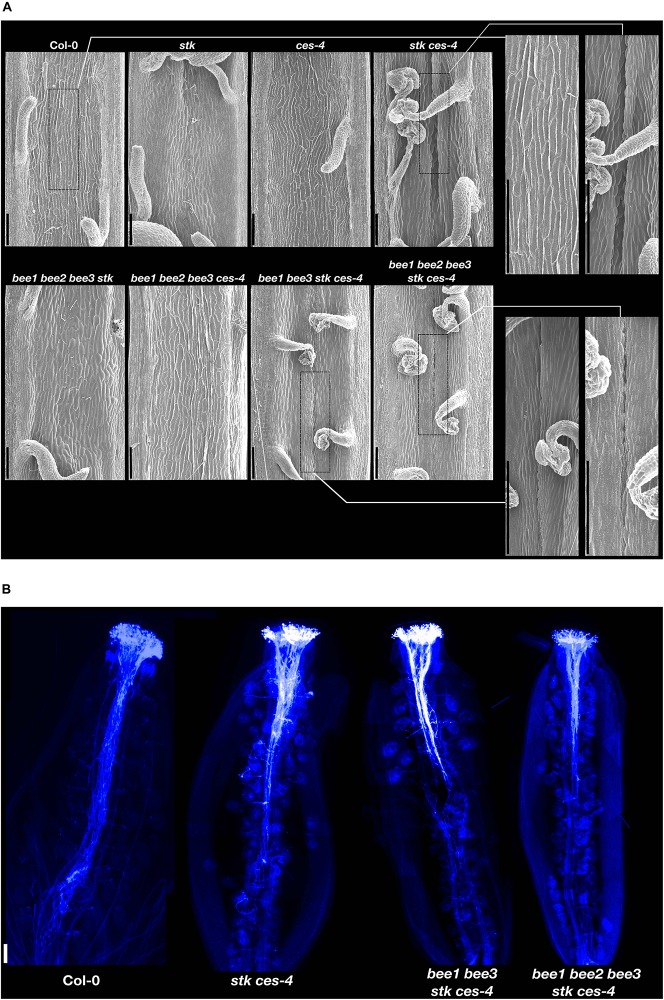
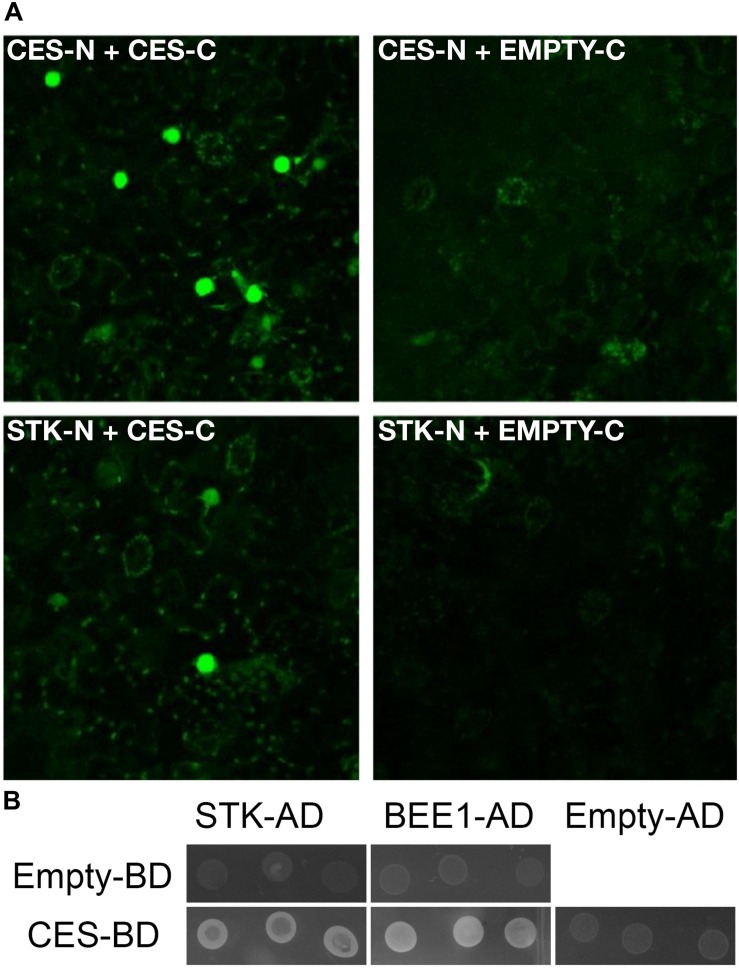
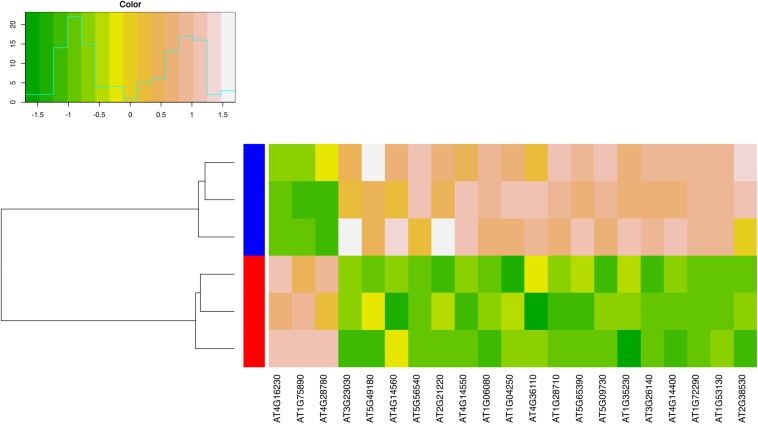
The MADS-domain transcription factor () controls several aspects of plant reproduction. is co-expressed with (), a basic Helix-Loop-Helix (bHLH) transcription factor-encoding gene. was reported to control redundantly with the brassinosteroid positive signaling factors BRASSINOSTEROID ENHANCED EXPRESSION1 (BEE1) and BEE3 the development of the transmitting tract. Combining the mutants led to a reduction in ovule fertilization due to a defect in carpel fusion which, caused the formation of holes at the center of the septum where the transmitting tract differentiates. Combining the mutant with the triple mutant showed an increased number of unfertilized ovules and septum defects. The transcriptome profile of this quadruple mutant revealed a small subset of differentially expressed genes which are mainly involved in cell death, extracellular matrix and cell wall development. Our data evidence a regulatory gene network controlling transmitting tract development regulated directly or indirectly by a STK-CES containing complex and reveal new insights in the regulation of transmitting tract development by bHLH and MADS-domain transcription factors.
MADS结构域转录因子()控制植物繁殖的多个方面。与()共同表达,()是一个编码基本螺旋-环-螺旋(bHLH)转录因子的基因。据报道,与油菜素类固醇正向信号因子油菜素类固醇增强表达1(BEE1)和BEE3共同控制传粉道的发育。由于心皮融合缺陷,导致隔膜中心形成孔洞,传粉道在此处分化,将突变体组合会导致胚珠受精减少。将突变体与三重突变体组合显示未受精胚珠数量增加和隔膜缺陷。该四重突变体的转录组图谱显示了一小部分差异表达基因,这些基因主要参与细胞死亡、细胞外基质和细胞壁发育。我们的数据证明了一个由含STK-CES的复合体直接或间接调控传粉道发育的调控基因网络,并揭示了bHLH和MADS结构域转录因子在传粉道发育调控方面的新见解。