Zhang YanDong, Ma ChengYuan, Liu ChunShui, Wei Feng
Department of Rheumatology, First Hospital, Jilin University, ChangChun, Jilin, China.
Department of Neurosurgery, First Hospital, Jilin University, ChangChun, Jilin, China.
PeerJ. 2020 May 11;8:e8845. doi: 10.7717/peerj.8845. eCollection 2020.
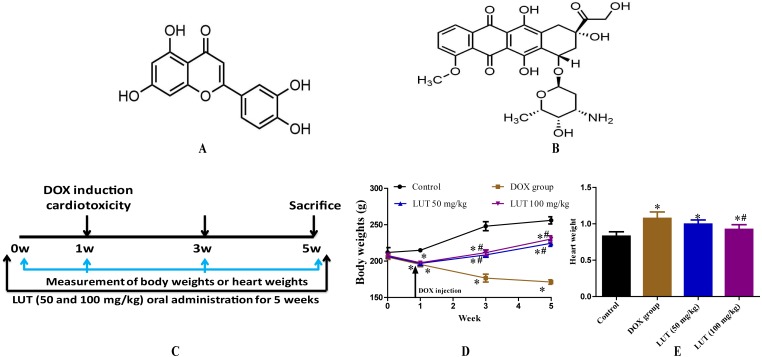
Luteolin (LUT) is a flavonoid found in vegetables and fruits that has diverse functions. Doxorubicin (DOX) is an anthracycline antibiotic that is frequently used for the treatment of various cancers. Unfortunately, the clinical efficacy of DOX is limited by its dose-related cardiotoxicity. In this study, we aimed to investigate the potential mechanism through which LUT attenuates cardiotoxicity in vivo.
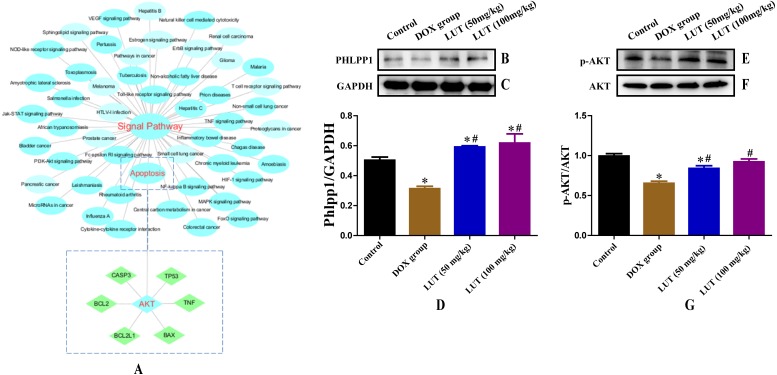
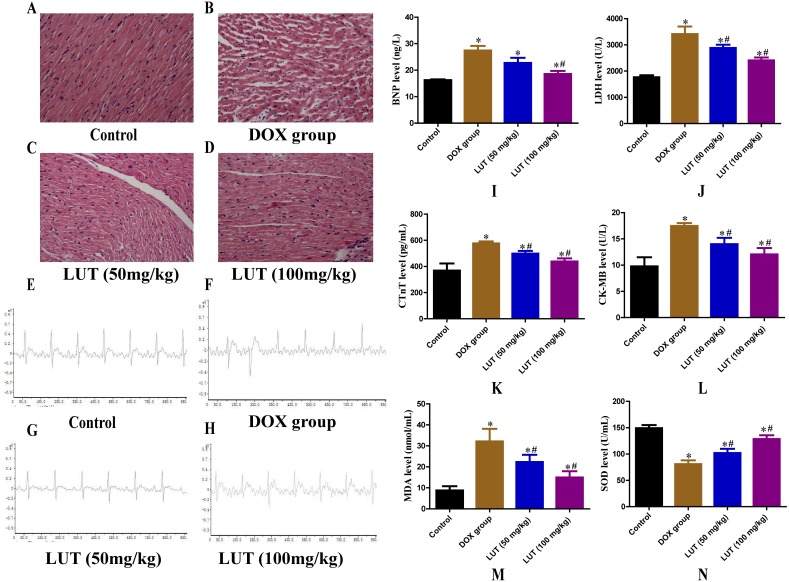
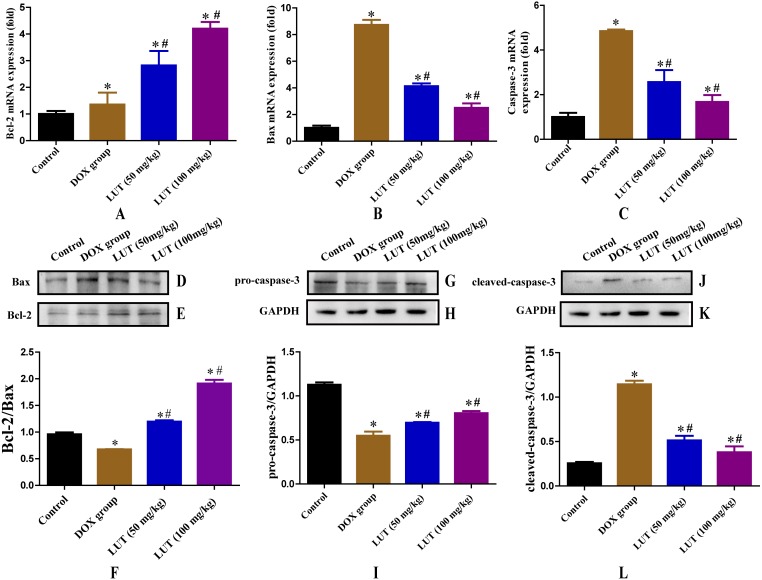
We evaluated the body weight, heart weight, electrocardiogram, and pathological changes before and after administration of LUT. Moreover, the effects of LUT (50 mg/kg in the low dose group, 100 mg/kg in the high dose group) on biochemical parameters (brain natriuretic peptide, creatine kinase MB, cardiac troponin T, and dehydrogenation of lactate enzyme) and oxidative stress parameters (malondialdehyde and superoxide dismutase) were studied in the sera of cardiotoxicity model rats. We also identified the apoptotic mediators whose expression was induced by LUT by quantitative real-time reverse transcription-polymerase chain reaction (RT-qPCR) evaluation. In addition, we used network analysis to predict DOX-induced cardiotoxicity and protection afforded by LUT. Western blotting was used to detect the expression of associated proteins.
LUT significantly improved DOX-induced cardiotoxicity in a dose-dependent fashion. LUT ameliorated DOX-induced weight loss and heart weight changes, as well as changes in biochemical parameters and oxidative stress parameters in heart injury model rats. LUT's protective effect was observed via regulation of the apoptotic markers Bcl-2, Bax, and caspase-3 mRNA and protein expression levels. Network analysis showed that the AKT/Bcl-2 signalling pathway was activated; specifically, the PH domain leucine-rich repeats protein phosphatase 1 (phlpp1) was involved in the AKT/Bcl-2 signal pathway. LUT inhibited the activity of phlpp1 leading to positive regulation of the AKT/Bcl-2 pathway, which attenuated doxorubicin-induced cardiotoxicity.
These results demonstrate that LUT exerted protective effects against DOX-induced cardiotoxicity in vivo by alleviating oxidative stress, suppressing phlpp1 activity, and activating the AKT/Bcl-2 signalling pathway.
木犀草素(LUT)是一种存在于蔬菜和水果中的黄酮类化合物,具有多种功能。阿霉素(DOX)是一种蒽环类抗生素,常用于治疗各种癌症。不幸的是,DOX的临床疗效受到其剂量相关心脏毒性的限制。在本研究中,我们旨在探讨LUT在体内减轻心脏毒性的潜在机制。
我们评估了给予LUT前后的体重、心脏重量、心电图和病理变化。此外,研究了LUT(低剂量组50mg/kg,高剂量组100mg/kg)对心脏毒性模型大鼠血清中生化参数(脑钠肽、肌酸激酶同工酶MB、心肌肌钙蛋白T和乳酸脱氢酶)和氧化应激参数(丙二醛和超氧化物歧化酶) 的影响。我们还通过定量实时逆转录聚合酶链反应(RT-qPCR)评估确定了由LUT诱导表达的凋亡介质。此外,我们使用网络分析来预测DOX诱导的心脏毒性以及LUT提供的保护作用。采用蛋白质免疫印迹法检测相关蛋白的表达。
LUT以剂量依赖的方式显著改善了DOX诱导的心脏毒性。LUT改善了DOX诱导的体重减轻和心脏重量变化,以及心脏损伤模型大鼠的生化参数和氧化应激参数变化。通过调节凋亡标志物Bcl-2、Bax和caspase-3的mRNA和蛋白表达水平观察到LUT的保护作用。网络分析表明AKT/Bcl-2信号通路被激活;具体而言,富含脯氨酸结构域亮氨酸重复蛋白磷酸酶1(phlpp1)参与AKT/Bcl-2信号通路。LUT抑制phlpp1的活性,导致AKT/Bcl-2通路的正向调节,从而减轻阿霉素诱导的心脏毒性。
这些结果表明,LUT通过减轻氧化应激反应、抑制phlpp1活性和激活AKT/Bcl-2信号通路,在体内对DOX诱导的心脏毒性发挥保护作用。