Kamath Sandip D, Scheiblhofer Sandra, Johnson Christopher M, Machado Yoan, McLean Thomas, Taki Aya C, Ramsland Paul A, Iyer Swati, Joubert Isabella, Hofer Heidi, Wallner Michael, Thalhamer Josef, Rolland Jennifer, O'Hehir Robyn, Briza Peter, Ferreira Fatima, Weiss Richard, Lopata Andreas L
Australian Institute of Tropical Health and Medicine, James Cook University, Townsville, Qld, Australia.
Department of Biosciences, University of Salzburg, Salzburg, Austria.
Allergy. 2020 Nov;75(11):2909-2919. doi: 10.1111/all.14410. Epub 2020 Jun 18.
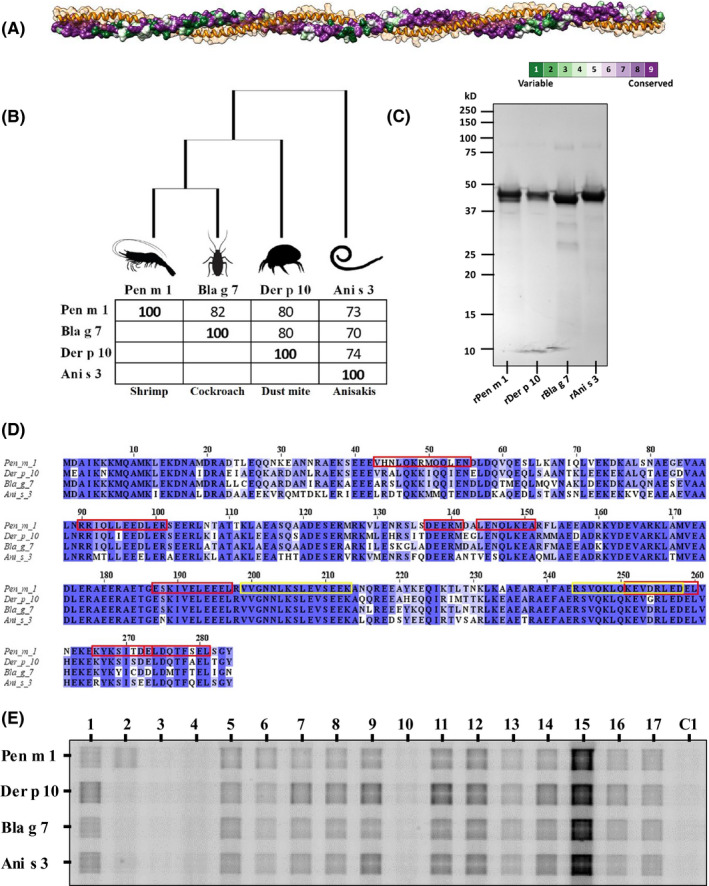
Tropomyosins are highly conserved proteins, an attribute that forms the molecular basis for their IgE antibody cross-reactivity. Despite sequence similarities, their allergenicity varies greatly between ingested and inhaled invertebrate sources. In this study, we investigated the relationship between the structural stability of different tropomyosins, their endolysosomal degradation patterns, and T-cell reactivity.
We investigated the differences between four tropomyosins-the major shrimp allergen Pen m 1 and the minor allergens Der p 10 (dust mite), Bla g 7 (cockroach), and Ani s 3 (fish parasite)-in terms of IgE binding, structural stability, endolysosomal degradation and subsequent peptide generation, and T-cell cross-reactivity in a BALB/c murine model.
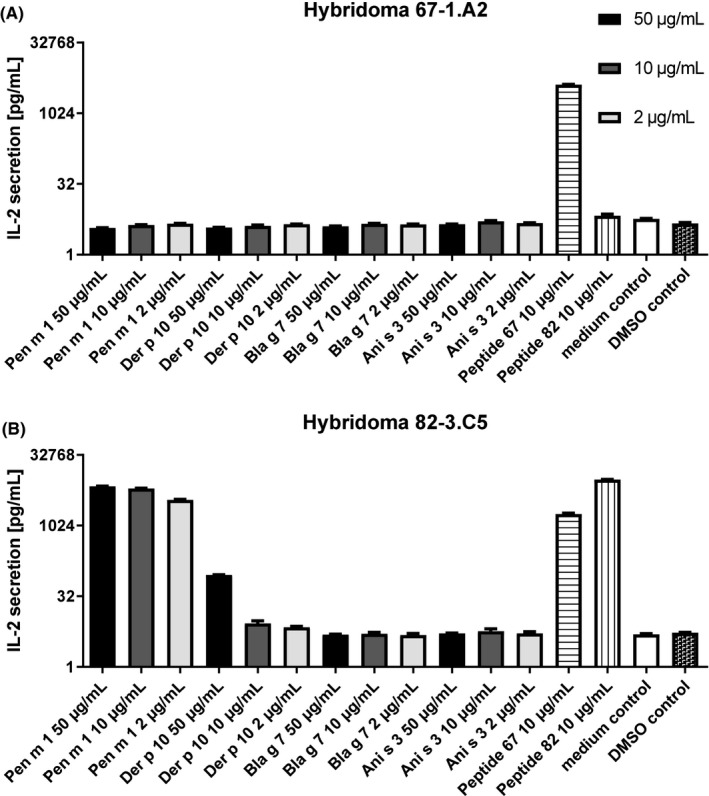
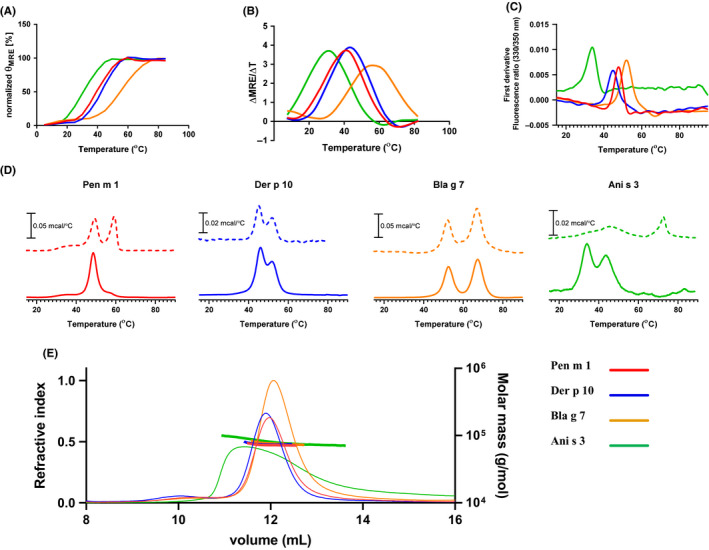
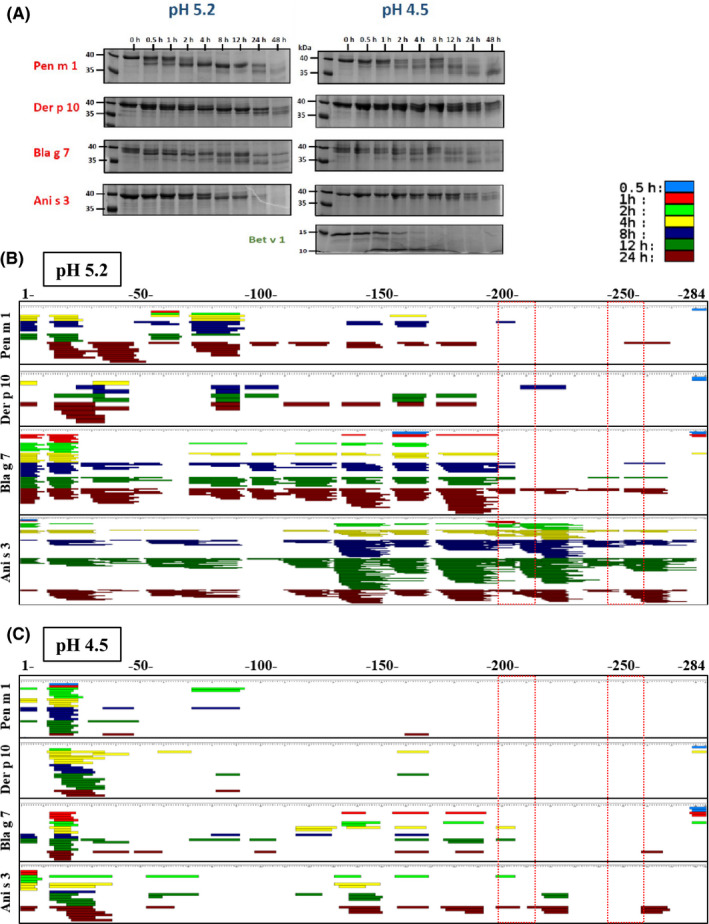
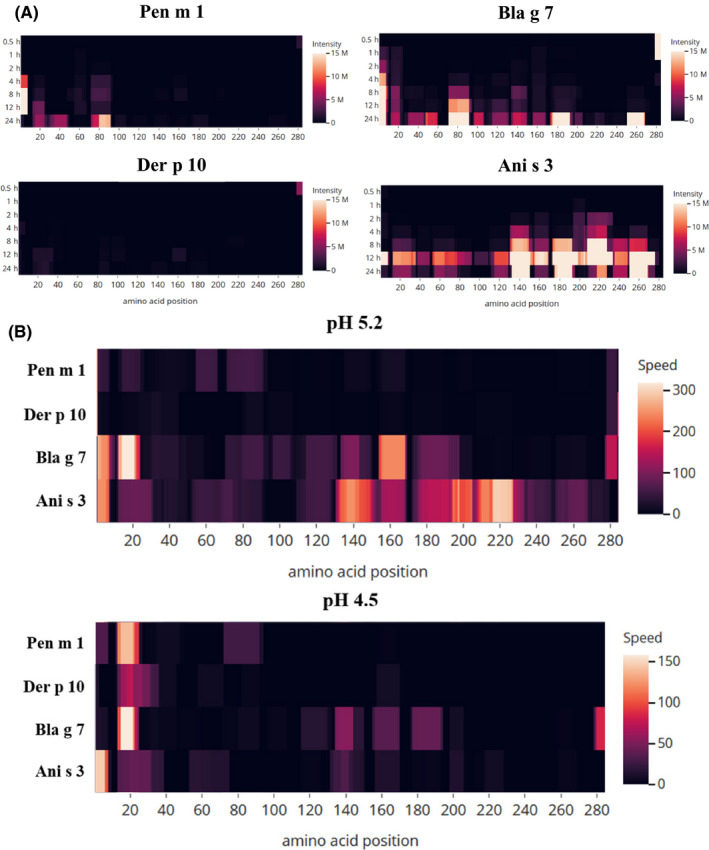
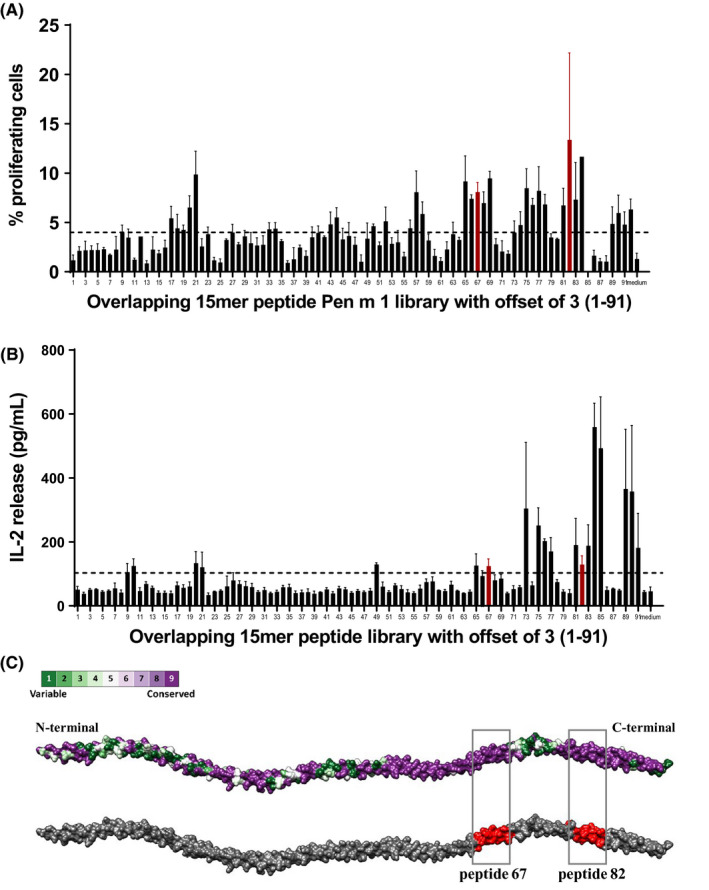
Tropomyosins displayed different melting temperatures, which did not correlate with amino acid sequence similarities. Endolysosomal degradation experiments demonstrated differential proteolytic digestion, as a function of thermal stability, generating different peptide repertoires. Pen m 1 (T 42°C) and Der p 10 (T 44°C) elicited similar patterns of endolysosomal degradation, but not Bla g 7 (T 63°C) or Ani s 3 (T 33°C). Pen m 1-specific T-cell clones, with specificity for regions highly conserved in all four tropomyosins, proliferated weakly to Der p 10, but did not proliferate to Bla g 7 and Ani s 3, indicating lack of T-cell epitope cross-reactivity.
Tropomyosin T-cell cross-reactivity, unlike IgE cross-reactivity, is dependent on structural stability rather than amino acid sequence similarity. These findings contribute to our understanding of cross-sensitization among different invertebrates and design of suitable T-cell peptide-based immunotherapies for shrimp and related allergies.
原肌球蛋白是高度保守的蛋白质,这一特性构成了其IgE抗体交叉反应性的分子基础。尽管序列相似,但它们在摄入性和吸入性无脊椎动物来源之间的致敏性差异很大。在本研究中,我们调查了不同原肌球蛋白的结构稳定性、其溶酶体降解模式与T细胞反应性之间的关系。
我们在BALB/c小鼠模型中研究了四种原肌球蛋白——主要的虾过敏原Pen m 1和次要过敏原Der p 10(尘螨)、Bla g 7(蟑螂)和Ani s 3(鱼寄生虫)在IgE结合、结构稳定性、溶酶体降解及随后的肽生成以及T细胞交叉反应性方面的差异。
原肌球蛋白表现出不同的解链温度,这与氨基酸序列相似性无关。溶酶体降解实验表明,根据热稳定性的不同,蛋白水解消化存在差异,产生不同的肽库。Pen m 1(T 42°C)和Der p 10(T 44°C)引发了相似的溶酶体降解模式,但Bla g 7(T 63°C)或Ani s 3(T 33°C)则不然。对所有四种原肌球蛋白中高度保守区域具有特异性的Pen m 1特异性T细胞克隆对Der p 10的增殖较弱,但对Bla g 7和Ani s 3不增殖,表明缺乏T细胞表位交叉反应性。
与IgE交叉反应性不同,原肌球蛋白T细胞交叉反应性取决于结构稳定性而非氨基酸序列相似性。这些发现有助于我们理解不同无脊椎动物之间的交叉致敏作用,并为虾及相关过敏设计合适的基于T细胞肽的免疫疗法。