Moores Cancer Center, University of California San Diego, San Diego, California, United States of America.
Department of Otolaryngology, Head and Neck Surgery, Tokai University, Isehara, Japan.
PLoS One. 2020 May 21;15(5):e0233380. doi: 10.1371/journal.pone.0233380. eCollection 2020.
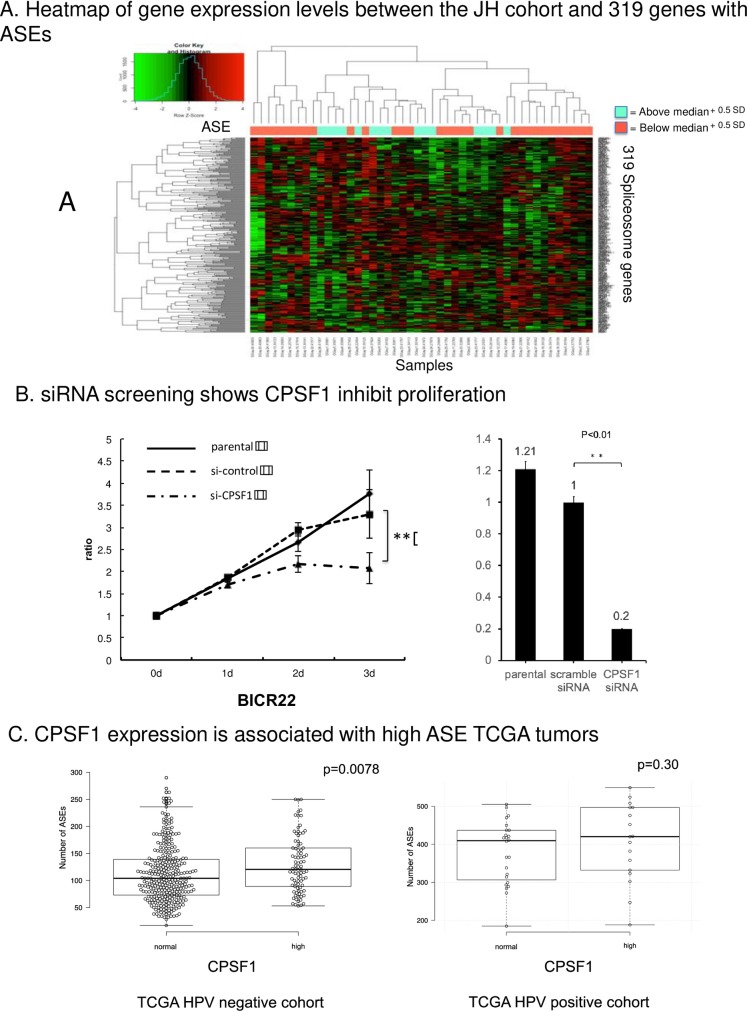
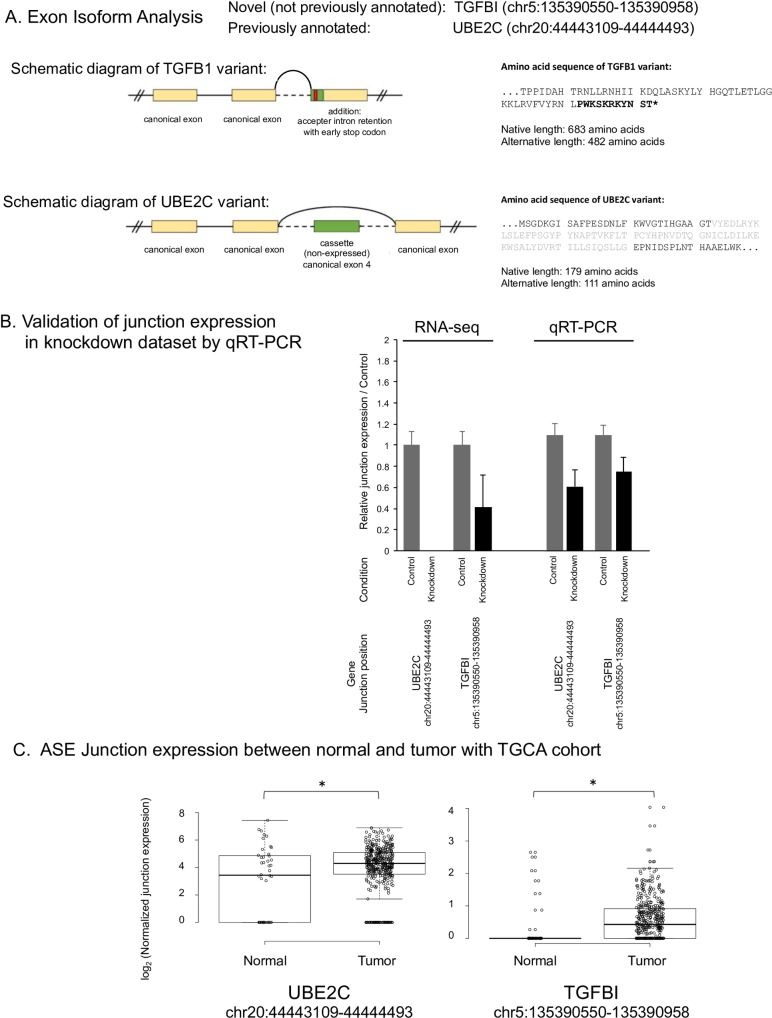
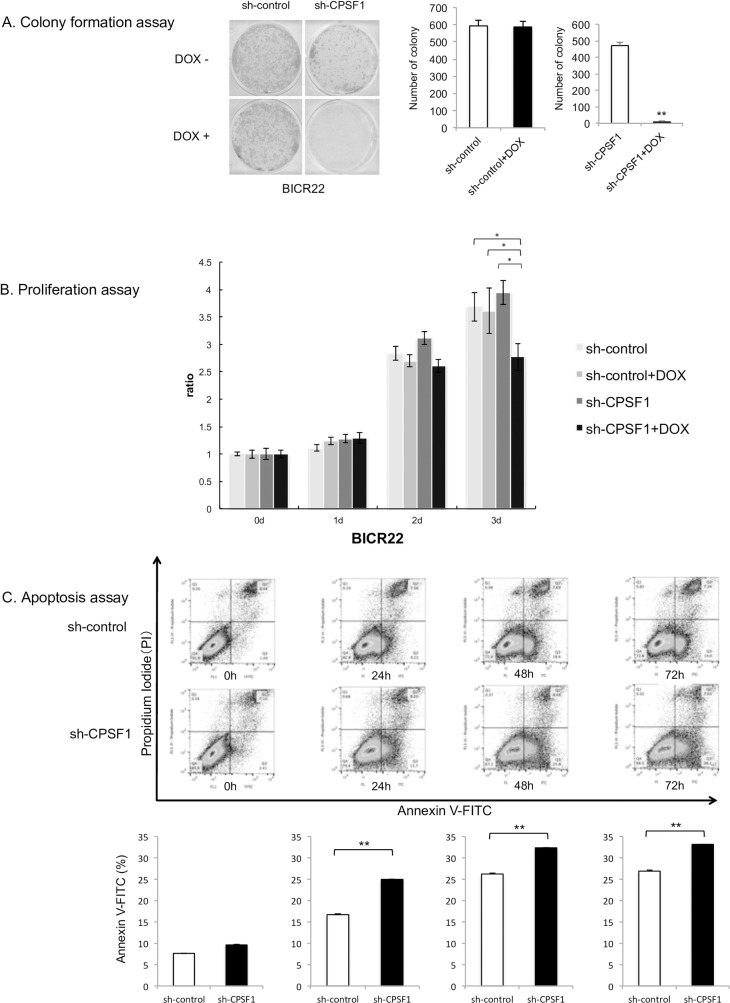
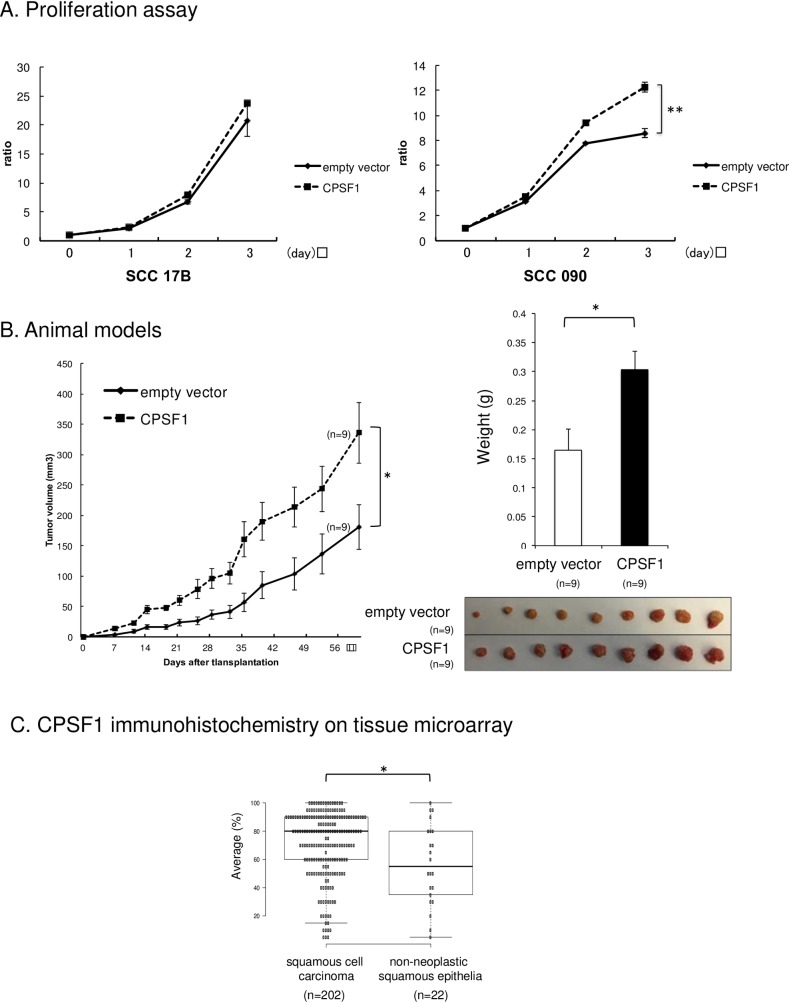
Alternative mRNA splicing increases protein diversity, and alternative splicing events (ASEs) drive oncogenesis in multiple tumor types. However, the driving alterations that underlie the broad dysregulation of ASEs are incompletely defined. Using head and neck squamous cell carcinoma (HNSCC) as a model, we hypothesized that the genomic alteration of genes associated with the spliceosome may broadly induce ASEs across a broad range of target genes, driving an oncogenic phenotype. We identified 319 spliceosome genes and employed a discovery pipeline to identify 13 candidate spliceosome genes altered in HNSCC using The Cancer Genome Atlas (TCGA) HNSCC data. Phenotypic screens identified amplified and overexpressed CPSF1 as a target gene alteration that was validated in proliferation, colony formation, and apoptosis assays in cell line and xenograft systems as well as in primary HNSCC. We employed knockdown and overexpression assays followed by identification of ASEs regulated by CPSF1 overexpression to identify changes in ASEs, and the expression of these ASEs was validated using RNA from cell line models. Alterations in expression of spliceosome genes, including CPSF1, may contribute to HNSCC by mediating aberrant ASE expression.
可变剪接增加了蛋白质的多样性,并且可变剪接事件 (ASEs) 在多种肿瘤类型中驱动肿瘤发生。然而,导致 ASE 广泛失调的驱动改变尚未完全确定。我们以头颈部鳞状细胞癌 (HNSCC) 为模型,假设与剪接体相关的基因的基因组改变可能会广泛诱导广泛的靶基因中的 ASEs,从而驱动致癌表型。我们鉴定了 319 个剪接体基因,并采用发现管道,使用癌症基因组图谱 (TCGA) HNSCC 数据在 HNSCC 中鉴定出 13 个候选剪接体基因的改变。表型筛选鉴定出扩增和过表达的 CPSF1 作为靶基因改变,在细胞系和异种移植系统中的增殖、集落形成和凋亡测定中以及在原发性 HNSCC 中得到验证。我们进行了敲低和过表达实验,然后通过鉴定 CPSF1 过表达调控的 ASEs 来确定 ASEs 的变化,并使用来自细胞系模型的 RNA 验证这些 ASEs 的表达。包括 CPSF1 在内的剪接体基因的表达改变可能通过介导异常的 ASE 表达导致 HNSCC。