Trempolec Natalia, Degavre Charline, Doix Bastien, Brusa Davide, Corbet Cyril, Feron Olivier
Pole of Pharmacology and Therapeutics (FATH), Institut de Recherche Expérimentale et Clinique (IREC), UCLouvain, B-1200 Brussels, Belgium.
Institut de Recherche Expérimentale et Clinique (IREC) Flow Cytometry Platform, UCLouvain, B-1200 Brussels, Belgium.
Cancers (Basel). 2020 May 19;12(5):1284. doi: 10.3390/cancers12051284.
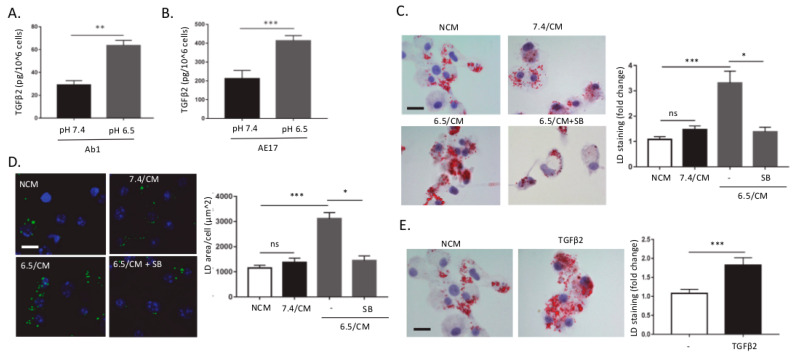
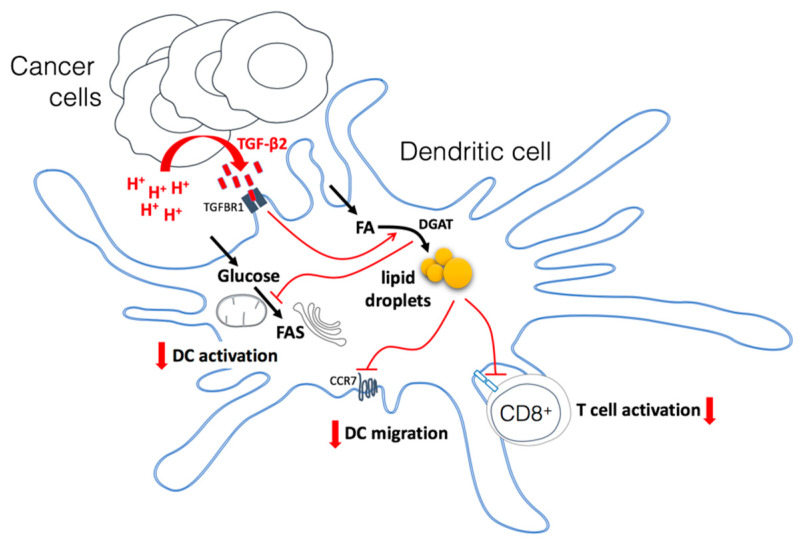
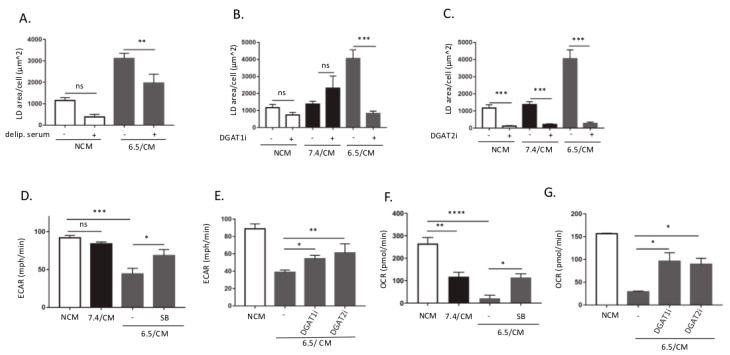
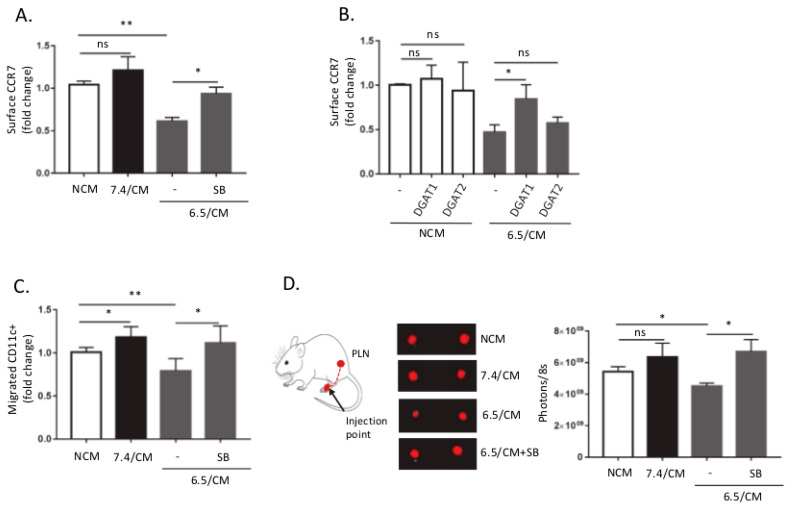
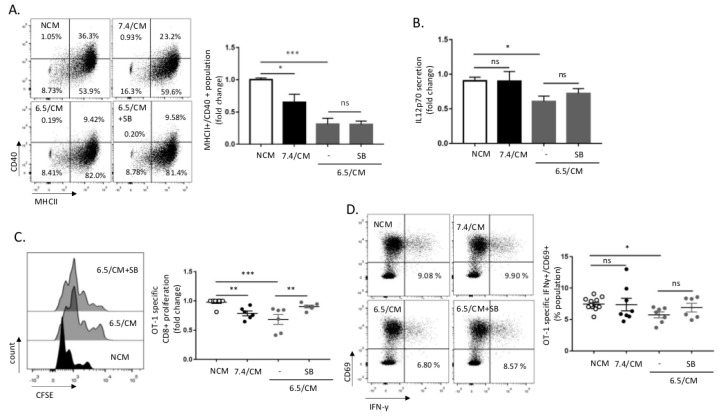
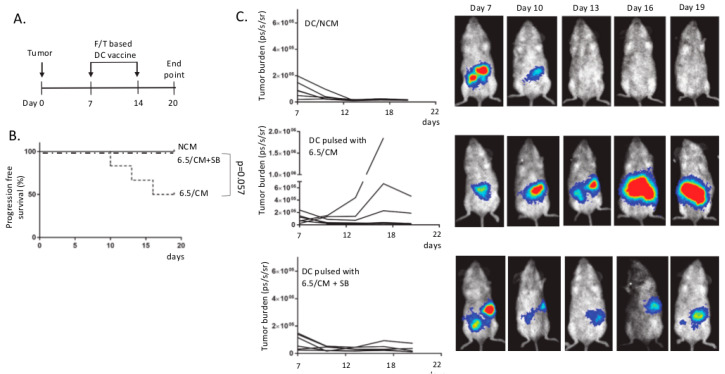
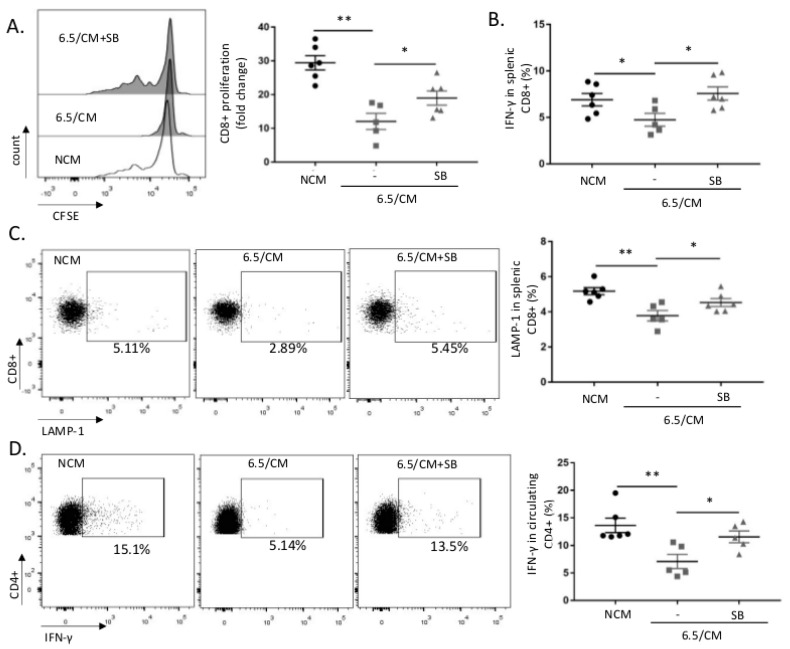
For poorly immunogenic tumors such as mesothelioma there is an imperious need to understand why antigen-presenting cells such as dendritic cells (DCs) are not prone to supporting the anticancer T cell response. The tumor microenvironment (TME) is thought to be a major contributor to this DC dysfunction. We have reported that the acidic TME component promotes lipid droplet (LD) formation together with epithelial-to-mesenchymal transition in cancer cells through autocrine transforming growth factor-β2 (TGF-β2) signaling. Since TGF-β is also a master regulator of immune tolerance, we have here examined whether acidosis can impede immunostimulatory DC activity. We have found that exposure of mesothelioma cells to acidosis promotes TGF-β2 secretion, which in turn leads to LD accumulation and profound metabolic rewiring in DCs. We have further documented how DCs exposed to the mesothelioma acidic milieu make the anticancer vaccine less efficient in vivo, with a reduced extent of both DC migratory potential and T cell activation. Interestingly, inhibition of TGF-β2 signaling and diacylglycerol O-acyltransferase (DGAT), the last enzyme involved in triglyceride synthesis, led to a significant restoration of DC activity and anticancer immune response. In conclusion, our study has identified that acidic mesothelioma milieu drives DC dysfunction and altered T cell response through pharmacologically reversible TGF-β2-dependent mechanisms.
对于间皮瘤等免疫原性较差的肿瘤,迫切需要了解为什么诸如树突状细胞(DC)等抗原呈递细胞不易支持抗癌T细胞反应。肿瘤微环境(TME)被认为是导致这种DC功能障碍的主要因素。我们曾报道,酸性TME成分通过自分泌转化生长因子-β2(TGF-β2)信号通路,促进癌细胞中脂滴(LD)形成以及上皮-间质转化。由于TGF-β也是免疫耐受的主要调节因子,我们在此研究了酸中毒是否会阻碍具有免疫刺激作用的DC活性。我们发现,间皮瘤细胞暴露于酸中毒环境会促进TGF-β2分泌,进而导致DC中LD积累和深刻的代谢重塑。我们进一步记录了暴露于间皮瘤酸性环境中的DC如何使抗癌疫苗在体内的效果降低,DC迁移潜力和T细胞活化程度均降低。有趣的是,抑制TGF-β2信号通路以及甘油二酯O-酰基转移酶(DGAT,参与甘油三酯合成的最后一种酶),可显著恢复DC活性和抗癌免疫反应。总之,我们的研究表明,酸性间皮瘤环境通过药理学上可逆的TGF-β2依赖性机制导致DC功能障碍并改变T细胞反应。