Institut de Recherche Expérimentale et Clinique (IREC), Pole of Pharmacology and Therapeutics (FATH), Cancer Translational Research laboratory, UCLouvain, Brussels, Belgium.
IPHY Platform, Institut de Recherche Expérimentale et Clinique (IREC), UCLouvain, Brussels, Belgium.
J Immunother Cancer. 2024 Nov 5;12(11):e009752. doi: 10.1136/jitc-2024-009752.
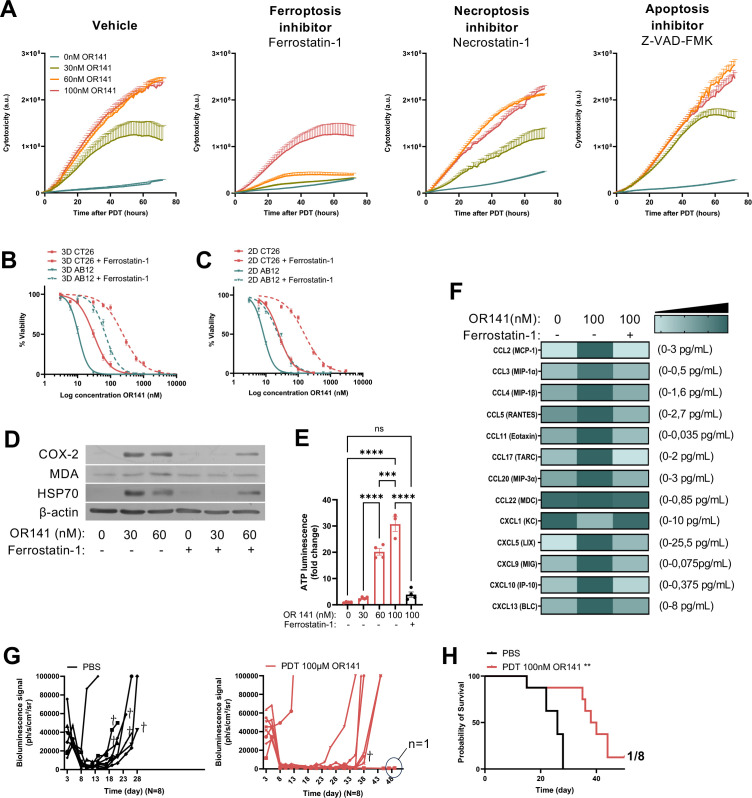
Immunogenic cell death (ICD) and ferroptosis have recently emerged as key factors in the anticancer immune response. Among the treatments able to induce ICD and the associated release of danger signals is photodynamic therapy (PDT). Ferroptosis for its part results from lipid peroxidation and is induced by CD8 T cells to kill nearby cancer cells on IFN-γ production. We aimed to combine the two concepts, that is, to evaluate whether the strong pro-oxidant effects of PDT may promote ferroptosis and antigen release and to develop a procedure for in situ PDT to prepare the soil for highly endocytotic immature dendritic cell (iDC) adoptive transfer. This approach was implemented for managing peritoneal carcinomatosis, a lesion often associated with poor outcomes.
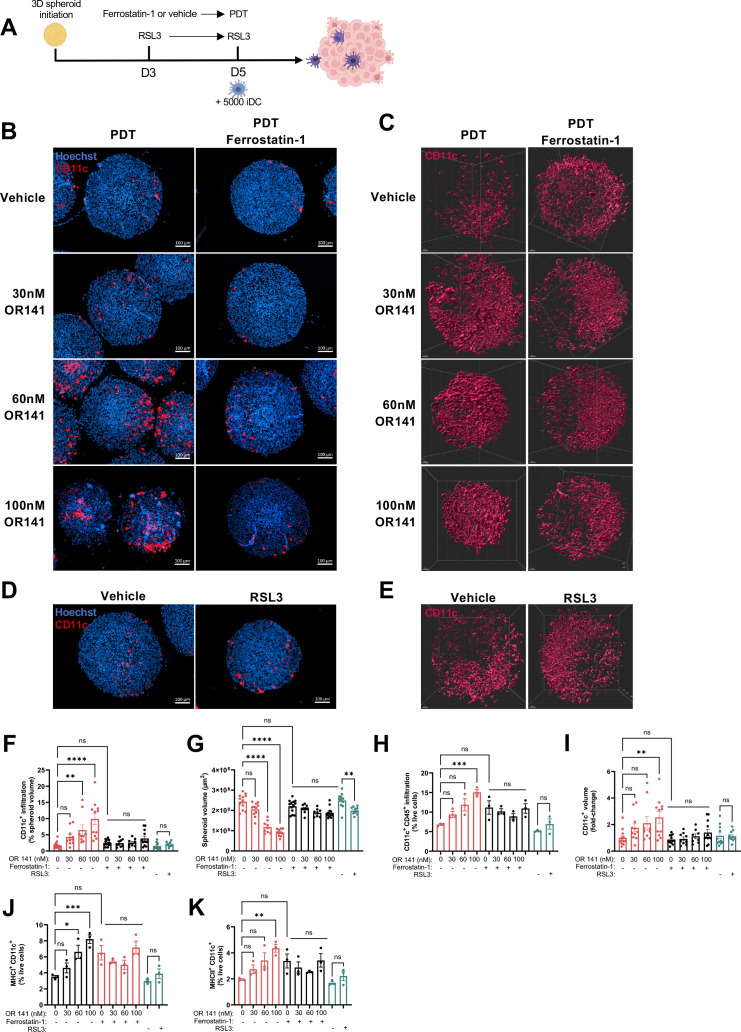
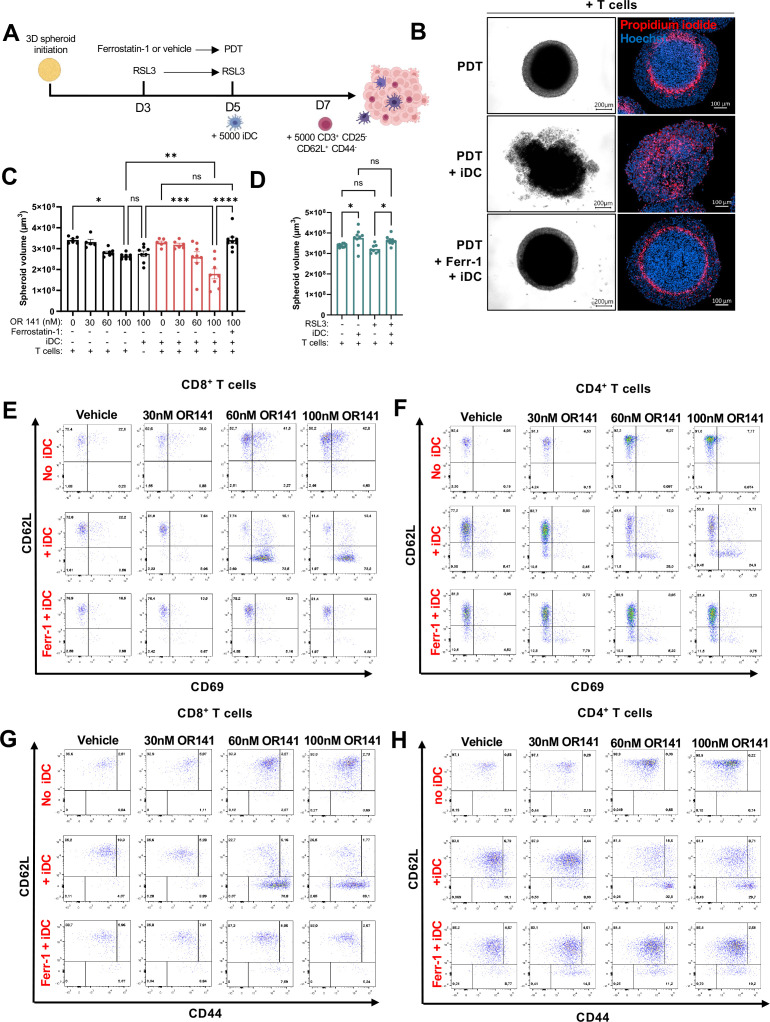
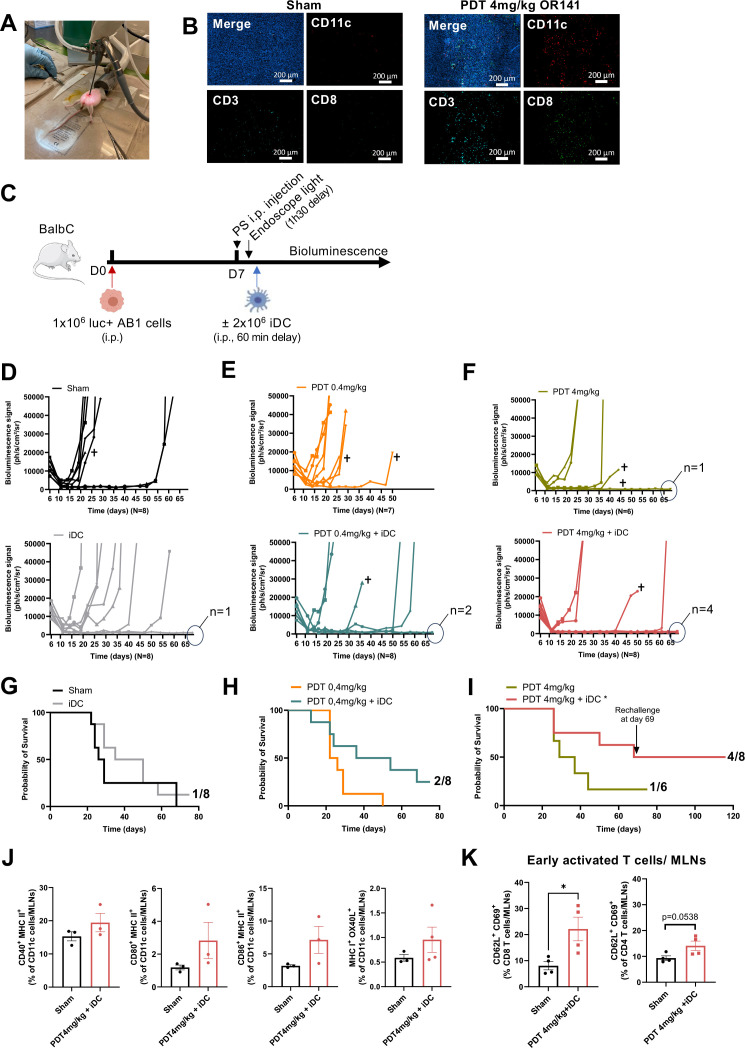
We used three-dimensional (3D) heterotypic spheroids made of cancer cells, exposed them to a white light-activated OR141 photosensitizer (PS), and subsequently complexified them by adding iDC and naive lymphocytes. We next used a model of mouse peritoneal carcinomatosis and administered PDT using laparoscopy to locally induce photoactivation using the endoscope light. The immune response following adoptive transfer of iDC was tracked both in vivo and ex vivo using isolated immune cells from in situ vaccinated mice.
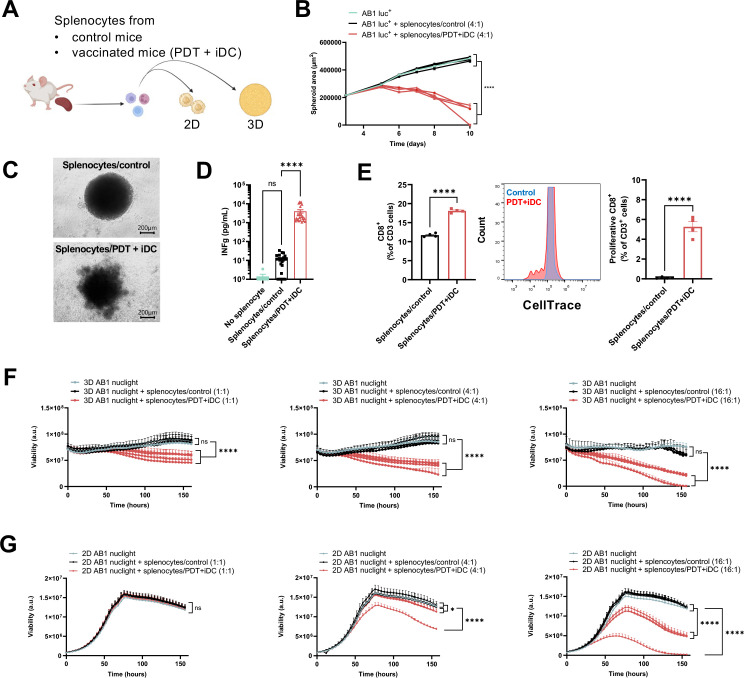
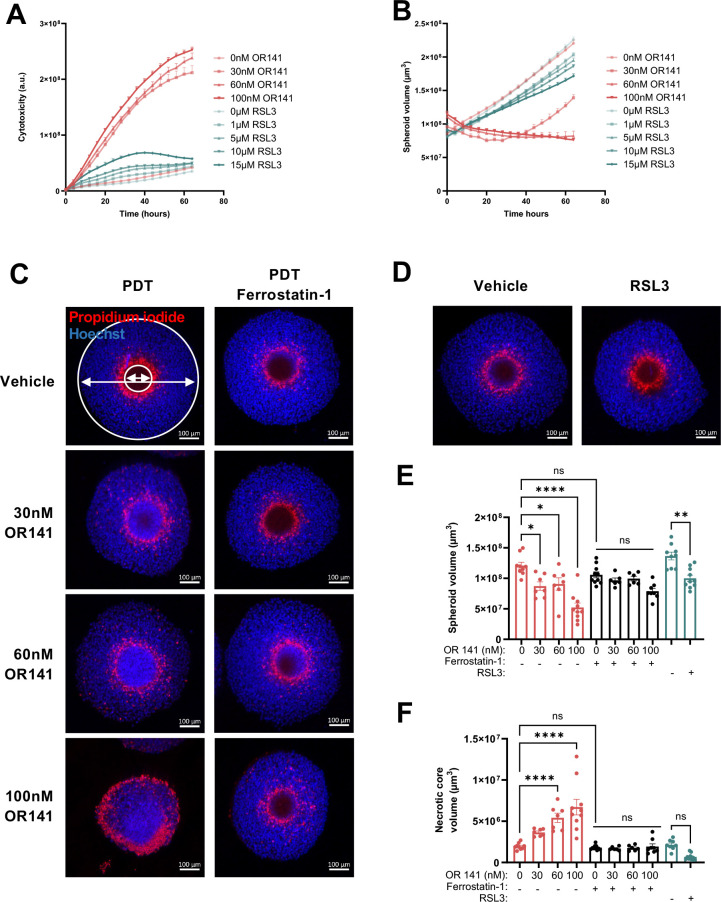
Cancer cells undergoing PDT-induced cell death significantly increased ICD markers and the infiltration of iDCs in spheroids, relying on ferroptosis. These actions induced the sequential activation of CD8 and CD4 T cells as revealed by a significant spheroid 3D structure deterioration and, remarkably, were not recapitulated by conventional ferroptosis inducer RSL3. Using LED light from an endoscope for in situ photoactivation of PS enabled us to apply the vaccination modality in mice with peritoneal tumors. Consecutive intraperitoneal injection of iDCs resulted in delayed tumor growth, increased survival rates, and prevented tumor relapse on rechallenge. CD8 T cell response was supported by depletion experiments, nodal detection of early activated T cells, and ex vivo T cell-induced cytotoxicity toward spheroids.
The combination of in situ PDT locally delivered by an endoscope light and iDC administration induces a durable memory immune response against peritoneal carcinomatosis thereby opening new perspectives for the treatment of a life-threatening condition.
免疫原性细胞死亡(ICD)和铁死亡最近成为抗肿瘤免疫反应的关键因素。能够诱导 ICD 及相关危险信号释放的治疗方法之一是光动力疗法(PDT)。铁死亡则是由于脂质过氧化引起的,并由 IFN-γ产生的 CD8 T 细胞诱导,以杀死附近的癌细胞。我们旨在将这两个概念结合起来,即评估 PDT 的强促氧化剂作用是否可以促进铁死亡和抗原释放,并开发一种原位 PDT 程序,为高内吞作用的不成熟树突状细胞(iDC)过继转移做好准备。该方法用于治疗腹膜癌转移,这是一种常与预后不良相关的病变。
我们使用由癌细胞组成的三维(3D)异质球体,用白光激活的 OR141 光敏剂(PS)照射它们,然后通过添加 iDC 和幼稚淋巴细胞对其进行复合物化。接下来,我们使用小鼠腹膜癌转移模型,并通过腹腔镜局部使用内窥镜光进行 PDT 诱导光激活。通过对原位接种小鼠分离的免疫细胞进行体内和体外追踪,跟踪 iDC 过继转移后的免疫反应。
经历 PDT 诱导细胞死亡的癌细胞显著增加了 ICD 标志物和球体中 iDC 的浸润,这依赖于铁死亡。这些作用通过显著的球体 3D 结构恶化诱导了 CD8 和 CD4 T 细胞的顺序激活,值得注意的是,这不能被常规铁死亡诱导剂 RSL3 重现。使用内窥镜的 LED 光对 PS 进行原位光激活使我们能够在患有腹膜肿瘤的小鼠中应用疫苗接种模式。连续腹腔内注射 iDC 可导致肿瘤生长延迟、存活率提高,并在再次挑战时防止肿瘤复发。CD8 T 细胞反应得到了耗竭实验、节点中早期激活 T 细胞的检测以及体外 T 细胞对球体的细胞毒性的支持。
局部内窥镜光照射的原位 PDT 与 iDC 给药相结合,可诱导针对腹膜癌转移的持久记忆免疫反应,为危及生命疾病的治疗开辟了新的前景。