Department of Epidemiology and Biostatistics, Dongguan Key Laboratory of Environmental Medicine, School of Public Health, Key Laboratory of Precision Public Health, Guangdong Medical University, 1 Xincheng Avenue Songshanhu District, Dongguan, 523000, Guangdong, China.
Shenzhen Center for Disease Control and Prevention, 8 Longyuan Road, Longzhu Avenue Nanshan District, Shenzhen, 518000, Guangdong, China.
Sci Rep. 2020 May 21;10(1):8410. doi: 10.1038/s41598-020-65344-y.
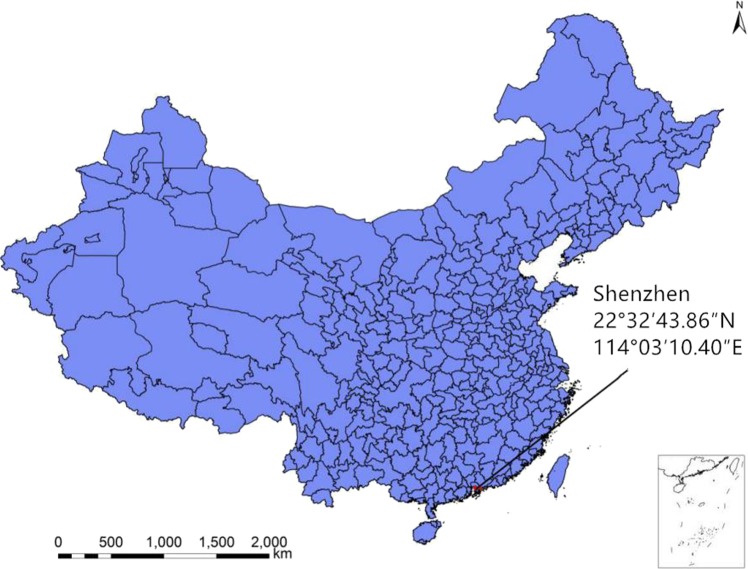
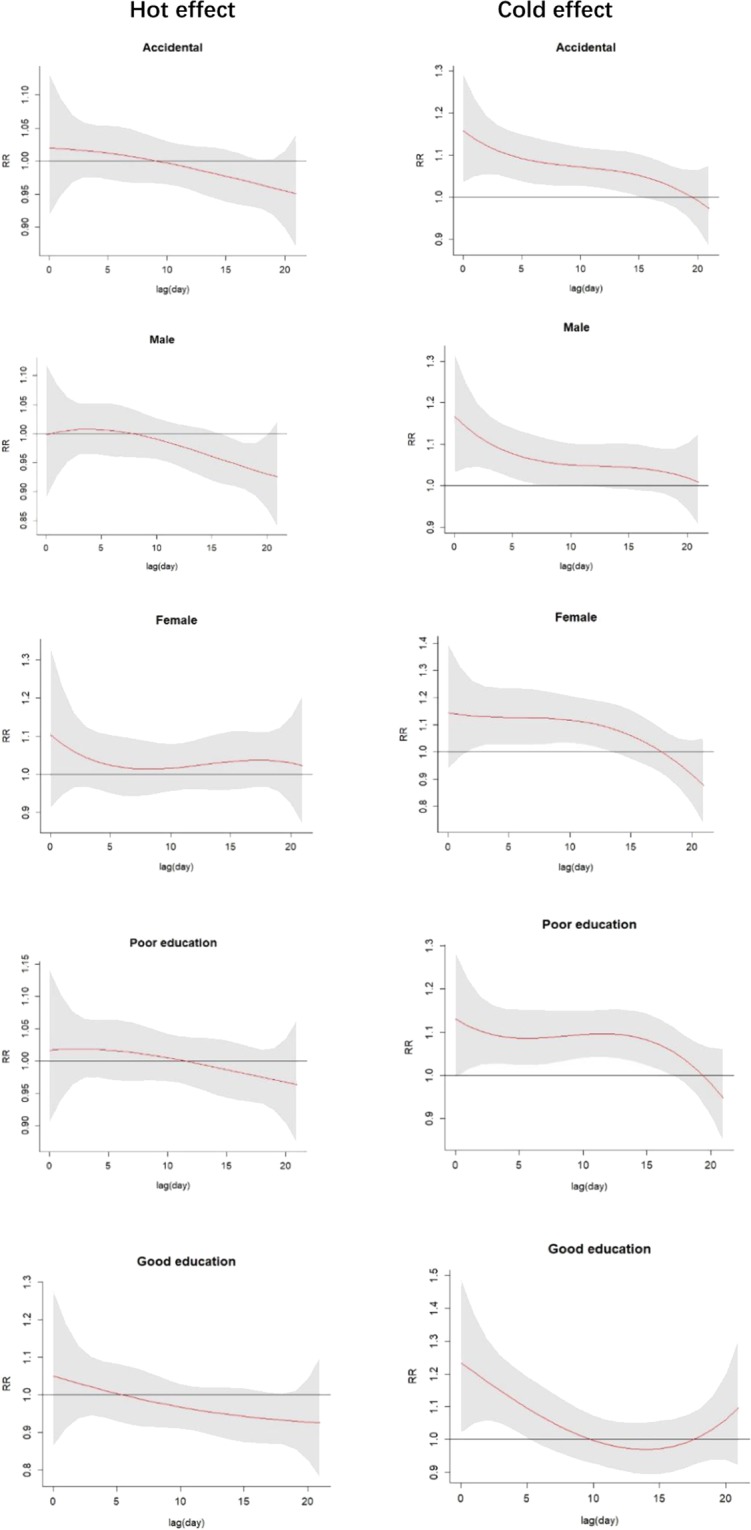
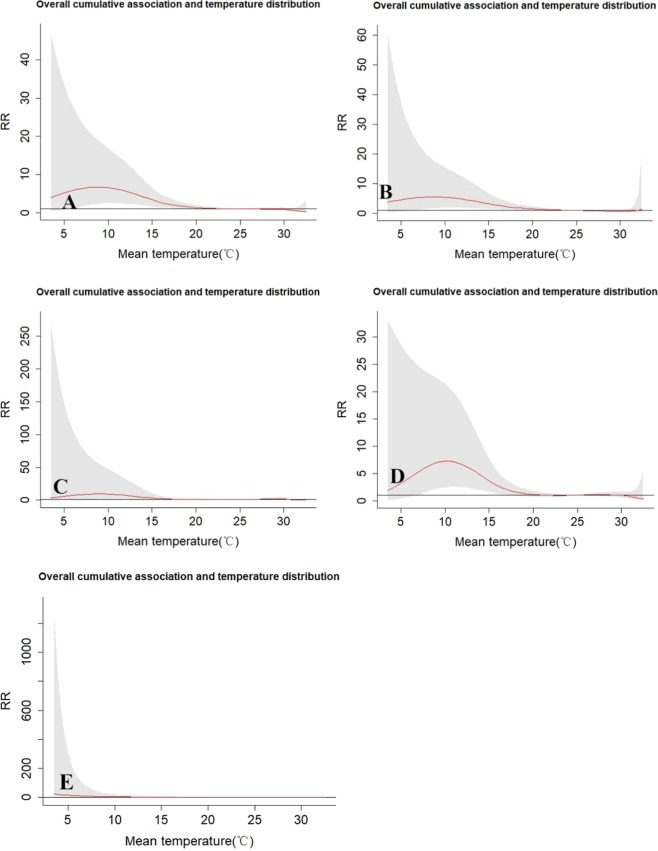
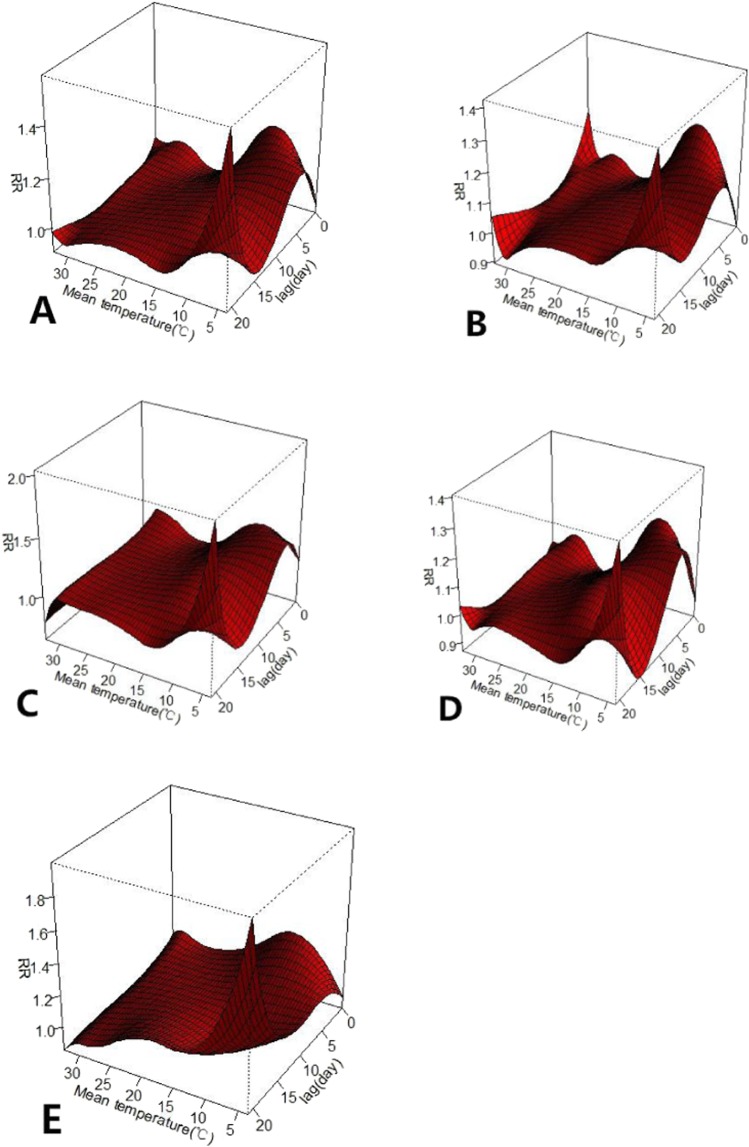
Health-risk assessments of temperature are central to determine total non-accidental human mortality; however, few studies have investigated the effect of temperature on accidental human mortality. We performed a time-series study combined with a distributed lag non-linear model (DLNM) to quantify the non-linear and delayed effects of daily mean temperature on accidental human mortality between 2013 and 2017 in Shenzhen, China. The threshold for effects of temperature on accidental human mortality occurred between 5.6 °C and 18.5 °C. Cold exposures, but not hot exposures, were significantly associated with accidental human mortality. All of the observed groups were susceptible to cold effects, with the strongest effects presented in females (relative risk [RR]: 3.14, 95% confidence interval (CI) [1.44-6.84]), followed by poorly educated people (RR: 2.63, 95% CI [1.59-4.36]), males (RR: 1.79, 95% CI [1.10-2.92]), and well-educated people (RR: 1.20, 95% CI [0.58-2.51]). Pooled estimates for cold effects at a lag of 0-21 days (d) were also stronger than hot effects at a lag of 0-2 d. Our results indicate that low temperatures increased the risk of accidental human mortality. Females and poorly educated people were more susceptible to the low temperatures. These findings imply that interventions which target vulnerable populations during cold days should be developed to reduce accidental human mortality risk.
健康风险评估是确定非意外全因人类死亡率的核心;然而,很少有研究调查温度对意外人类死亡率的影响。我们进行了一项时间序列研究,并结合分布式滞后非线性模型(DLNM),以量化 2013 年至 2017 年期间中国深圳每日平均温度对意外人类死亡率的非线性和滞后影响。温度对意外人类死亡率影响的阈值发生在 5.6°C 至 18.5°C 之间。寒冷暴露而非炎热暴露与意外人类死亡率显著相关。所有观察到的人群都容易受到寒冷的影响,女性的影响最大(相对风险 [RR]:3.14,95%置信区间 [CI] [1.44-6.84]),其次是受教育程度较低的人(RR:2.63,95% CI [1.59-4.36])、男性(RR:1.79,95% CI [1.10-2.92])和受教育程度较高的人(RR:1.20,95% CI [0.58-2.51])。0-21 天(d)滞后的寒冷效应的汇总估计值也强于 0-2 天滞后的炎热效应。我们的研究结果表明,低温会增加意外人类死亡率的风险。女性和受教育程度较低的人群更容易受到低温的影响。这些发现表明,应该针对寒冷天气中的弱势群体制定干预措施,以降低意外人类死亡率的风险。