Institute of Basic Medical Sciences, Neuroscience Center, National Human Brain Bank for Development and Function, Chinese Academy of Medical Sciences, Beijing 100005, People's Republic of China.
Department of Human Anatomy, Histology and Embryology, School of Basic Medicine, Peking Union Medical College, Beijing 100005, People's Republic of China.
Int J Chron Obstruct Pulmon Dis. 2020 May 5;15:973-980. doi: 10.2147/COPD.S246845. eCollection 2020.
Chronic obstructive pulmonary disease (COPD) is a worldwide public health challenge due to its high prevalence and related disability and mortality; however, the pathogenesis of COPD remains unclear. In this study, we aimed to identify key proteins involved in the pathogenesis of COPD.
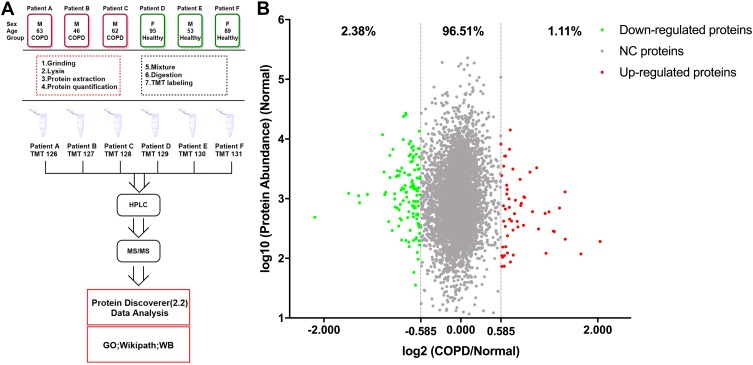
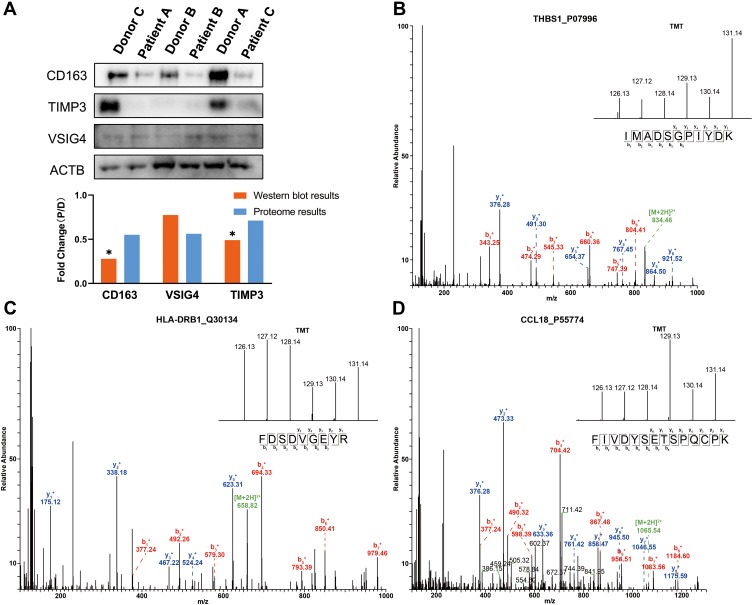
We collected lung tissue from three patients with COPD who required thoracic surgery for lung transplantation in the China-Japan Friendship Hospital. Lung tissue from three donors who had no history of lung disease was collected as healthy controls through a whole-body donation program of Peking Union Medical College (China). We conducted a proteomic analysis of the protein expression profiles in the two groups using a combination of high-resolution liquid chromatography coupled with tandem mass spectrometry (LC-MS/MS) and quantitative 6-plex tandem mass tag-labeling; these data were validated by Western blot analysis.
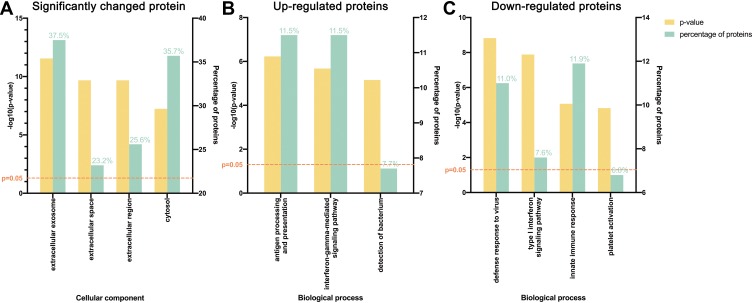
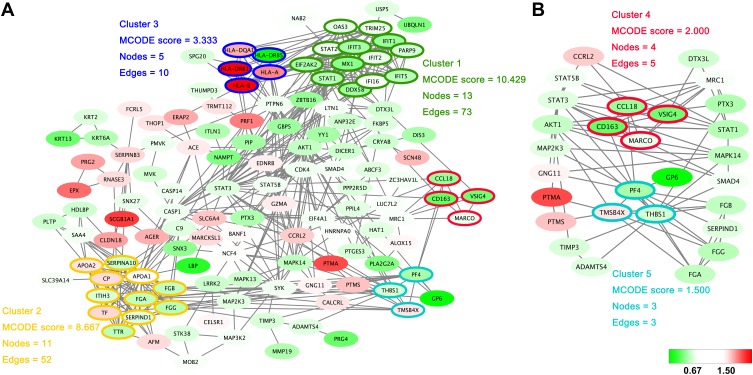
A total of 4976 proteins were identified and analyzed, of which 173 were significantly changed (118 downregulated and 55 upregulated). Gene ontology analysis and protein-protein interaction networks demonstrated that the significantly changed proteins, especially downregulated proteins, were involved in platelet and macrophage activation. The mass spectrometry proteomics data have been deposited to the ProteomeXchange Consortium (http://proteomecentral.proteomexchange.org) via the iProX partner repository with the dataset identifier PXD017158.
In our study, GP6, PF4, and THBS1, which are associated with platelet activation and wound healing, were significantly downregulated in COPD patients. These results indicate that patients with COPD are more likely to develop hemostasis disorders, which could impede the repair process of the lung tissues. Moreover, downregulation of CD163, MARCO and VSIG4, which are involved in dysfunction of alveolar macrophages in efferocytosis, may inhibit the resolution of inflammation and contribute to the pathogenesis of COPD.
慢性阻塞性肺疾病(COPD)是一种全球性的公共卫生挑战,其高患病率以及相关的残疾和死亡率导致其受到广泛关注;然而,COPD 的发病机制仍不清楚。在本研究中,我们旨在鉴定 COPD 发病机制中的关键蛋白。
我们收集了中日友好医院因肺移植而接受胸部手术的 3 例 COPD 患者的肺组织。通过北京协和医学院的全身捐献计划,收集了 3 例无肺部疾病病史的供体肺组织作为健康对照。我们使用高分辨液相色谱串联质谱(LC-MS/MS)和定量 6 重串联质量标签标记相结合的方法对两组的蛋白质表达谱进行了蛋白质组学分析;这些数据通过 Western blot 分析进行了验证。
共鉴定和分析了 4976 种蛋白质,其中有 173 种蛋白质明显改变(118 种下调,55 种上调)。GO 分析和蛋白质-蛋白质相互作用网络表明,显著改变的蛋白质,尤其是下调的蛋白质,参与血小板和巨噬细胞的激活。质谱蛋白质组学数据已通过 iProX 合作存储库存储到 ProteomeXchange 联盟(http://proteomecentral.proteomexchange.org),数据集标识符为 PXD017158。
在本研究中,与血小板激活和伤口愈合相关的 GP6、PF4 和 THBS1 在 COPD 患者中明显下调。这些结果表明,COPD 患者更有可能发生止血紊乱,这可能会阻碍肺组织的修复过程。此外,参与肺泡巨噬细胞在吞噬作用中功能障碍的 CD163、MARCO 和 VSIG4 的下调,可能会抑制炎症的消退,并有助于 COPD 的发病机制。