Department of Blood Transfusion, Guangzhou First People's Hospital, School of Medicine, South China University of Technology, Guangzhou, Guangdong, China.
Guangdong Engineering Research Center of Precise Transfusion, Guangzhou, Guangdong, China.
Transfusion. 2020 Aug;60(8):1778-1784. doi: 10.1111/trf.15858. Epub 2020 May 22.
The aim of this study was to estimate the number of blood donors during the COVID-19 incubation period across China.
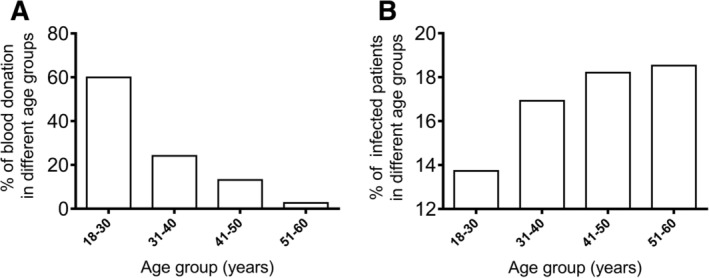
In this study, we developed a predictive model to estimate the number of blood donors during the COVID-19 incubation period among 34 provincial regions in China. Our main assumption was that blood donors of all ages in different regions have a stable blood donation intention and the same infection risk.
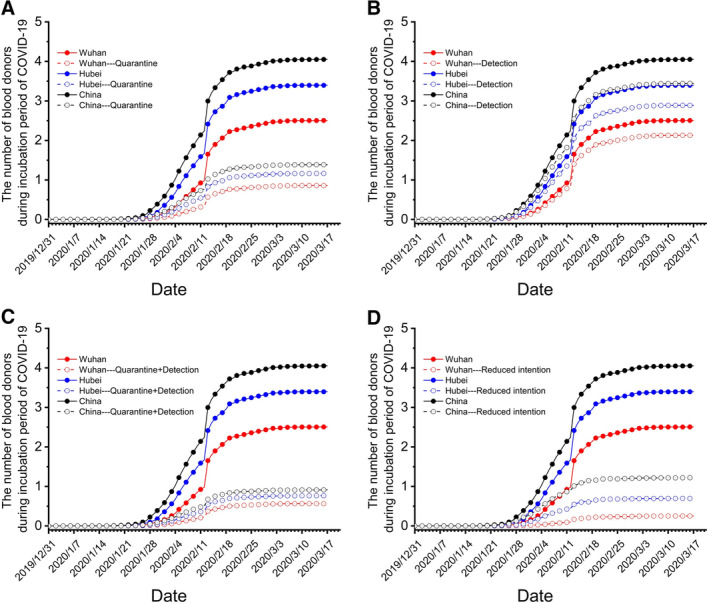
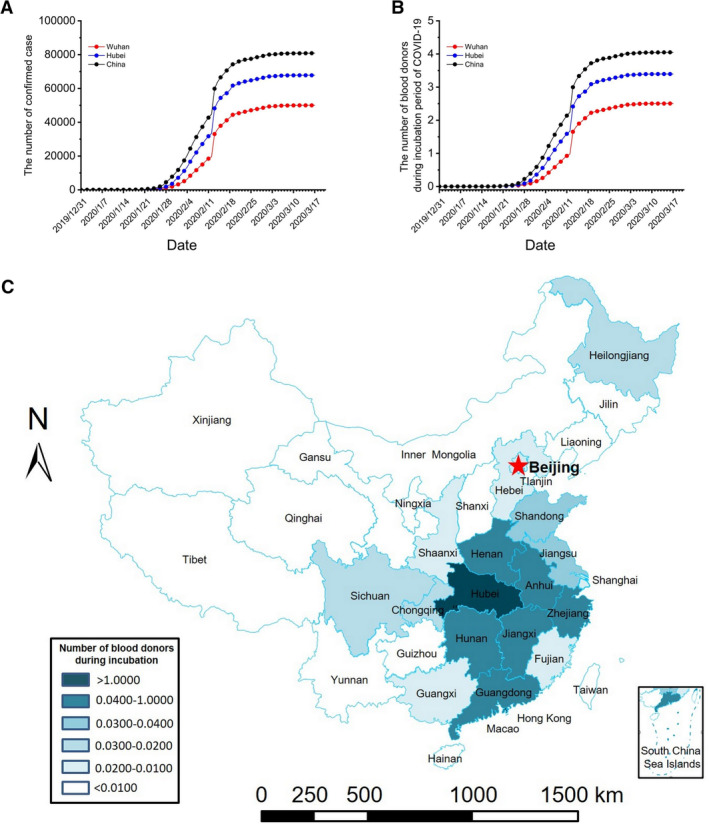
First, we estimated the number of blood donors during the COVID-19 incubation period in Wuhan city, Hubei Province, and China, from December 31, 2019 to March 17, 2020. Second, we compared the number of blood donors during the COVID-19 incubation period in all provinces across China. In addition, we found that if all RBCs, plasma, and cryoprecipitation were stored in isolation until the 14th day, the potential risk of SARS-CoV-2 transmission through blood transfusion was reduced by at least 65.77% after the blood donor safely passed the COVID-19 incubation period. Moreover, if the detection of SARS-CoV-2 RNA was carried out on all platelets, the potential risk would be reduced by 77.48%.
Although the risk is low, with the rapid spread of the COVID-19 and the appearance of alarmingly high infectivity and a high fatality rate, appropriate measures should be taken by health departments to ensure the safety of clinical blood.
本研究旨在估计 COVID-19 潜伏期期间中国各地的献血者人数。
在这项研究中,我们开发了一个预测模型,以估计 COVID-19 潜伏期期间中国 34 个省级地区的献血者人数。我们的主要假设是,不同地区所有年龄段的献血者具有稳定的献血意愿和相同的感染风险。
首先,我们估计了 COVID-19 潜伏期期间湖北省武汉市和中国的献血者人数,从 2019 年 12 月 31 日至 2020 年 3 月 17 日。其次,我们比较了 COVID-19 潜伏期期间中国所有省份的献血者人数。此外,我们发现,如果所有 RBCs、血浆和冷沉淀都在隔离状态下储存至第 14 天,那么在献血者安全度过 COVID-19 潜伏期后,通过输血传播 SARS-CoV-2 的潜在风险至少降低了 65.77%。此外,如果对所有血小板进行 SARS-CoV-2 RNA 检测,则潜在风险将降低 77.48%。
尽管风险较低,但随着 COVID-19 的迅速传播以及感染率和死亡率惊人升高,卫生部门应采取适当措施确保临床用血的安全。