State Key Laboratory of Virology, Wuhan Institute of Virology, Chinese Academy of Sciences, Wuhan 100864, Hubei, China.
University of Chinese Academy of Sciences, Beijing 100049, China.
Viruses. 2020 May 18;12(5):557. doi: 10.3390/v12050557.
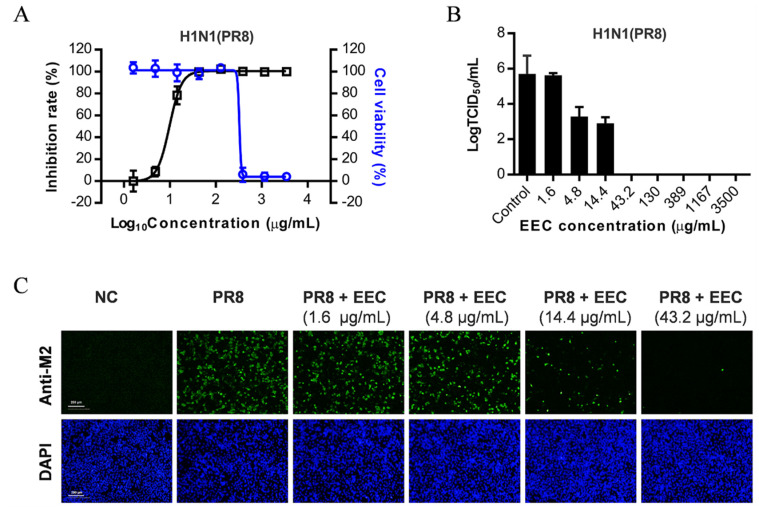
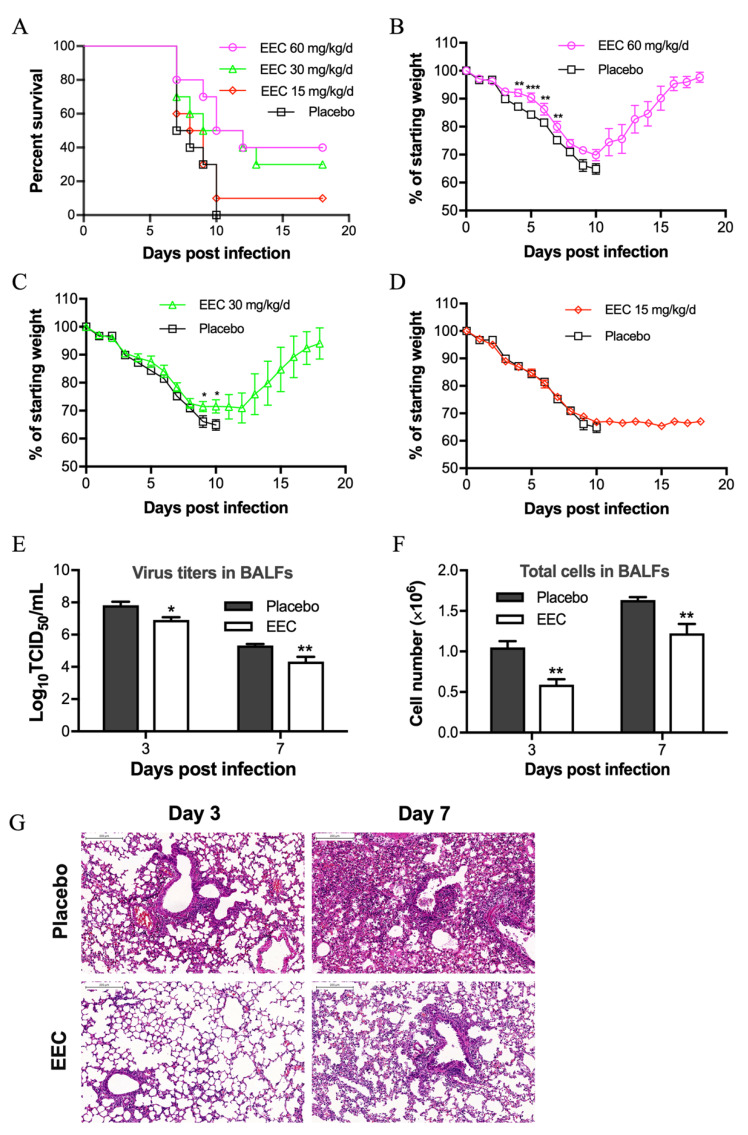
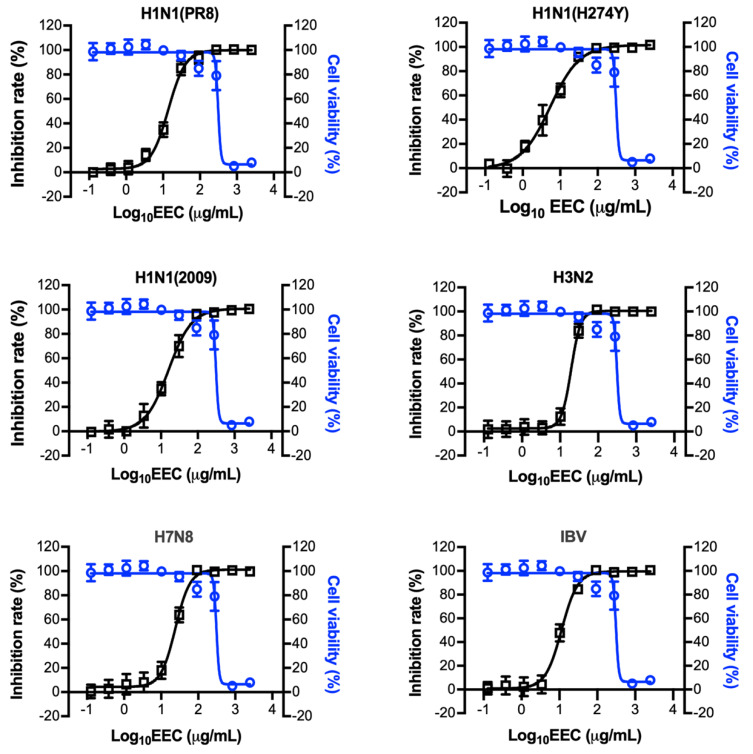
Influenza virus infections can lead to viral pneumonia and acute respiratory distress syndrome in severe cases, causing significant morbidity and mortality and posing a great threat to human health. Because of the diversity of influenza virus strains and drug resistance to the current direct antiviral agents, there have been no effective drugs as yet to cure all patients infected by influenza viruses. Natural products from plants contain compounds with diverse structures that have the potential to interact with multiple host and virus factors. In this study, we identified the ethanol extract of (Roth) Alston (EEC) as an inhibitor against the replication of a panel of influenza A and B viruses both on human pulmonary epithelial A549 and human monocytic U937 cells. The animal study revealed that EEC administration reduces the weight loss and improves the survival rate of mice infected with lethal influenza virus. Also, EEC treatment attenuated lung injury and reduced virus titer significantly. In conclusion, we showed that EEC has antiviral activity both in vitro and in vivo, suggesting that the plant has the potential to be further developed as a resource of new anti-influenza drugs.
流感病毒感染可导致严重病例的病毒性肺炎和急性呼吸窘迫综合征,造成重大发病率和死亡率,对人类健康构成巨大威胁。由于流感病毒株的多样性和对现有直接抗病毒药物的耐药性,目前尚无有效的药物治愈所有感染流感病毒的患者。植物来源的天然产物含有具有与多种宿主和病毒因素相互作用潜力的多种结构化合物。在这项研究中,我们发现(Roth)Alston 的乙醇提取物(EEC)是一种抑制物,可在人肺上皮 A549 和人单核细胞 U937 细胞上抑制一系列甲型和乙型流感病毒的复制。动物研究表明,EEC 给药可减轻感染致死性流感病毒的小鼠的体重减轻并提高其存活率。此外,EEC 治疗可显著减轻肺损伤并降低病毒滴度。总之,我们表明 EEC 在体外和体内均具有抗病毒活性,这表明该植物有可能进一步开发成为新的抗流感药物资源。