Department of Basic Sciences, College of Veterinary Medicine, Mississippi State University, Starkville, Mississippi State, Mississippi, United States of America.
College of Veterinary Medicine, South China Agricultural University, Guangzhou, Guangdong, China.
PLoS Pathog. 2018 Dec 3;14(12):e1007417. doi: 10.1371/journal.ppat.1007417. eCollection 2018 Dec.
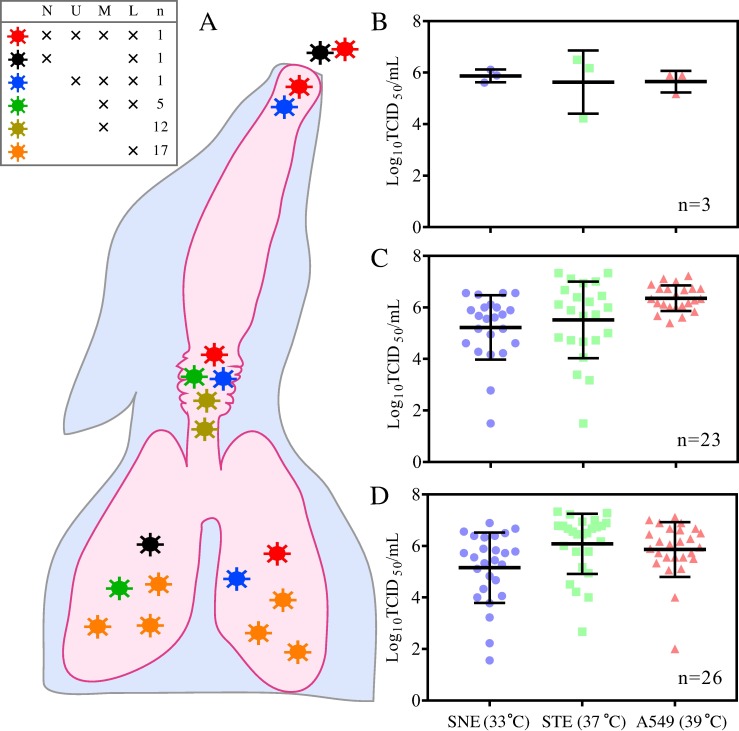
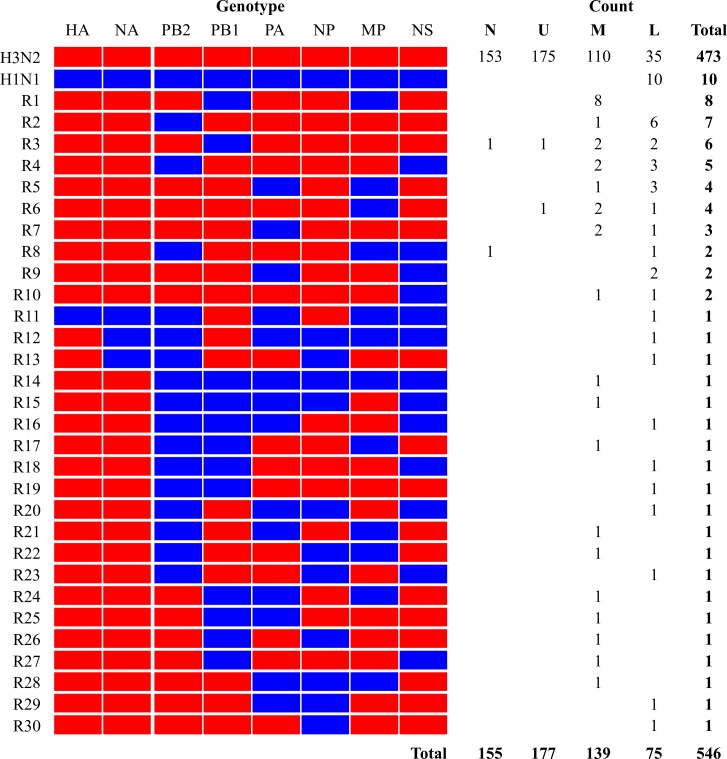
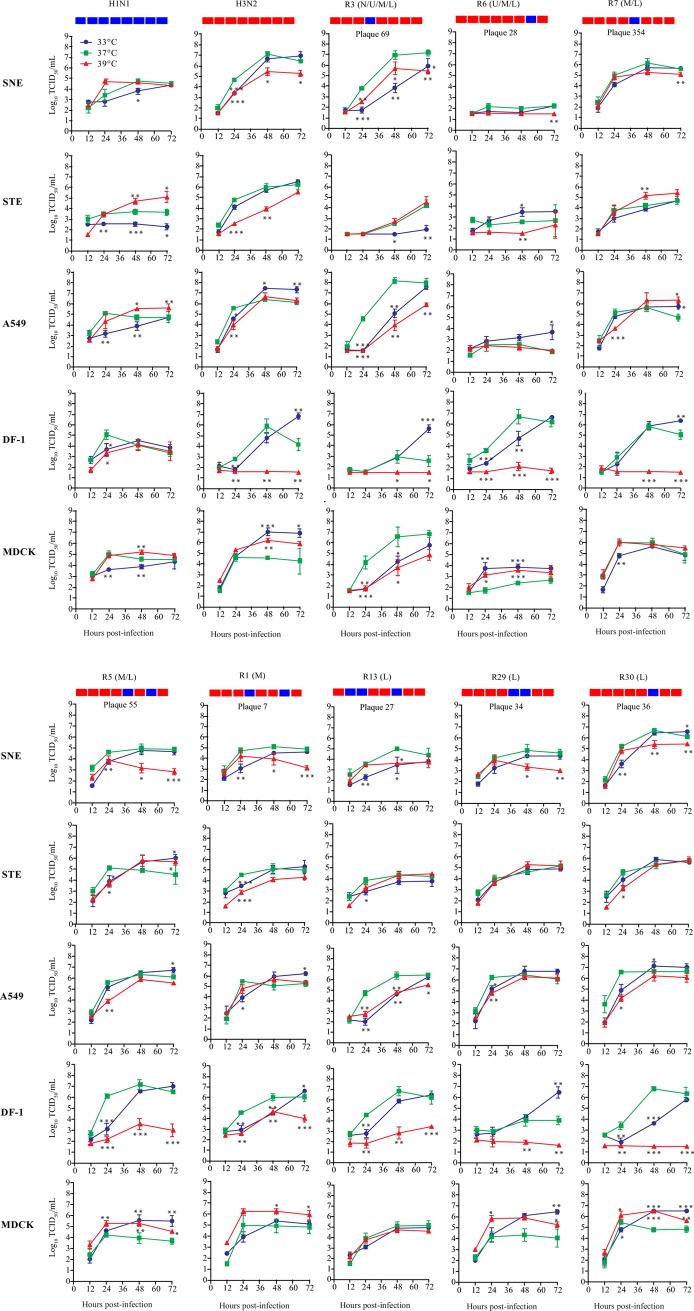
Genetic reassortment between influenza A viruses (IAVs) facilitate emergence of pandemic strains, and swine are proposed as a "mixing vessel" for generating reassortants of avian and mammalian IAVs that could be of risk to mammals, including humans. However, how a transmissible reassortant emerges in swine are not well understood. Genomic analyses of 571 isolates recovered from nasal wash samples and respiratory tract tissues of a group of co-housed pigs (influenza-seronegative, avian H1N1 IAV-infected, and swine H3N2 IAV-infected pigs) identified 30 distinct genotypes of reassortants. Viruses recovered from lower respiratory tract tissues had the largest genomic diversity, and those recovered from turbinates and nasal wash fluids had the least. Reassortants from lower respiratory tracts had the largest variations in growth kinetics in respiratory tract epithelial cells, and the cold temperature in swine nasal cells seemed to select the type of reassortant viruses shed by the pigs. One reassortant in nasal wash samples was consistently identified in upper, middle, and lower respiratory tract tissues, and it was confirmed to be transmitted efficiently between pigs. Study findings suggest that, during mixed infections of avian and swine IAVs, genetic reassortments are likely to occur in the lower respiratory track, and tissue tropism is an important factor selecting for a transmissible reassortant.
流感病毒(IAV)之间的基因重配促进了大流行株的出现,猪被认为是产生禽源和哺乳动物 IAV 重组病毒的“混合容器”,这些病毒可能对哺乳动物(包括人类)构成风险。然而,可传播的重组病毒是如何在猪群中出现的,目前还不太清楚。对一组共同饲养的猪(流感血清阴性、感染禽源 H1N1 IAV、感染猪源 H3N2 IAV)的鼻腔冲洗样本和呼吸道组织中回收的 571 个分离株进行基因组分析,确定了 30 种不同的重组体基因型。从下呼吸道组织中回收的病毒具有最大的基因组多样性,而从鼻甲和鼻腔冲洗液中回收的病毒具有最小的基因组多样性。下呼吸道组织中回收的重组体在呼吸道上皮细胞中的生长动力学方面变化最大,猪鼻细胞中的低温似乎选择了猪排出的重组体病毒类型。在鼻腔冲洗样本中,一种重组体在上、中、下呼吸道组织中均被一致鉴定,且其在猪群中的传播效率得到了证实。研究结果表明,在禽源和猪源 IAV 的混合感染期间,基因重配很可能发生在下呼吸道,组织嗜性是选择可传播重组体的一个重要因素。