Basic and Applied Scientific Research Center, Imam Abdulrahman Bin Faisal University, P.O. Box 1982, Dammam 31441, Saudi Arabia.
Department of Biology, College of Science, Imam Abdulrahman Bin Faisal University, P.O. Box 1982, Dammam 31441, Saudi Arabia.
Molecules. 2020 May 18;25(10):2346. doi: 10.3390/molecules25102346.
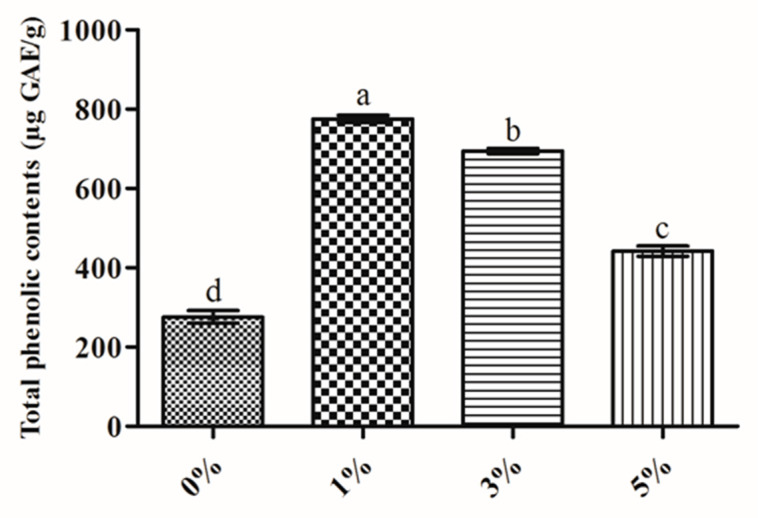
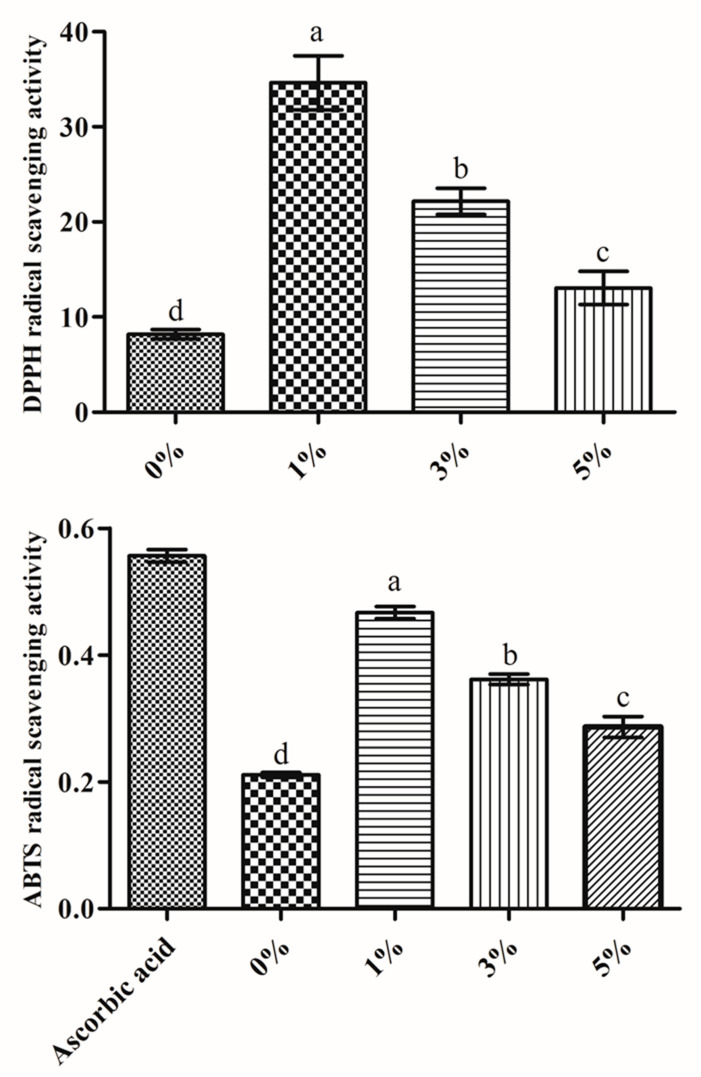
Soybean (Glycine max L.) is a good source of natural antioxidants and commonly consumed as fermented products such as cheonggukjang, miso, tempeh, and sufu in Asian countries. The aim of the current study was to examine the influence of novel endophytic bacterial strain, RWL-1 as a starter for soybean fermentation. During fermentation, the cooked soybeans were inoculated with different concentrations (1%, 3%, and 5%) of RWL-1. The changes in 2,2-diphenyl-1-picrylhydrazyl (DPPH), 2,2'-azino-bis (3-ethylbenzthiazoline-6-sulfonic acid) (ABTS) radical scavenging activities, total phenolic contents, isoflavones (Daidzin, Genistin, Glycitin, Daidzein, Glycitein, and Genistein), amino acids (aspartic acid, threonine, serine, glutamic acid, glycine, alanine, cysteine, valine, methionine, isoleucine, leucine, tyrosine, phenylalanine, lysine, histidine, arginine, and proline) composition, and minerals (calcium, copper, iron, potassium, magnesium, manganese, sodium, nickel, lead, arsenic, and zinc) were investigated. The level of antioxidants, total phenolic contents, isoflavones, and total amino acids were higher in fermented soybean inoculated with 1% RWL-1 after 60 h of fermentation as compared to control, 3% and 5% RWL-1. Additionally, fermented soybean inoculated with 5% RWL-1 showed the highest values for mineral contents. Changes in antioxidant activities and bioactive compounds depended on the concentration of the strain used for fermentation. From these results, we conclude that fermented soybean has strong antioxidant activity, probably due to its increased total phenolic contents and aglycone isoflavone that resulted from fermentation. Such natural antioxidants could be used in drug and food industries and can be considered to alleviate oxidative stress.
大豆(Glycine max L.)是天然抗氧化剂的良好来源,在亚洲国家常被作为发酵产品食用,如清曲酱、味噌、豆豉和腐乳。本研究旨在研究新型内生细菌菌株 RWL-1 作为大豆发酵起始菌的影响。在发酵过程中,将不同浓度(1%、3%和 5%)的 RWL-1 接种到煮熟的大豆中。研究了 2,2-二苯基-1-苦基肼(DPPH)、2,2'-联氮-双-(3-乙基苯并噻唑啉-6-磺酸)(ABTS)自由基清除活性、总酚含量、异黄酮(大豆苷、大豆苷元、染料木苷、大豆苷元、染料木黄酮和黄豆苷元)、氨基酸(天冬氨酸、苏氨酸、丝氨酸、谷氨酸、甘氨酸、丙氨酸、半胱氨酸、缬氨酸、蛋氨酸、异亮氨酸、亮氨酸、酪氨酸、苯丙氨酸、赖氨酸、组氨酸、精氨酸和脯氨酸)组成和矿物质(钙、铜、铁、钾、镁、锰、钠、镍、铅、砷和锌)的变化。与对照相比,发酵 60 小时后,接种 1% RWL-1 的发酵大豆的抗氧化剂水平、总酚含量、异黄酮和总氨基酸含量更高,而 3%和 5% RWL-1 的含量较低。此外,接种 5% RWL-1 的发酵大豆的矿物质含量最高。抗氧化活性和生物活性化合物的变化取决于用于发酵的菌株浓度。根据这些结果,我们得出结论,发酵大豆具有较强的抗氧化活性,这可能是由于其总酚含量和糖苷异黄酮增加,这是发酵的结果。这种天然抗氧化剂可用于药物和食品工业,可以考虑用于缓解氧化应激。