Gulisano Mariangela, Barone Rita, Alaimo Salvatore, Ferro Alfredo, Pulvirenti Alfredo, Cirnigliaro Lara, Di Silvestre Selena, Martellino Serena, Maugeri Nicoletta, Milana Maria Chiara, Scerbo Miriam, Rizzo Renata
Child and Adolescent Psychiatric Section, Department of Clinical and Experimental Medicine, Catania University, Via Santa Sofia 78, 95123 Catania, Italy.
Bioinformatics Unit, Department of Clinical and Experimental Medicine, Catania University, Viale Andrea Doria 6, 95125 Catania, Italy.
Brain Sci. 2020 May 18;10(5):308. doi: 10.3390/brainsci10050308.
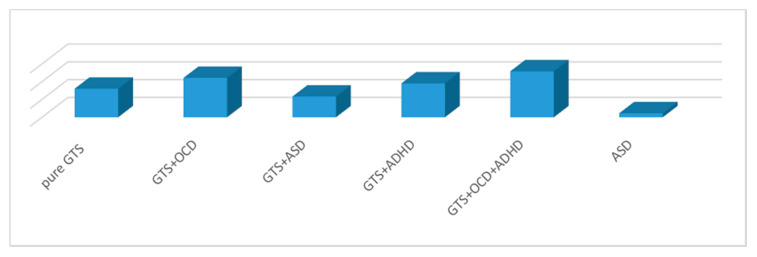
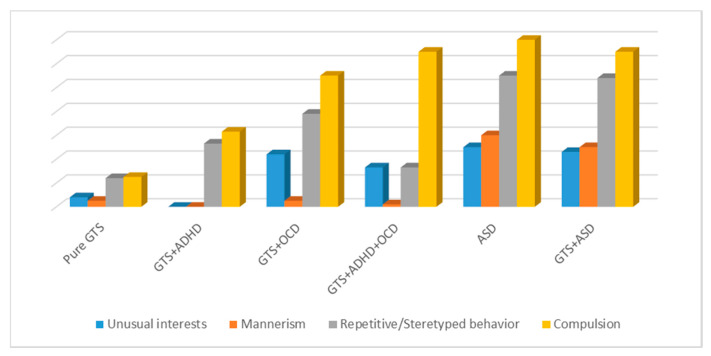
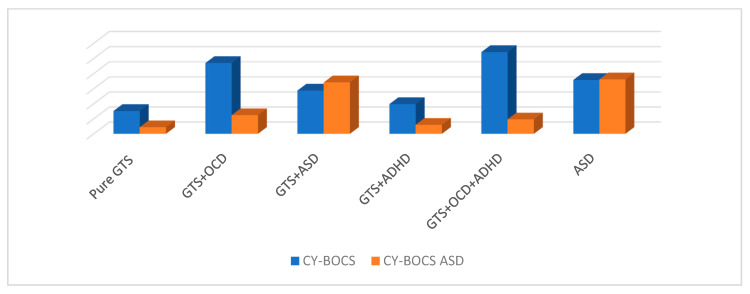
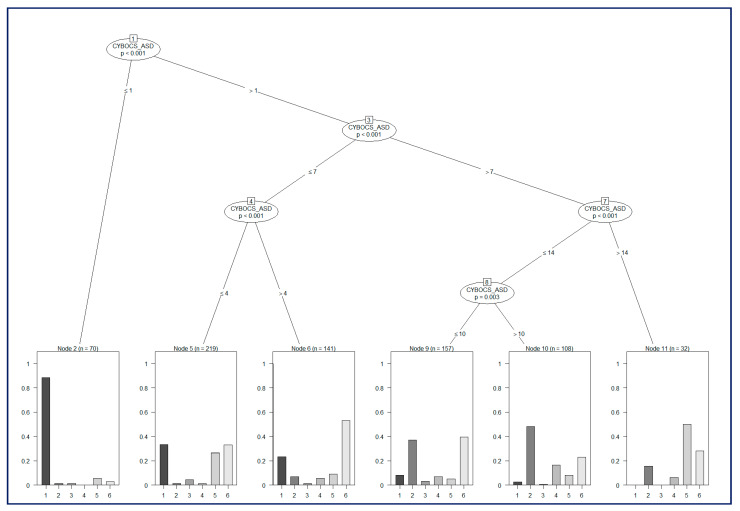
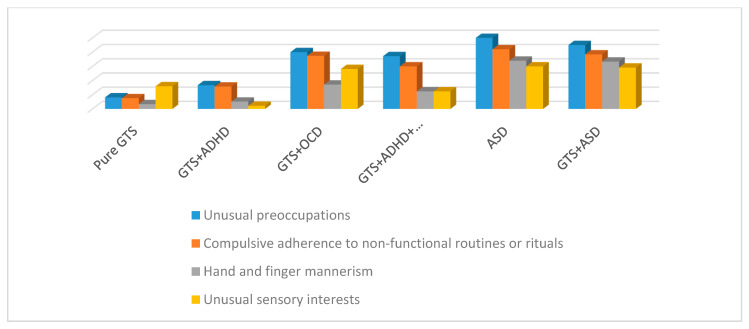
Gilles de la Tourette syndrome (GTS) and autism spectrum disorder (ASD) are two neurodevelopmental disorders with male predominance, frequently comorbid, that share clinical and behavioral features. The incidence of ASD in patients affected by GTS was reported to be between 2.9% and 22.8%. We hypothesized that higher ASD rates among children affected by GTS previously reported may be due to difficulty in discriminating GTS sub-phenotypes from ASD, and the higher scores in the restrictive and repetitive behaviors in particular may represent at least a "false comorbidity". We studied a large population of 720 children and adolescents affected by GTS ( = 400) and ASD ( = 320), recruited from a single center. Patients were all assessed with The Yale Global Tic Severity Rating Scale (YGTSS), The Autism Diagnostic Observation Schedule (ADOS), The Autism Diagnostic Interview Revised (ADI-R), The Children's Yale-Brown Obsessive-Compulsive Scale (CY-BOCS), and The Children's Yale-Brown Obsessive-Compulsive Scale for autism spectrum disorder (CY-BOCS ASD). Our results showed statistically significant differences in ADOS scores for social aspects between GTS with comorbid attention deficit hyperactivity disorder (ADHD) and obsessive-compulsive disorder (OCD) sub-phenotypes and ASD. No differences were present when we compared GTS with comorbid ASD sub-phenotype to ASD, while repetitive and restrictive behavior scores in ASD did not present statistical differences in the comparison with GTS and comorbid OCD and ASD sub-phenotypes. We also showed that CY-BOCS ASD could be a useful instrument to correctly identify OCD from ASD symptoms.
Gilles de la Tourette综合征(GTS)和自闭症谱系障碍(ASD)是两种以男性为主的神经发育障碍,常合并出现,且具有共同的临床和行为特征。据报道,GTS患者中ASD的发病率在2.9%至22.8%之间。我们推测,先前报道的受GTS影响儿童中较高的ASD发病率可能是由于难以将GTS亚表型与ASD区分开来,特别是在限制性行为和重复行为方面较高的得分可能至少代表一种“假合并症”。我们研究了从单一中心招募的720名受GTS(n = 400)和ASD(n = 320)影响的儿童和青少年的大样本群体。所有患者均接受了耶鲁全球抽动严重程度量表(YGTSS)、自闭症诊断观察量表(ADOS)、自闭症诊断访谈修订版(ADI-R)、儿童耶鲁-布朗强迫症量表(CY-BOCS)以及自闭症谱系障碍儿童耶鲁-布朗强迫症量表(CY-BOCS ASD)的评估。我们的结果显示,合并注意缺陷多动障碍(ADHD)和强迫症(OCD)亚表型的GTS与ASD在ADOS社交方面得分存在统计学显著差异。当我们将合并ASD亚表型的GTS与ASD进行比较时,未发现差异,而ASD中的重复和限制性行为得分与GTS以及合并OCD和ASD亚表型的比较中未呈现统计学差异。我们还表明,CY-BOCS ASD可能是从ASD症状中正确识别OCD的有用工具。