Instituto de Investigaciones Biomédicas (INBIOMED, UBA-CONICET), Facultad de Medicina, Universidad de Buenos Aires, Buenos Aires, Argentina.
Departamento de Biología Celular e Histología, Facultad de Medicina, Universidad de Buenos Aires, Buenos Aires, Argentina.
Sci Rep. 2020 May 22;10(1):8542. doi: 10.1038/s41598-020-65381-7.
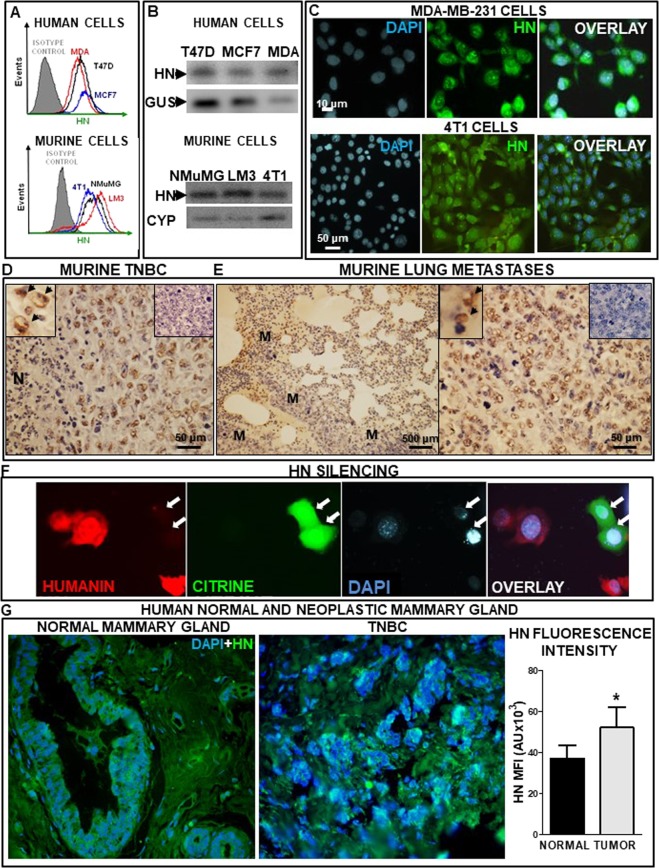
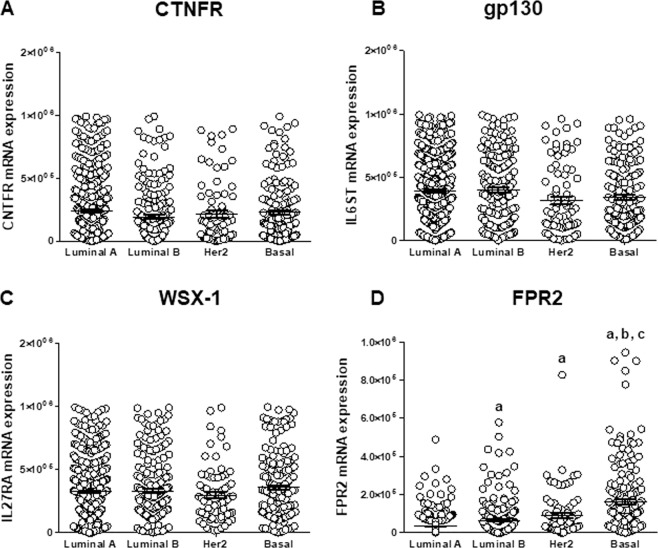
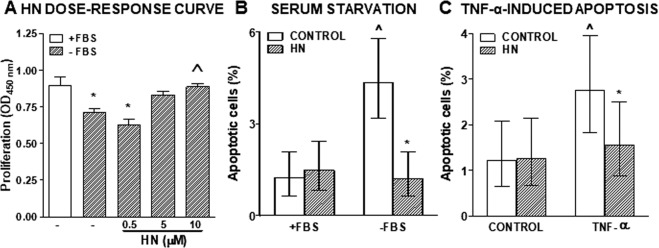
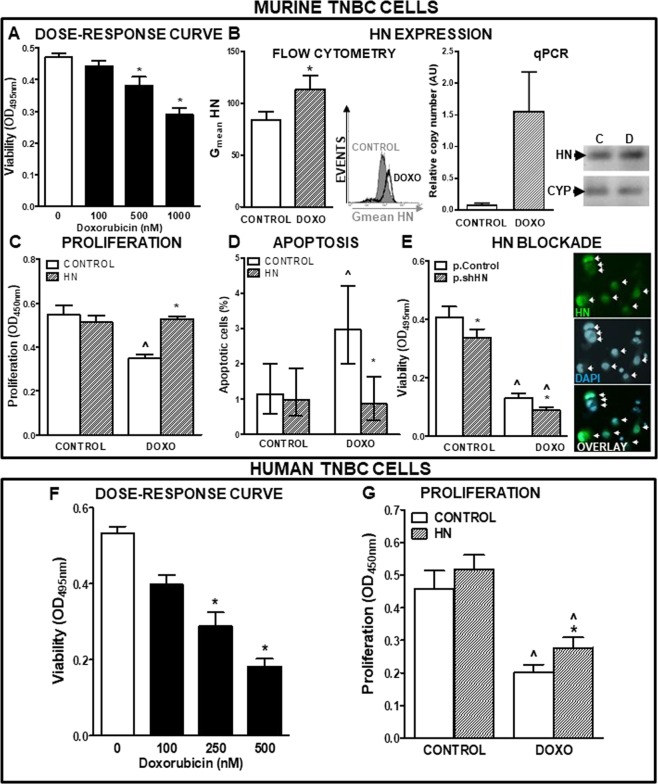
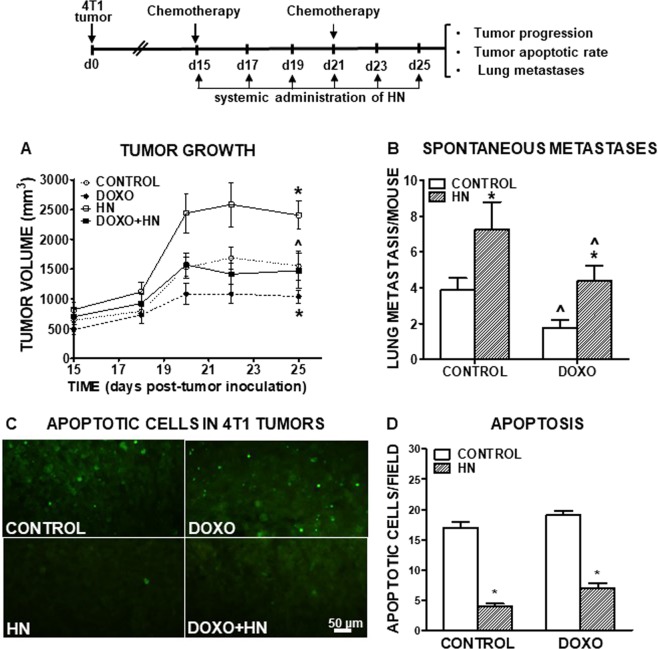
Humanin (HN) is a mitochondrial-derived peptide with cytoprotective effect in many tissues. Administration of HN analogs has been proposed as therapeutic approach for degenerative diseases. Although HN has been shown to protect normal tissues from chemotherapy, its role in tumor pathogenesis is poorly understood. Here, we evaluated the effect of HN on the progression of experimental triple negative breast cancer (TNBC). The meta-analysis of transcriptomic data from The Cancer Genome Atlas indicated that HN and its receptors are expressed in breast cancer specimens. By immunohistochemistry we observed up-regulation of HN in TNBC biopsies when compared to mammary gland sections from healthy donors. Addition of exogenous HN protected TNBC cells from apoptotic stimuli whereas shRNA-mediated HN silencing reduced their viability and enhanced their chemo-sensitivity. Systemic administration of HN in TNBC-bearing mice reduced tumor apoptotic rate, impaired the antitumor and anti-metastatic effect of chemotherapy and stimulated tumor progression, accelerating tumor growth and development of spontaneous lung metastases. These findings suggest that HN may exert pro-tumoral effects and thus, caution should be taken when using exogenous HN to treat degenerative diseases. In addition, our study suggests that HN blockade could constitute a therapeutic strategy to improve the efficacy of chemotherapy in breast cancer.
人源素(HN)是一种具有细胞保护作用的线粒体衍生肽,在许多组织中都有此作用。有人提出,使用 HN 类似物作为退行性疾病的治疗方法。尽管已经证明 HN 可以保护正常组织免受化疗的影响,但它在肿瘤发病机制中的作用仍知之甚少。在这里,我们评估了 HN 对实验性三阴性乳腺癌(TNBC)进展的影响。癌症基因组图谱中的转录组数据分析的荟萃分析表明,HN 及其受体在乳腺癌标本中表达。通过免疫组织化学,我们观察到与来自健康供体的乳腺组织切片相比,TNBC 活检中 HN 的表达上调。外源性 HN 的添加可保护 TNBC 细胞免受凋亡刺激,而 shRNA 介导的 HN 沉默则降低了它们的活力并增强了它们的化疗敏感性。在患有 TNBC 的小鼠中全身给予 HN 可降低肿瘤的凋亡率,损害化疗的抗肿瘤和抗转移作用,并刺激肿瘤进展,加速肿瘤生长和自发性肺转移的发展。这些发现表明,HN 可能发挥促肿瘤作用,因此,在使用外源性 HN 治疗退行性疾病时应谨慎。此外,我们的研究表明,HN 阻断可能构成改善乳腺癌化疗疗效的治疗策略。