Wang Ran, Qian Yan, Guo Xiaojing, Song Fangda, Xiong Zhiqiang, Cai Shirong, Bian Xiuwu, Wong Man Hon, Cao Qin, Cheng Lixin, Lu Gang, Leung Kwong Sak
CUHK-SDU Joint Laboratory on Reproductive Genetics, School of Biomedical Sciences, The Chinese University of Hong Kong, Shatin, New Territories, Hong Kong, 999077, China.
Center for Neuromusculoskeletal Restorative Medicine, Hong Kong Science Park, Shatin, New Territories, Hong Kong, 999077, China.
Genome Med. 2025 Mar 3;17(1):18. doi: 10.1186/s13073-025-01441-9.
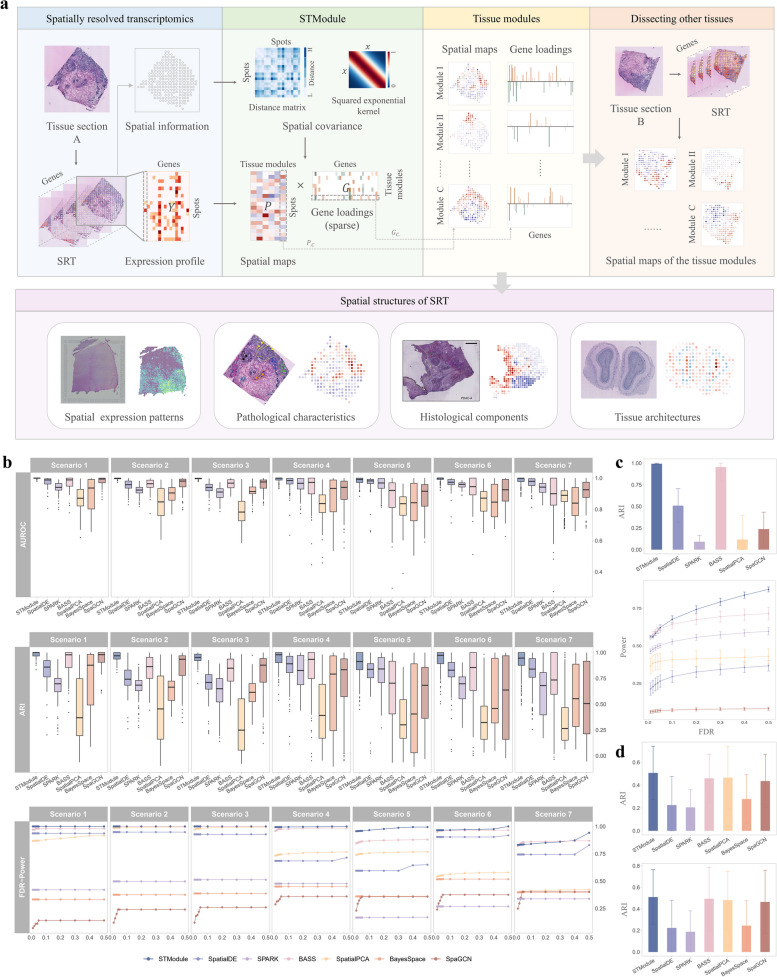
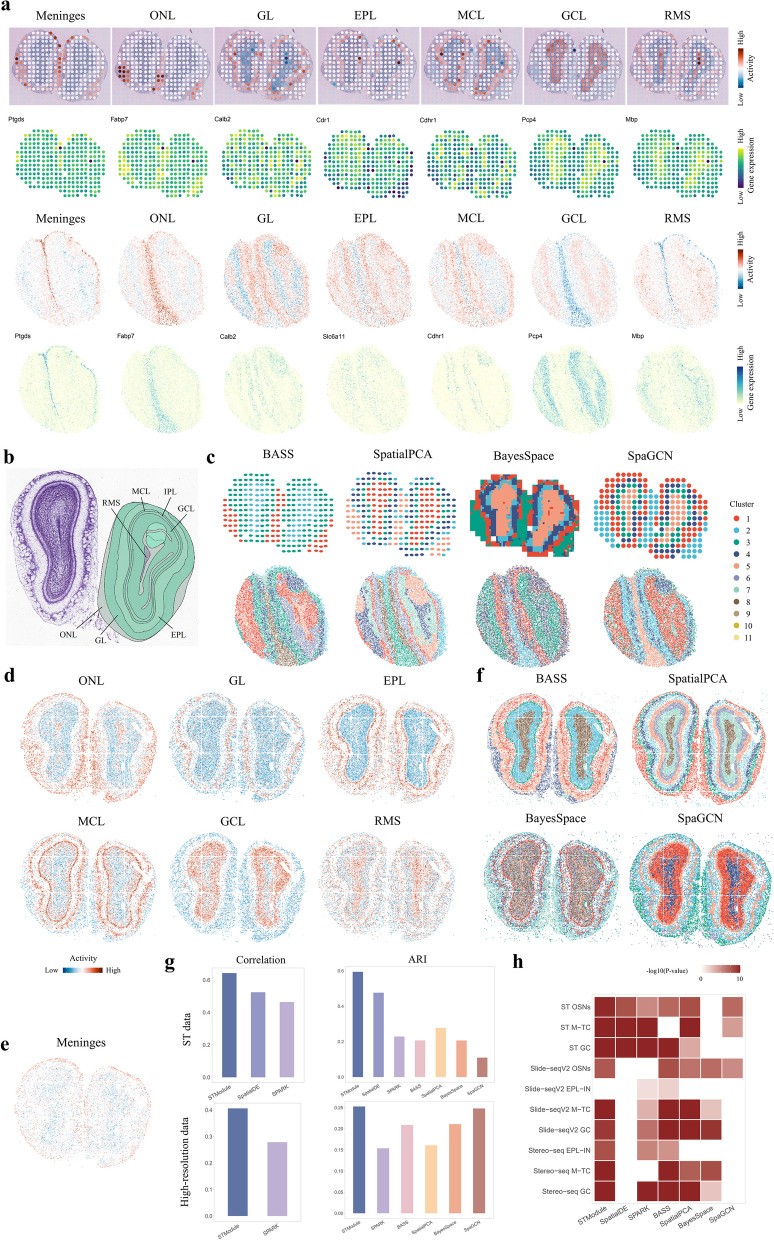
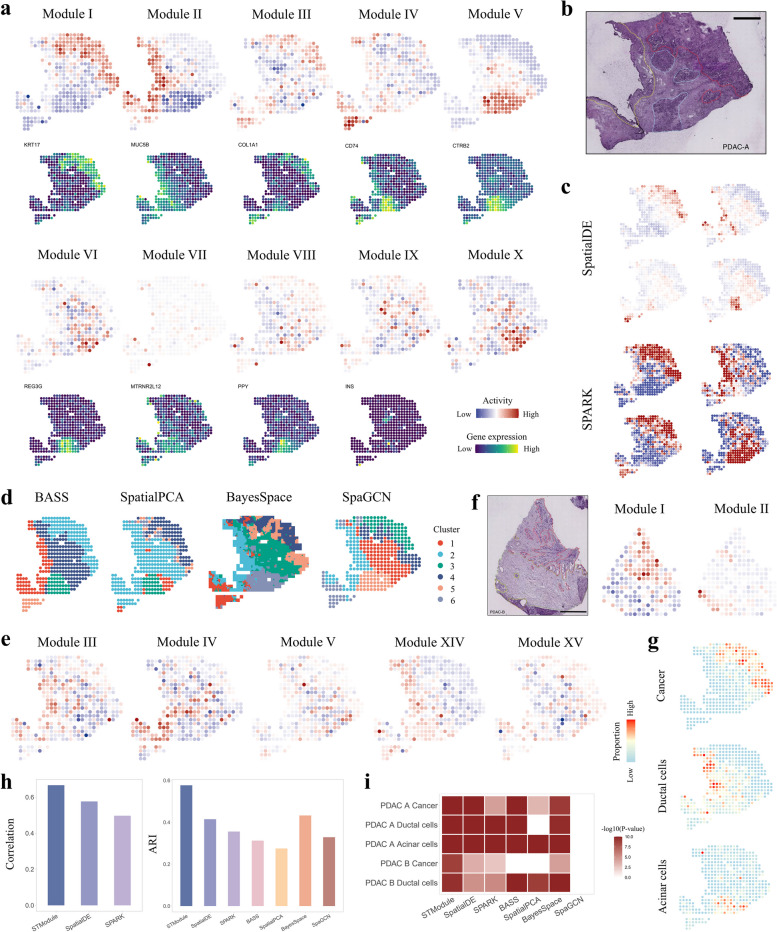
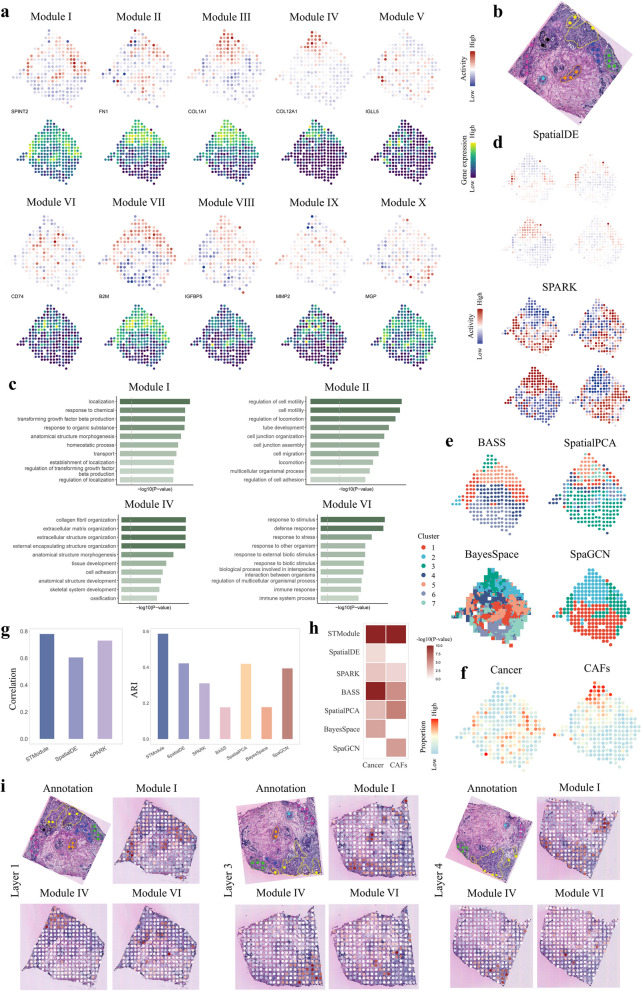
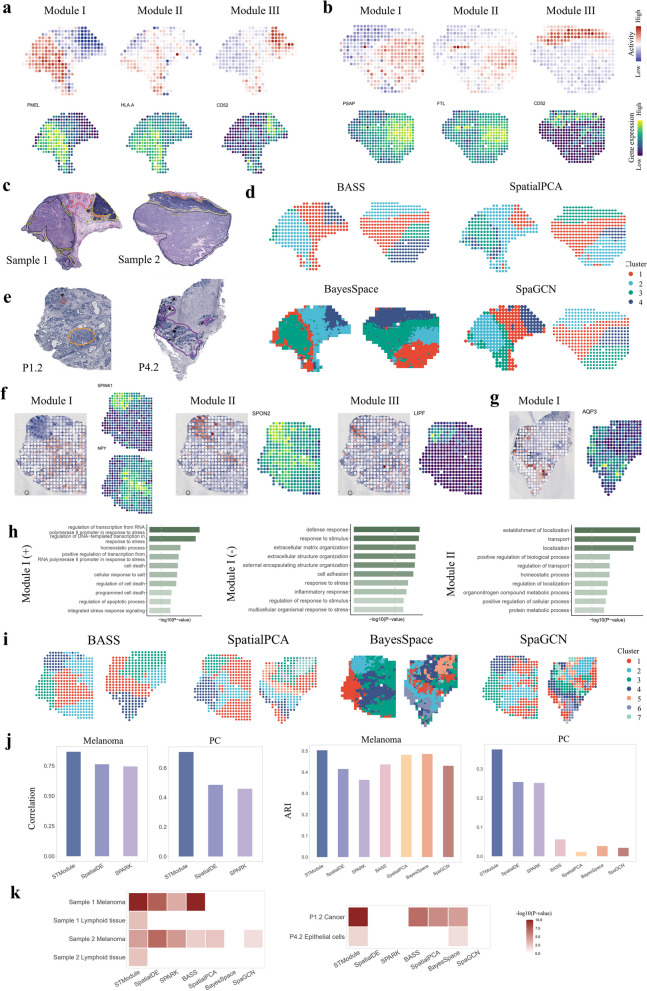
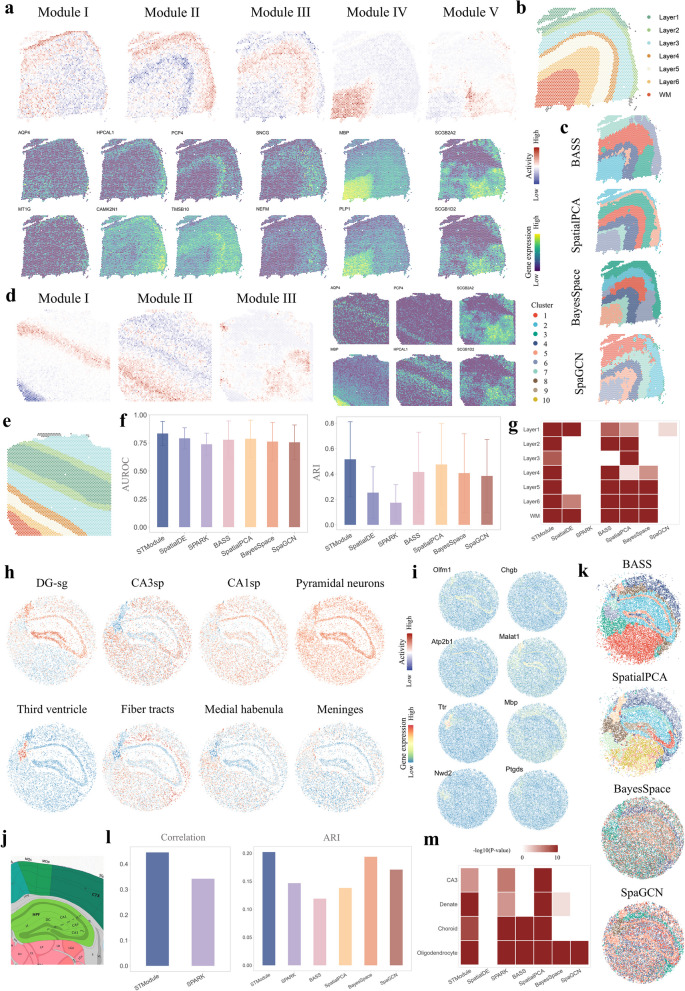
Here we present STModule, a Bayesian method developed to identify tissue modules from spatially resolved transcriptomics that reveal spatial components and essential characteristics of tissues. STModule uncovers diverse expression signals in transcriptomic landscapes such as cancer, intraepithelial neoplasia, immune infiltration, outcome-related molecular features and various cell types, which facilitate downstream analysis and provide insights into tumor microenvironments, disease mechanisms, treatment development, and histological organization of tissues. STModule captures a broader spectrum of biological signals compared to other methods and detects novel spatial components. The tissue modules characterized by gene sets demonstrate greater robustness and transferability across different biopsies. STModule: https://github.com/rwang-z/STModule.git .
在此,我们展示了STModule,这是一种为从空间分辨转录组学中识别组织模块而开发的贝叶斯方法,这些组织模块揭示了组织的空间成分和基本特征。STModule揭示了转录组景观中的多种表达信号,如癌症、上皮内瘤变、免疫浸润、与预后相关的分子特征以及各种细胞类型,这有助于下游分析,并为肿瘤微环境、疾病机制、治疗开发以及组织的组织学结构提供见解。与其他方法相比,STModule能够捕获更广泛的生物信号,并检测到新的空间成分。以基因集为特征的组织模块在不同活检样本中表现出更强的稳健性和可转移性。STModule:https://github.com/rwang-z/STModule.git 。